What Tunbridge Wells’ Grandest Street Names Are Really Telling You
Walk from Camden Park to Nevill Park, and you have, without realising it, walked through a wedding.
Most people assume the poshest streets in any English town are simply named for their poshness — grand words for grand houses. In Tunbridge Wells, that’s almost backwards. The names came first, and they weren’t chosen for how they sounded. They were the names of the families who owned the fields these streets now sit on, stamped onto the landscape the moment they sold them off for development. Read the street signs carefully enough, and you’re reading a property register that happens to still be in daily use, two centuries later.
The Template: Calverley Park
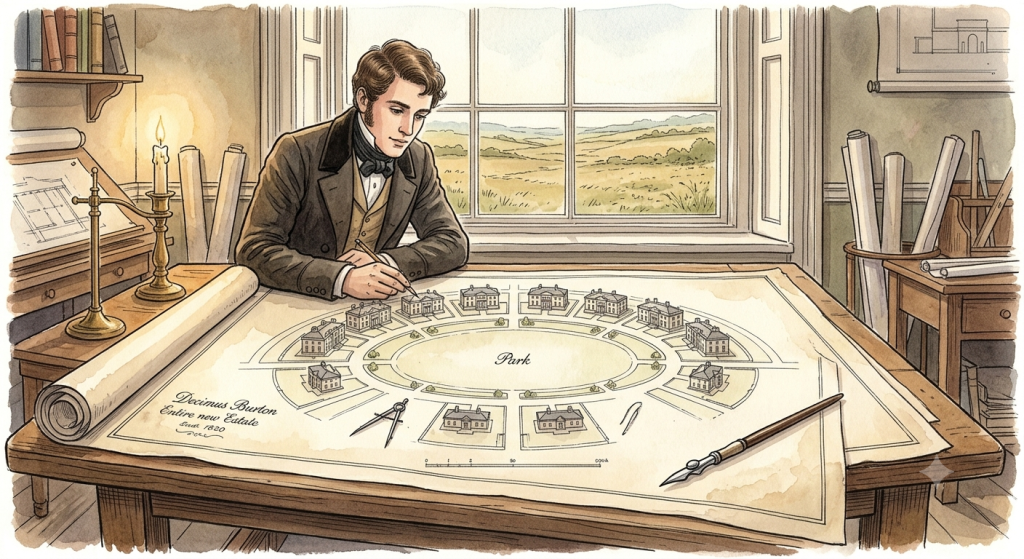
We’ve told this story before — Decimus Burton’s 1828 masterplan for Calverley Park, built for landowner John Ward, its gateway named Victoria Lodge after the teenage princess who was living next door at the time. What’s worth adding here is that Calverley wasn’t a one-off. It was the template. Once Burton proved that a grand, planned private estate could be built, named, and sold as a single coherent development, Tunbridge Wells’s other major landowners took note.
Over the following decades, the same pattern repeated itself across the town: Nevill Park. Camden Park. Hungershall Park. Each one a private aristocratic estate, laid out on formerly agricultural land, and named — without exception — after the family who owned it.
Nevill: A Name That Predates the Town Itself
Nevill Street, Nevill Park, and the Nevill cricket ground all carry the surname of the Marquesses of Abergavenny — a family who have held Eridge Park, just outside Tunbridge Wells, since 1448. That’s not a typo. The Nevill family were established landowners in this part of Kent more than 150 years before Dudley North ever stumbled on the chalybeate spring.
When Tunbridge Wells expanded in the 19th century and needed land to build on, the Marquess of Abergavenny had plenty of it, immediately to hand, with a family name already carrying three and a half centuries of local weight. Naming the resulting streets after his own family wasn’t an act of vanity so much as simple accuracy — this genuinely was Nevill land.
Camden: A Name That Married Into the Story
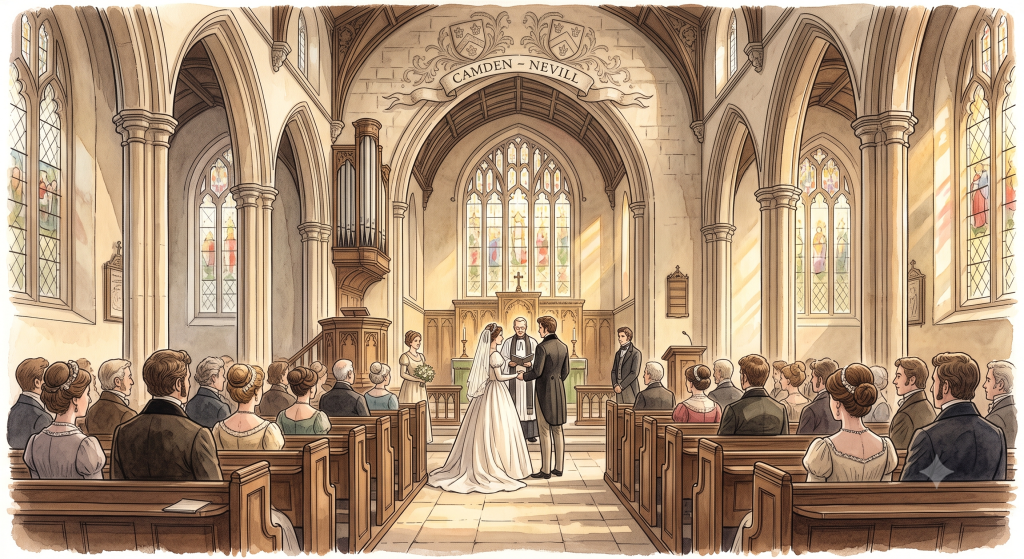
Camden Road and Camden Park take their name from the Pratt family, Marquesses Camden — another substantial Kent landowning dynasty — and were developed on broadly the same template as Calverley: a grand plan, laid out in 1847 in one-acre plots around a central shared meadow, much of which survives intact today.
Here’s the detail that turns two separate street names into a single family story: the 4th Marquess Camden married Lady Joan Marion Nevill, daughter of the 3rd Marquess of Abergavenny. Camden Park and Nevill Park aren’t simply two grand estates that happen to sit near each other in the same town. They’re named after in-laws. Every time someone walks between the two, they’re crossing from one branch of the same family tree to the other, without any sign ever telling them so.
There’s a pleasing wider echo, too. The Pratt family’s name is stamped onto more than just this corner of Kent — Camden Town in London, now one of the most recognisable market districts in the country, is named after this exact same family. Two “Camdens” exist on the map of England, in completely different contexts, for precisely the same reason.
The Order Beneath the Chaos
It’s worth remembering what the town looked like before any of this planning arrived. An 18th-century visitor described Tunbridge Wells bluntly: the country was “all rock,” every part “either up or down hill,” the houses “scattered about it in a strange, wild manner, as if they had been dropped by accident, for they form neither streets nor squares.” Some of that original, unplanned, dropped-by-accident character is thought to survive today in streets like Murray Road, Little Mount Sion, and Warwick Road — the messy, organic older town that the aristocratic estates were built to improve upon and, in their own way, to tame.
Calverley, Nevill, and Camden weren’t just naming conventions. They were a statement about order — imposed grids and formal crescents laid deliberately over a town whose two original hills, Mount Ephraim and Mount Sion, had spent a century and a half feuding before anyone thought to plan anything.
The One Street We Can’t Explain
Not every street name yields to this kind of research, and one right in the middle of this same story remains genuinely, honestly unresolved.
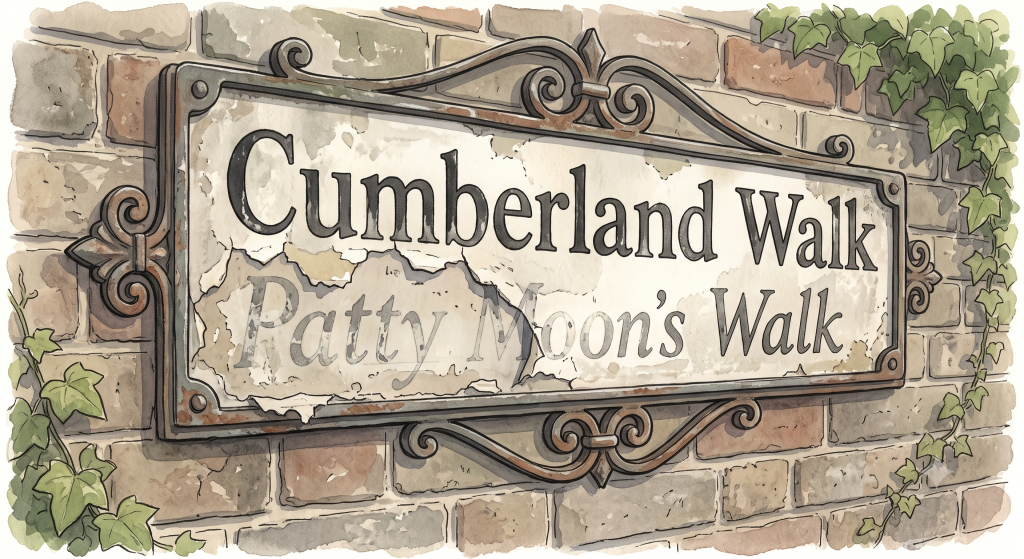
Cumberland Walk was renamed at some point. Before that, it was known simply as Patty Moon’s Walk — a wonderfully specific, entirely mysterious name, presumably after a real local woman about whom absolutely nothing else survives. Who Cumberland Walk is now named after is less clear than it should be. The tempting answer is Richard Cumberland, the celebrated 18th-century playwright already featured in these Chronicles, who lived nearby on Mount Sion. But there’s no source that actually confirms this. The more historically common explanation for “Cumberland” street names across Georgian Britain is the Duke of Cumberland — a name attached to streets and terraces across the country following his fame after Culloden in 1746.
We genuinely don’t know which one it is. If you do — if there’s a deed, a council record, a local history society file that settles it — WalkTW would very much like to hear from you.
The story continues in Two Families, One Wedding, Two Very Different Endings — what happened to the Nevills and the Camdens in the two centuries since.
Also in this series · TW Street Names