If you’ve ever walked across the Common on a crisp morning and looked up at the grand houses on Mount Ephraim, or struggled up the steep incline of Mount Sion, you’re actually walking through an ancient, 17th-century ideological battleground in Tunbridge Wells.
Back in the late 1600s, Tunbridge Wells wasn’t one unified, polite town. It was basically two rival hills suffering from a massive identity crisis, actively competing for tourists, lodging money, and bragging rights.
Choosing Your Side
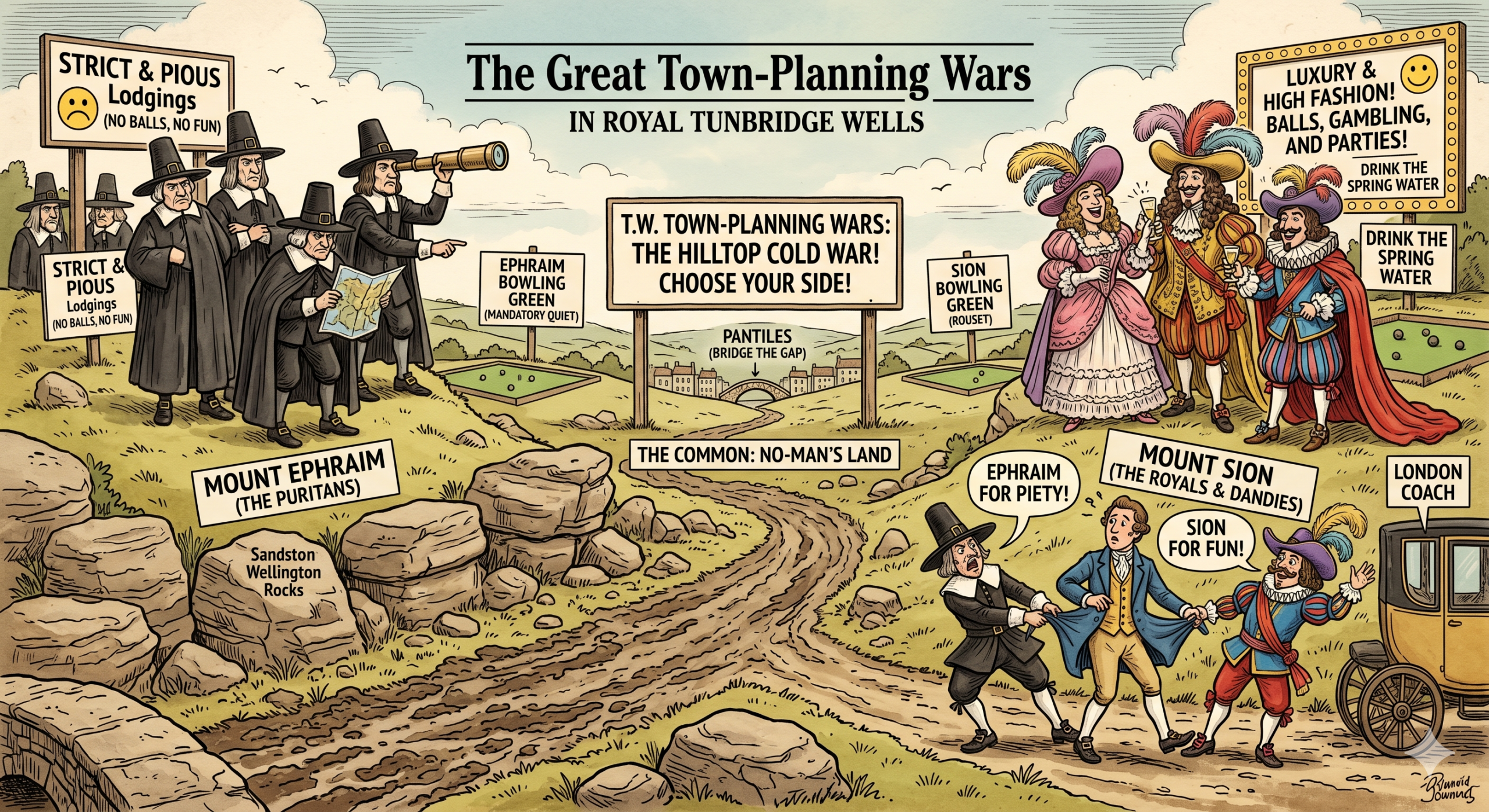
When the Chalybeate Spring first put us on the map, visitors flooded in and needed places to stay. Because the valley area was prone to flooding (classic Kent weather), entrepreneurs built accommodation up on the hills. But the two hills couldn’t have been more different if they tried. In fact, Tunbridge Wells’ unique geography really shaped the rivalry.
- Mount Ephraim (The Rebels): Settled heavily by Puritans and those who weren’t massive fans of the monarchy. They named their hill after a biblical mountain and kept things strict, pious, and business-focused.
- Mount Sion (The Royals): Settled by the high-flying royalists, Anglicans, and courtiers who wanted to party with the King. They wanted luxury, balls, gambling, and high fashion.
The Ultimate Hill-Top Cold War
For decades, a literal cold war played out across the Common. If a wealthy lord arrived in town, the touts from Mount Sion and Mount Ephraim would practically fight in the streets to drag them up their respective hills. All within the boundaries of Tunbridge Wells.
They built competing bowling greens, competing taverns, and competing lodging houses. If you stayed on Ephraim, the Sion crowd thought you were a boring prude. If you stayed in Sion, the Ephraim crowd thought you were a corrupt sinner.
Eventually, the valley (The Pantiles area) grew enough to bridge the gap and force everyone to play nice. Still, the distinct personalities of the hills lingered in Tunbridge Wells for generations.
Go Spot It Today! 🕵️♂️
You don’t need a time machine to experience this hilltop cold war—you can actually spot the physical remnants of the feud on your next weekend stroll through Tunbridge Wells.
- The Literal “No Man’s Land”. When you stand on the Tunbridge Wells Common today, you are looking at the literal physical barrier that kept the two factions apart. The reason this massive green space was never built over is largely that it served as the critical buffer zone between the competing developments.
- The Mount Ephraim Watchtowers. Walk along the ridge of Mount Ephraim today (near the Royal Wells Hotel). Notice how the oldest grand buildings face straight out over the Common. They were designed with those sweeping views not just for aesthetics, but so the early Puritan landlords could look directly across the valley and spy on whatever sinful antics their rival neighbours over on Mount Sion were up to in Tunbridge Wells.
- The Clues in the Street Names. As you move from the High Street toward the historic core of Mount Sion, the street names become a map of Royalist and Anglican identity (such as Mount Sion Road and Chapel Place). You can even walk Ephraim Lane and Sion Lane—the ancient, narrow tracks in Tunbridge Wells that the original 17th-century touts used to scramble down to intercept rich tourists stepping off their carriages.
- The Topographical Sweat Test. The absolute best way to notice the history is through your feet. The sheer steepness of Mount Sion Road shows just how isolated these early hilltop communities were. Living up there required a serious physical commitment, which is why both hills desperately tried to build their own self-contained mini-economies so their wealthy guests wouldn’t have to brave the muddy climb twice in one day.
The Takeaway
We complain about local parking and potholes today, but at least we don’t have two halves of Tunbridge Wells actively waging a holy war over who has the better bowling green!