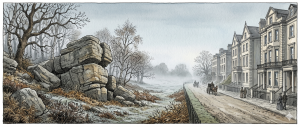
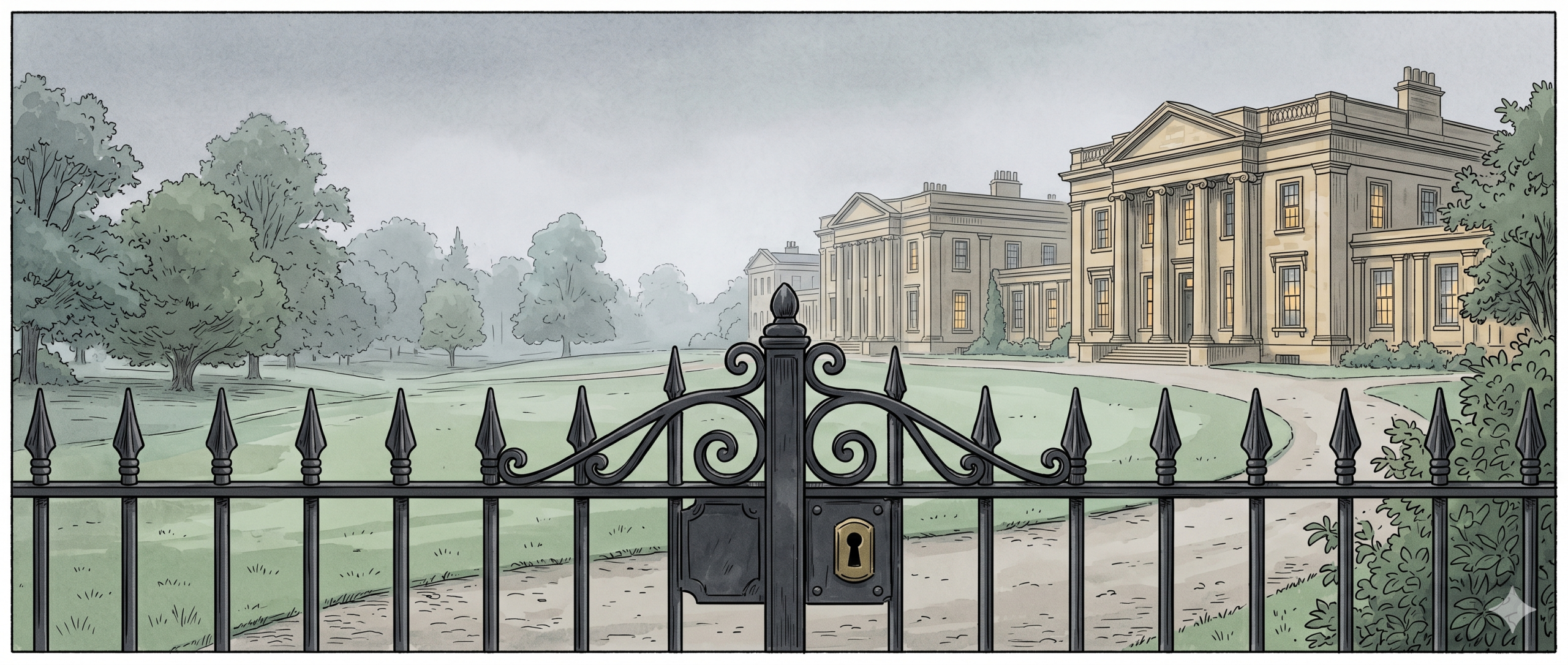
We all talk about Decimus Burton. His name is practically etched into the sandstone foundations of Royal Tunbridge Wells. He gets the lion’s share of the historical credit for designing our town’s upscale, neoclassical flair, transforming us from a muddy, chaotic spa outpost into a haven of architectural elegance.
But nobody talks about the parts of his grand vision that went completely off the rails—or the fact that his ultimate playground for the ultra-rich remains a hidden fortress right in the centre of town. Calverley Park Tunbridge Wells is a place few locals truly see. Many people are surprised to discover that Calverley Park in Tunbridge Wells is not open to the public.
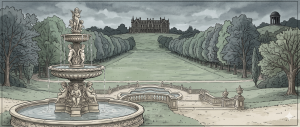
In the late 1820s, Burton was hired by a wealthy developer to build “Calverley New Town.” This wasn’t just a building project; it was a hyper-exclusive, gated master plan designed specifically to help the upper echelons of Victorian society escape the loud, rowdy, and crowded atmosphere of the old Pantiles. Burton drew up an incredibly ambitious blueprint: sweeping crescent-shaped terraces, a private church, a marketplace, and—at the absolute centre of it all—an expansive, rolling, private parkland. For those interested in historical green spaces, Calverley Park Tunbridge Wells is a fascinating case of luxury landscape architecture.
The Compromised Masterpiece
Burton wanted a utopia. What he got was a lesson in 19th-century economic reality.
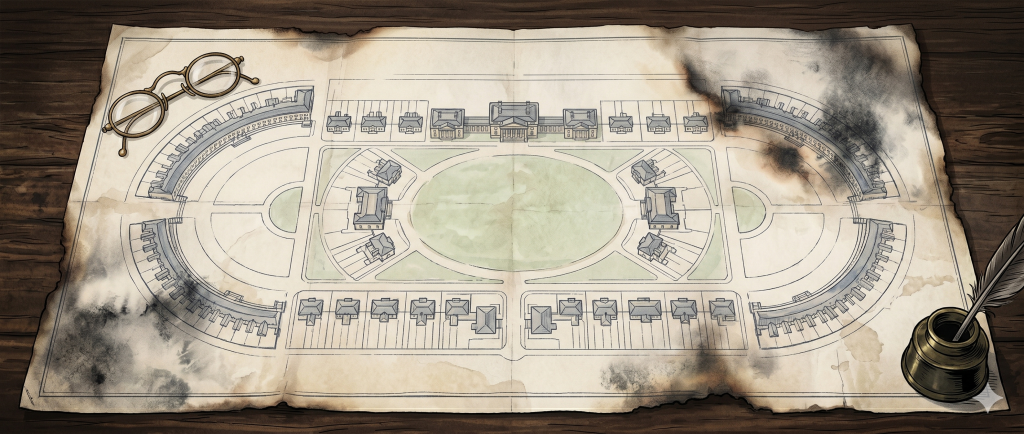
The iconic golden-sandstone villas went up, and the grand stone archways were erected, but the project was so ridiculously expensive that the full, sprawling crescent layout was never completed. As the economic anxieties of the 1840s set in, the developers had to scale back.
Yet the crowning jewel of Burton’s original layout survived. Hidden in plain sight, entirely encircled by those magnificent villas, is the private park at the heart of Calverley Park. It is a stunning, tranquil island of rolling green and mature trees. It is safe to say Calverley Park Tunbridge Wells remains a symbol of exclusivity in the town’s centre.
And here is the catch: it is still completely private. While thousands of people walk through the public Calverley Grounds next door every week, the historic private park at its centre remains legally locked away, accessible only to the modern-day residents of the surrounding villas who hold the brass keys to its gates.
Go Find It Today
- The Boundary Architecture: Walk up from Calverley Grounds toward the private villas. Look out for the imposing stone boundary posts, original iron railings, and discreet private road signs. You are standing face-to-face with Burton’s physical 19th-century attempt to keep the “ordinary” public completely separated from high society.
- Walk it: Calverley Grounds is Stop 1 of Footsteps Tour 7: Calverley, The Town Within the Town, a 40-minute self-guided walk.
- The Villa Surveillance: Notice how every single sandstone villa is oriented. Burton positioned them perfectly so that their grand drawing-room windows look inward toward the private park, creating a seamless, collective panopticon of exclusive green space.
Fact or Fiction? The WalkTW Archive
- Can you walk into Calverley Park? Only part of it. The park at the centre is private, held for the villa owners through the Calverley Park Association. The western part, Calverley Grounds, has been public since 1920, when the Council acquired it.
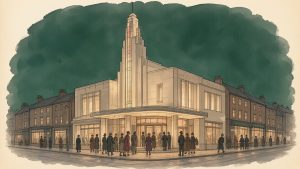
- Did Burton design the church too? Yes. Holy Trinity Church, built between 1827 and 1829 and now Trinity Theatre, formed part of his plan for the Calverley estate.
- Is there a secret tunnel from the park to Holy Trinity? Unproven. Historic England’s record for the park mentions no tunnel, and we found no other source for one. Treat it as a legend until someone produces evidence.
WalkTW Archive Meeting
That wraps up our Secret Life of the Greens trilogy! From the rebellious midnight fence-choppers of the Common, to the banker who built Dunorlan, and finally to Burton’s locked utopian gates here at Calverley.
Which of these three historic spaces is your absolute favourite spot to escape the modern world? Do you think private parks should stay private, or is it time to hand over the keys? Let us know in the comments below! For more local lore, Calverley Park Tunbridge Wells continues to inspire curiosity and debate among history enthusiasts.
Before the villas came the bill: John Ward paid £24,135 for the Calverley estate in 1826; his story is in The Tunbridge Wells Jigsaw.
Enjoyed this?