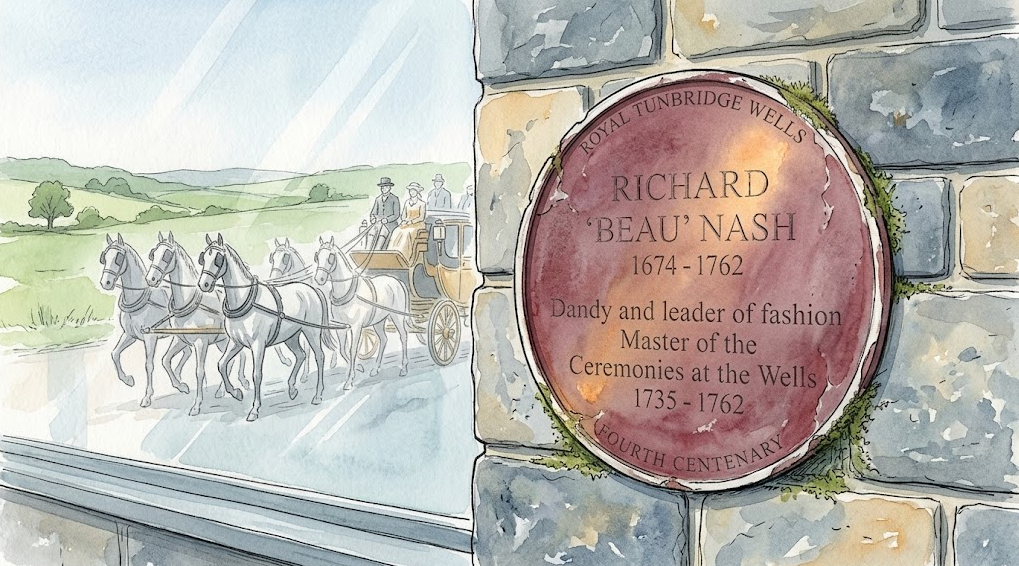
A Plaque That’s Been Wrong Since 2006
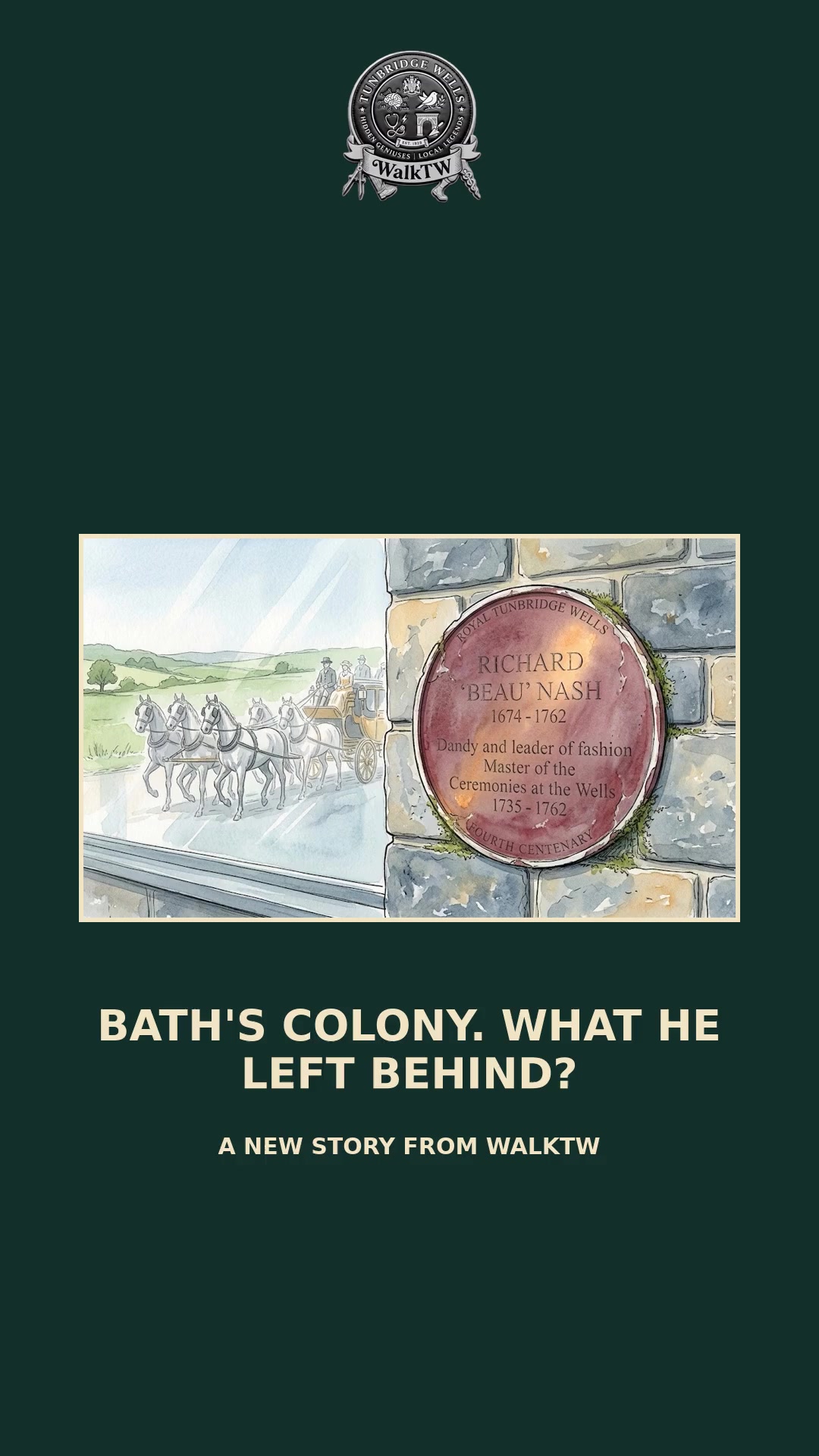
In 2006, Tunbridge Wells marked the 400th anniversary of its Chalybeate Spring with a claret-coloured plaque on the Pantiles. It commemorates Nash as a “Dandy and leader of fashion,” serving as “Master of the Ceremonies at the Wells 1735–1762.”
There’s just one problem: Nash died on 3 February 1761. The plaque has been quietly wrong for two decades, and as far as we can tell, nobody has ever corrected it. It’s a small error, but it fits the pattern rather neatly — even the town’s own memorial to Nash gets a detail about him slightly out of focus.
What Tunbridge Wells Kept
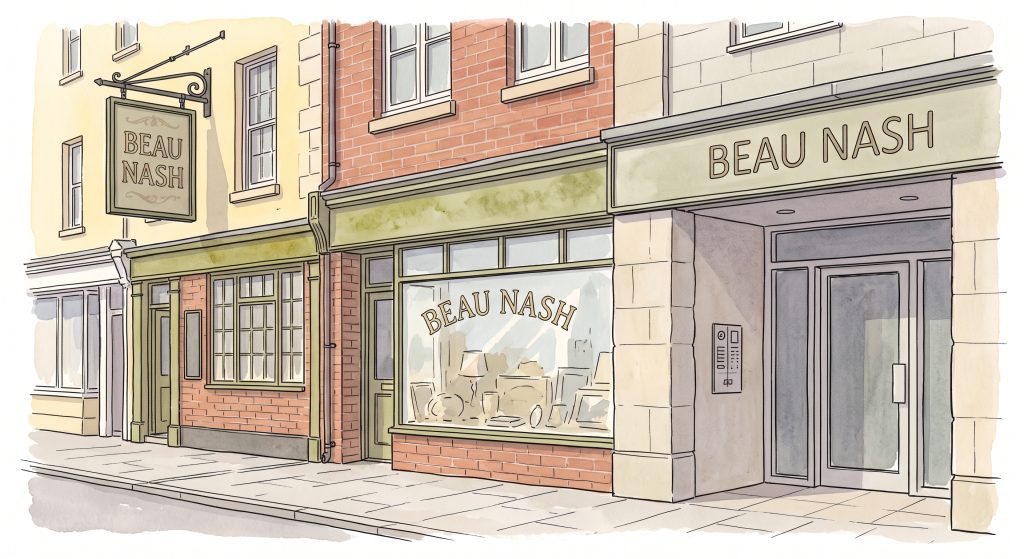
Walk around today, and Nash’s name still turns up here and there. There’s a Beau Nash Tavern on Mount Ephraim, a Beau Nash Antiques shop, and even Richard Beau Nash Apartments for those who fancy living under his name. All of it is branding rather than substance — pleasant nods to a memorable name, not evidence of anything he actually built here.
Compare that to Bell Causey, the woman whose decade of unglamorous work, as The Woman He Replaced describes, kept the town’s orchestra, library, and assembly rooms funded before Nash ever arrived. She has no tavern, no shop, and no apartment block named after her. She has, essentially, nothing — despite doing the harder job.
The Honest Verdict
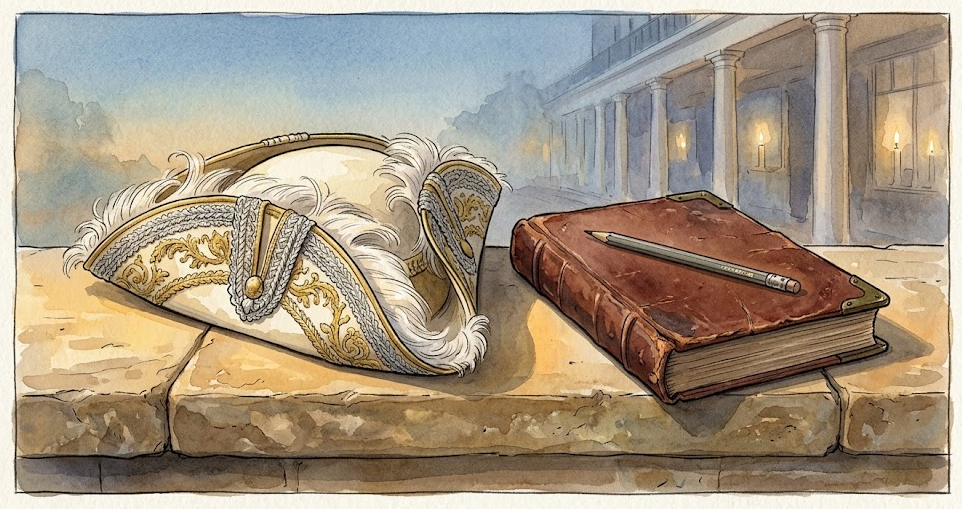
None of this means Nash’s twenty-six years in Tunbridge Wells didn’t matter. They did — The Franchise shows exactly how effectively he applied Bath’s playbook here. But “effective” and “essential” aren’t the same thing, and the record suggests Tunbridge Wells would have carried on perfectly well without him, the way it had under Causey, and the way it kept entertaining visitors long after his death, as Ten Things Tunbridge Wells Used To Do For Fun goes on to show.
Nash wasn’t a messiah for this town. He was a commercial operator who spotted a gap in his own calendar and filled it with somebody else’s spring. Tunbridge Wells let him take the credit because it was useful. But the town itself — its older habits, older visitors, and older independence — was never really his to claim.
Also in this series · Bath Colony
Leave a Reply