Two Companies, One Town, Zero Diplomacy
Building Files, Issue 3
There are towns in England where the railway arrived, and everyone was grateful. Royal Tunbridge Wells was not one of those towns. Here, the railway arrived twice — brought by two rival companies who despised each other — and the resulting feud shaped the town for the better part of a century.
It began, as most Victorian problems did, with money, ambition, and a complete absence of goodwill.
The First Arrival
The South Eastern Railway reached Tunbridge Wells on 20 September 1845. This was not, it has to be said, a triumphant entry. The line ran from Tonbridge and terminated at a temporary station called Jackwood Springs, on the northern fringe of town. It was essentially a shed. For over a year, passengers alighted into what amounted to a field.
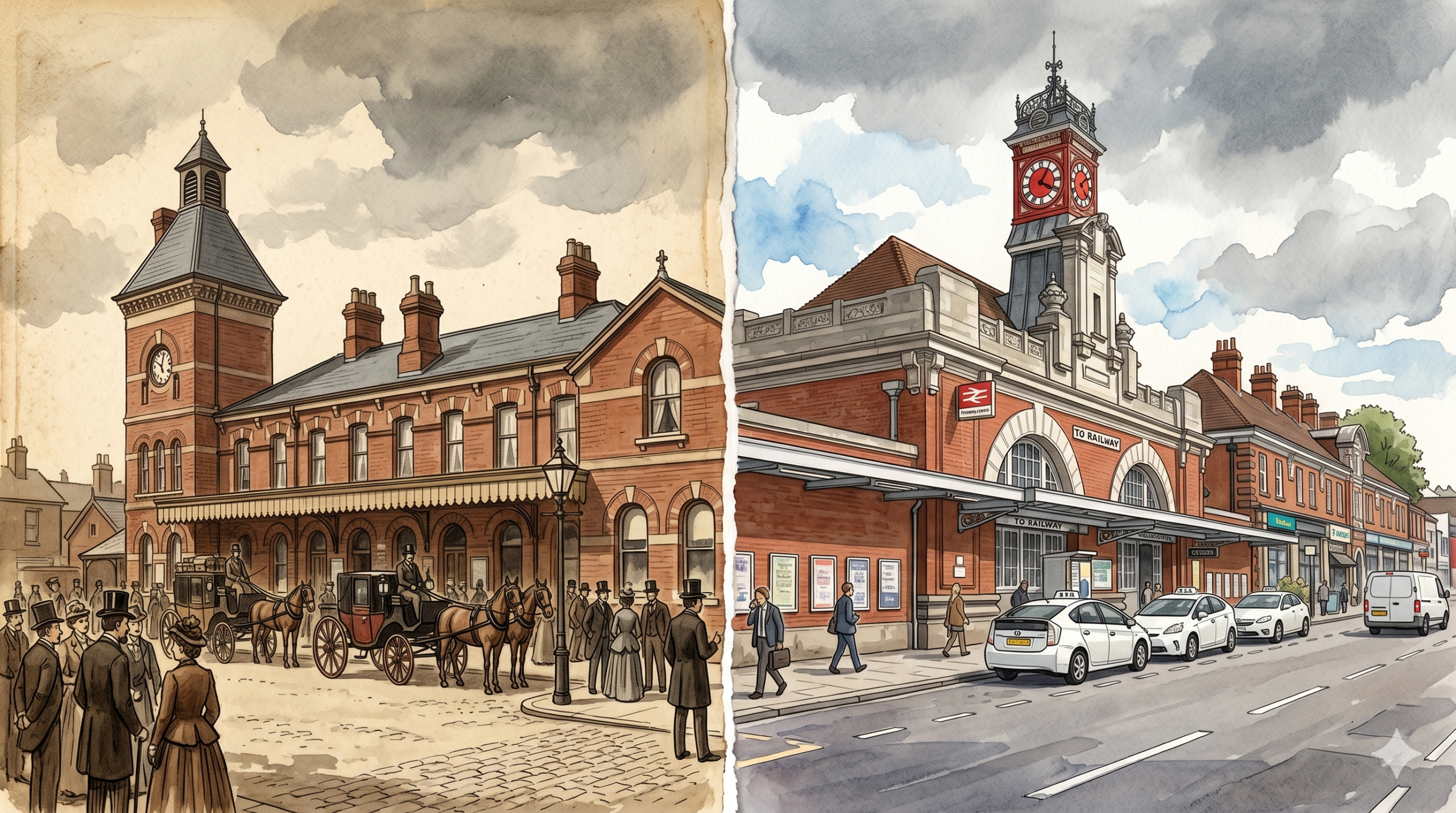
The proper station — what would eventually become Tunbridge Wells Central — opened on 25 November 1846, once the Wells Tunnel had been excavated beneath the town. The SER now had a foothold. More importantly, it had ambitions. Hastings was next on the agenda, and after that, potentially, Lewes.
This was when the trouble started.
Enter the Rival
The London, Brighton and South Coast Railway had been watching the SER’s southward expansion with the kind of alarm that polite Victorians expressed through Parliamentary bills rather than raised voices. The SER’s push toward Hastings threatened LBSCR territory. A line toward Lewes would be a direct invasion.
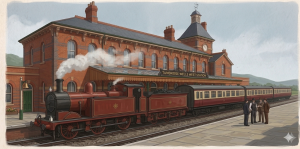
So the LBSCR drew up plans for its own line into Tunbridge Wells — from the west, via Groombridge — and obtained Parliamentary authorisation on 7 August 1862. After three separate Board of Trade inspections (the Victorian equivalent of a zero-star hygiene rating), the line finally opened on 1 October 1866.
Tunbridge Wells now had two railway stations. They belonged to two companies that, for all practical purposes, regarded each other as enemy combatants.
The Tunnel Nobody Wanted to Build
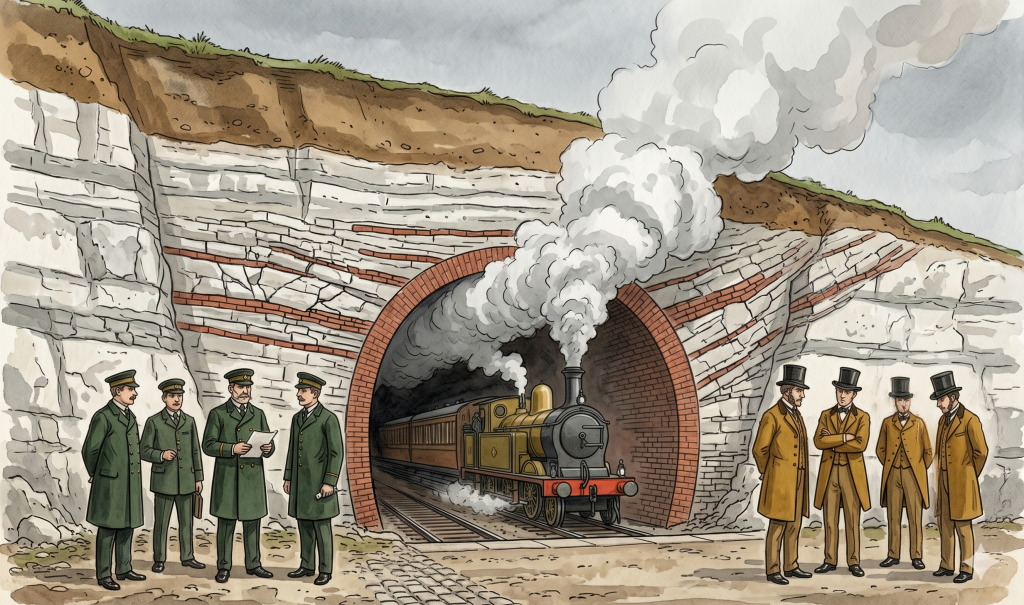
Having two stations in a town is only useful if passengers can get between them. The two companies had no particular desire to help each other’s customers. However, Parliament had other ideas.
The SER was eyeing a new line to Eastbourne, which would have cut directly into LBSCR territory. Rather than fight that battle in the courts, the LBSCR made a calculation: build a connecting spur between the two stations, give the SER access to the Eastbourne route it wanted, and get them to back off.
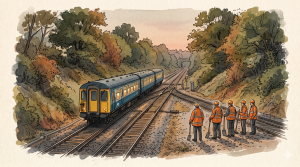
The result was the Grove Tunnel — a short, single-track connection bored through the hillside between the two stations. It opened for goods traffic in 1866 and for passengers on 1 February 1876. For the first time, a through service was possible between the SER’s Hastings line and the LBSCR’s routes to Lewes and the South Coast.
It was, in the most literal sense, a peace tunnel. Dug under Grove Hill to connect two companies that still, fundamentally, did not trust each other.
Through it ran trains from Charing Cross to Eastbourne — via a negotiated compromise buried twenty feet underground.
Rivals on Paper, Neighbours in Practice
The peculiar thing about the Tunbridge Wells railway war is how theatrical it was. The two stations sat less than half a mile apart. Passengers transferring between them could walk the distance in ten minutes. However, for most of the Victorian era, the official position of both companies was that no such transfer was necessary, because neither route needed the other.
In practice, the town required both. Tunbridge Wells West served Brighton, the South Coast, and the Wealden villages. Tunbridge Wells Central served London, Hastings, and Kent. Together, they gave the town remarkable connectivity. Apart — which they mostly insisted on being — they were a logistical inconvenience for anyone whose journey required both.
Meanwhile, the town’s population was growing rapidly. Tunbridge Wells was becoming a prosperous commuter destination. More trains, more routes, and more passengers meant that the rivalry was increasingly expensive for both sides.
The Long Road to the Grouping
By the turn of the twentieth century, the SER and LBSCR had each worn themselves down. The SER had already merged its operations — though not its legal identity — with the London, Chatham and Dover Railway in 1899, creating the South Eastern and Chatham Railway. The LBSCR carried on independently, but the Victorian era of aggressive expansion was essentially over.
For Tunbridge Wells, this meant a period of relative stability. Two stations, one tunnel, and a grudging peace. Trains ran through Grove Tunnel with increasing regularity. At its peak, Tunbridge Wells West handled more than a hundred trains per day — a figure that would have seemed extraordinary to the two sets of company directors who had spent decades trying to exclude each other from the town.
The formal end of the war came not with any local drama, but with an Act of Parliament. The Railways Act 1921 reorganised Britain’s railways into four large groups. On 1 January 1923, both the SE&CR and the LBSCR ceased to exist as independent entities. Both were absorbed into the new Southern Railway.
After nearly eighty years, the two stations in Tunbridge Wells finally belonged to the same company.
The Southern Railway promptly renamed Tunbridge Wells to Tunbridge Wells Central — a small, tidy act of administrative clarity that would have seemed impossibly utopian to every stationmaster, general manager, and Parliamentary draftsman who had come before.
What They Left Behind
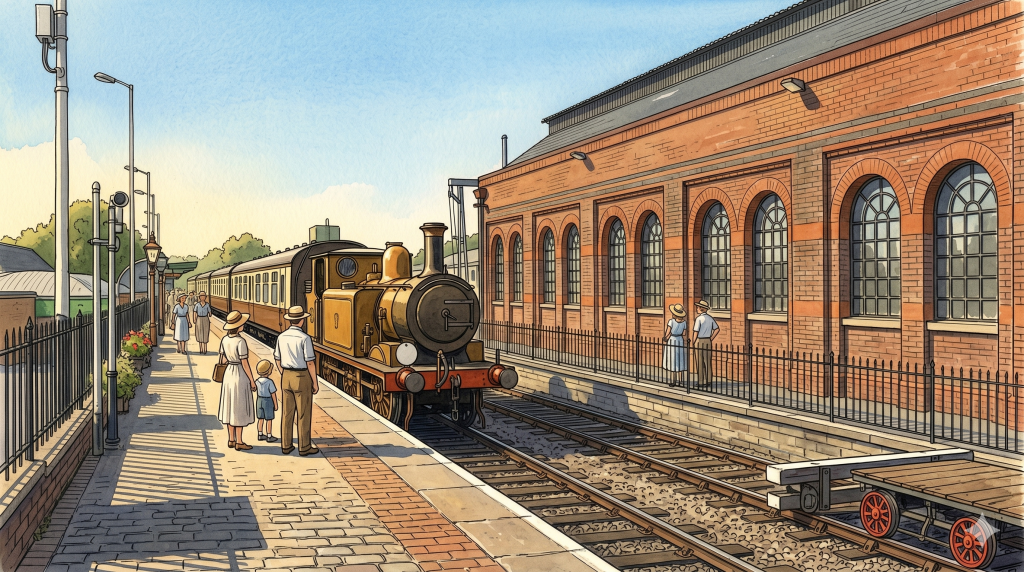
The 1923 grouping ended the war. It did not end the consequences. Two stations, two sets of infrastructure, and one tunnel bored through a hill in a gesture of forced cooperation — these were not things that could simply be unified by a renaming exercise.
The Southern Railway now owned both lines, both stations, and Grove Tunnel. What it did with them over the following decades — and what British Railways did after nationalisation in 1948 — would determine the shape of Tunbridge Wells for the rest of the twentieth century.
That story involves a German bomb, a pressure group called TWERPS, a supermarket, and a toilet block with a removal clause.
🚶 Walk the route yourself: Footsteps Tour 3 — The Railway War follows the stations, the tunnel, and the contested infrastructure that shaped this feud. Self-guided, free to download.
The Building Files is a WalkTW series exploring the hidden histories of Royal Tunbridge Wells’s most interesting addresses.
Also in this series: The Old West Station — Building File Issue 4, which covers the station’s history after the railway war ended.
Also in this series · Railway War