Bombs, Bureaucrats, and a Toilet Block with a Removal Clause
Building Files, Issue 3 (continued)
Walk it: Footsteps Tour 3 — The Railway War follows the stations, the tunnel, and the Victorian rivalry that refused to die. Self-guided, free to download.
Watch it: The Tunnel That Links Nothing, our 4-minute film about the two stations and the tunnel between them.
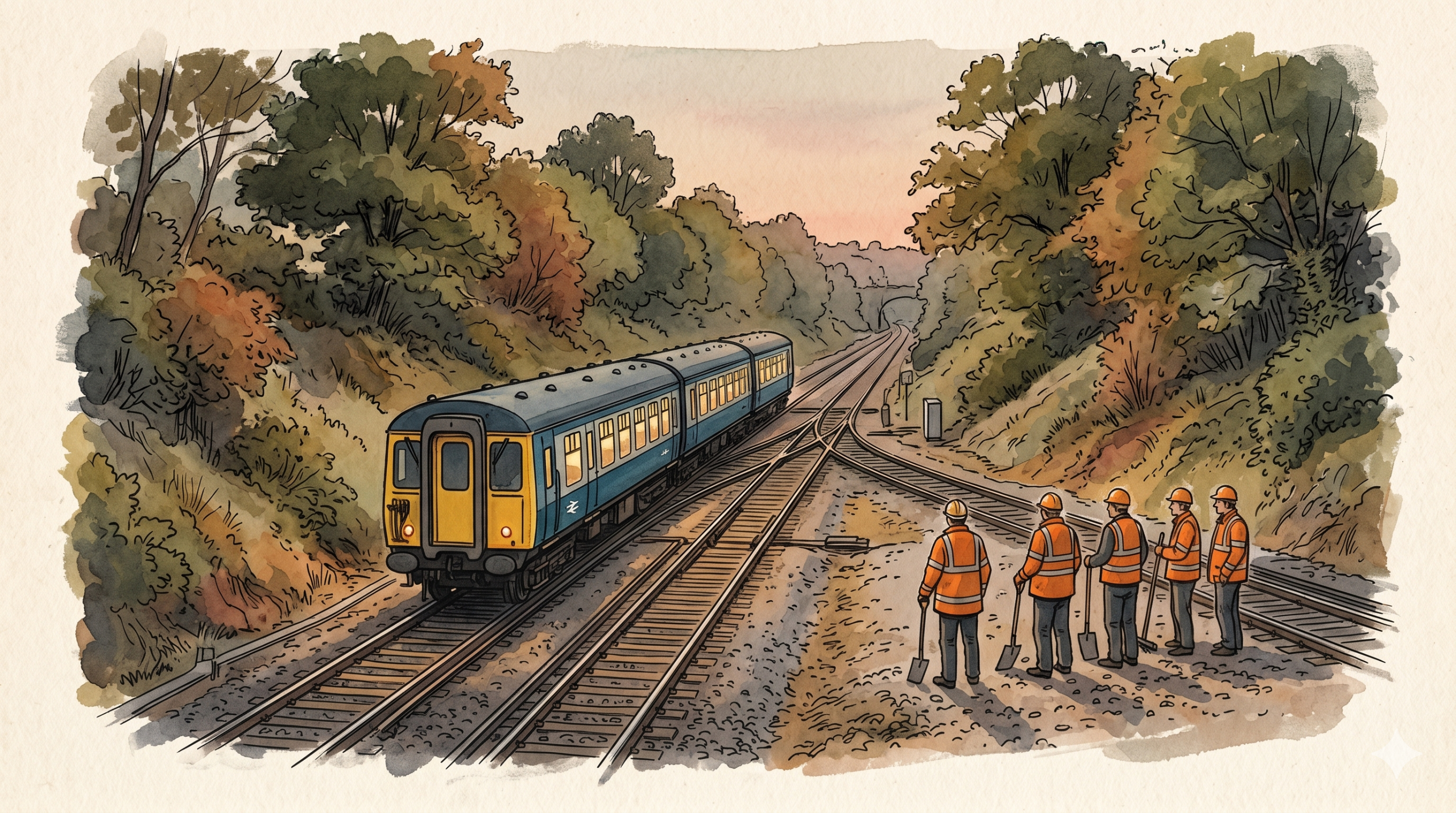
When the Southern Railway took ownership of both Tunbridge Wells stations in 1923, it inherited a peace that nobody had quite asked for. Two stations, one tunnel, decades of simmering antagonism — all of it now tidied away into a single company balance sheet. The railway war was over. What followed was something quieter, and in some ways stranger: a slow, incremental dismantling of everything the LBSCR had built.
It took sixty years. It involved a German bomb, a supermarket, and a toilet block whose planning permission came with the most unusual clause in Tunbridge Wells history.
20 November 1940
The Luftwaffe was not, as a rule, targeting railway engine sheds in medium-sized Kent spa towns. However, on 20 November 1940, a bomb found the locomotive shed at Tunbridge Wells West anyway.
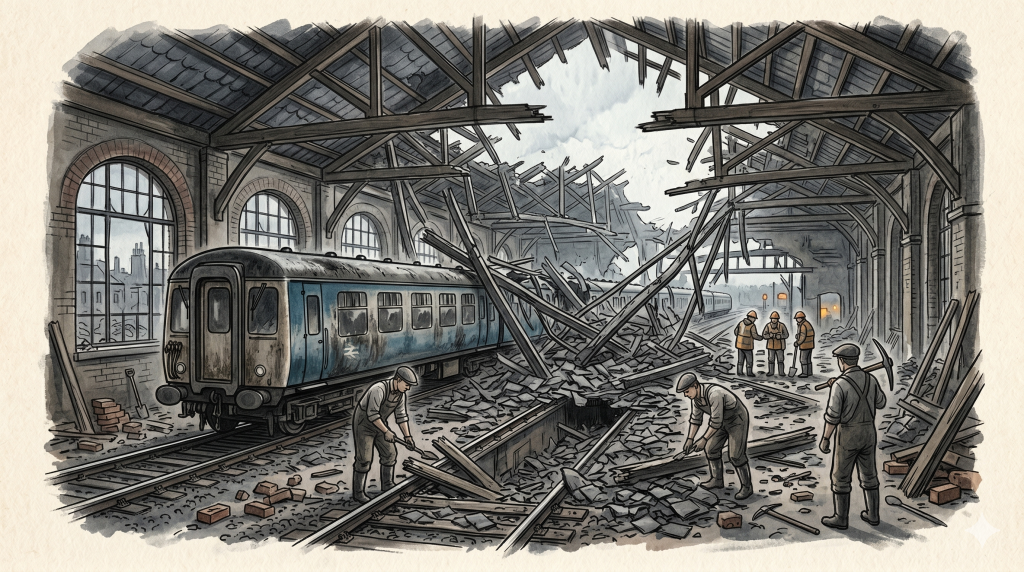
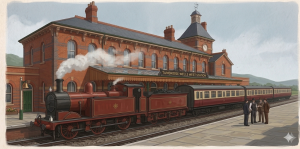
The damage was significant. The original Victorian slate roof — laid in 1891 when the LBSCR expanded the depot to four roads — was destroyed. British Railways replaced it with corrugated asbestos sheeting. This was, in the fullest sense, a wartime solution: functional, immediate, and utterly without grace.
The great red-brick engine shed survived. It still stands today, its arched windows intact, its Victorian bones unshaken. The asbestos roof is long gone. However, on the night of November 20th 1940, nobody was thinking about the long term. They were thinking about getting the trains running again.
The Slow Decline
The post-war decades were not kind to Tunbridge Wells West. Meanwhile, Tunbridge Wells Central — the SER’s station, the one that had won the first round of the rivalry in 1845 — was electrified in 1986 and went from strength to strength.
West was a different story. It served the Wealden villages, the Groombridge valleys, and the old LBSCR lines through the High Weald. These were lightly used routes, operating on a shoestring. By the early 1980s, the track needed relaying, the signalling needed replacing, and British Railways had run the numbers.
The conclusion was blunt: keeping the line from Eridge to Grove Junction open would cost £175,000 a year more than it earned. Furthermore, the planned electrification of the Tonbridge to Hastings line required the removal of Grove Junction — the very connection that had been bored through the hillside as the price of peace between two Victorian rivals, open to goods trains from 1866 and to passengers from 1876. Therefore, the junction would go. And without it, Tunbridge Wells West was an island.
British Railways announced closure on 16 May 1983. Local objections were strong enough to delay it. In February 1985, the Secretary of State for Transport confirmed the decision. The last passenger service ran on 6 July 1985.
After 119 years, the LBSCR’s line into Tunbridge Wells was closed to passengers. Empty trains still used the line until 10 August 1985, and one enthusiast survey records the rails still in place in 1986.
The Group That Named Itself TWERPS
About ten weeks later, on 13 September 1985, a meeting was held in Groombridge village hall. The mood, one imagines, was determined rather than cheerful.
The people in that room formed a charitable society to do something that British Railways had just declared economically indefensible: reopen the line. They named themselves the Tunbridge Wells and Eridge Railway Preservation Society. The acronym, as the Spa Valley Railway’s own history notes, was chosen by people who were “blissfully unaware of the fact that anyone would use such an acronym to poke fun at them.”
TWERPS it was. And TWERPS they remained.
The Sainsbury’s Compromise
The next few years were hard. Vegetation reclaimed the trackbed. The station buildings sat derelict. Then, in the late 1980s, the situation became dramatically more complicated.
Tunbridge Wells Borough Council granted planning permission for a large Sainsbury’s supermarket complex on the site of the former goods yard at Tunbridge Wells West. The goods shed was demolished. The signal boxes vanished. The former stabling sidings disappeared under concrete and car parking. A Homebase arrived next door.
However — and this is where the story acquires its most distinctly Tunbridge Wells character — the planning permission came with conditions.
The 1891 locomotive shed was a listed building. So was the station itself. They could not be touched. Furthermore, the council is reported to have secured an agreement from Sainsbury’s: a corridor would be preserved alongside Linden Park Road, sufficient for a reinstated railway line to pass through the site. And if, at any future point, the railway returned and any Sainsbury’s building stood in its way, the company would remove it at their own cost.
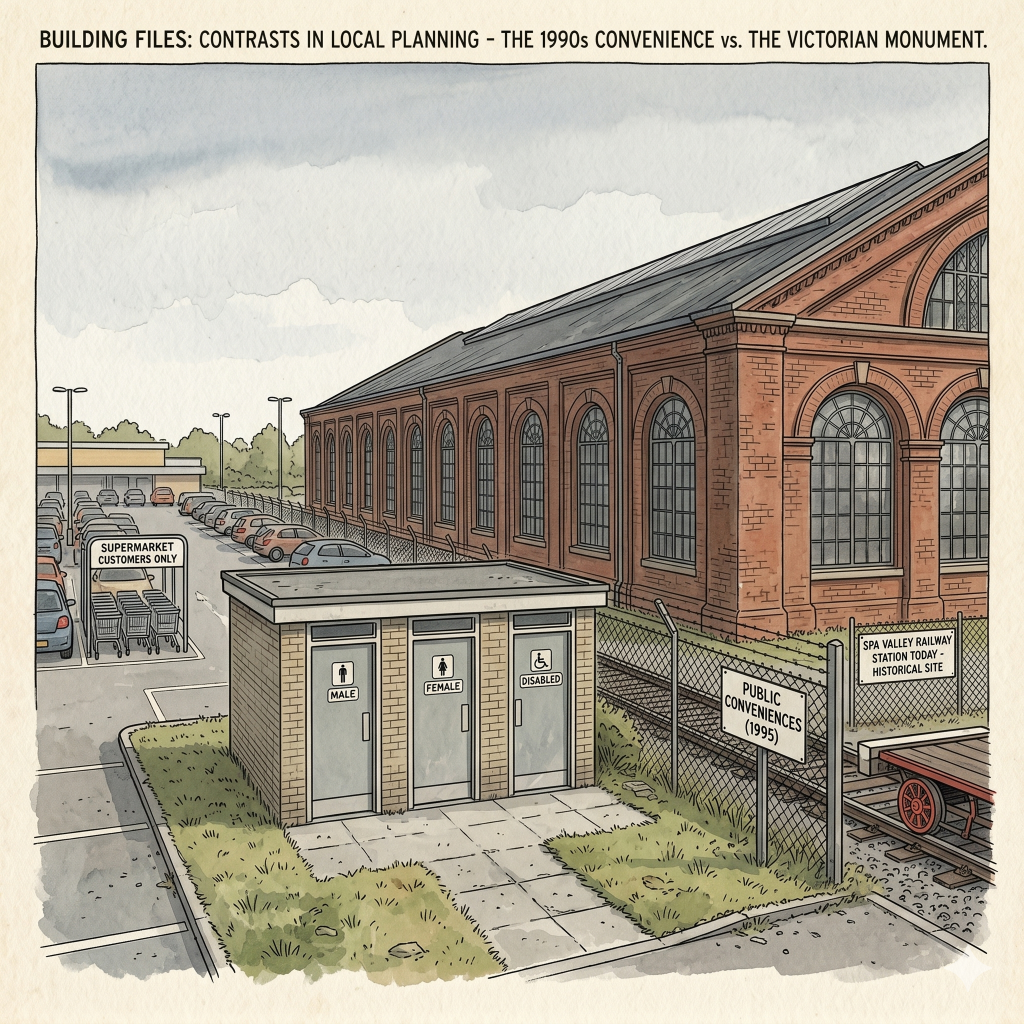
In the mid-1990s, a toilet block was built on this corridor. It stood in the path of the railway. It could, under the terms of that reported agreement, be demolished.
A toilet block with a legally binding removal clause. In Tunbridge Wells. Where else.
The Return
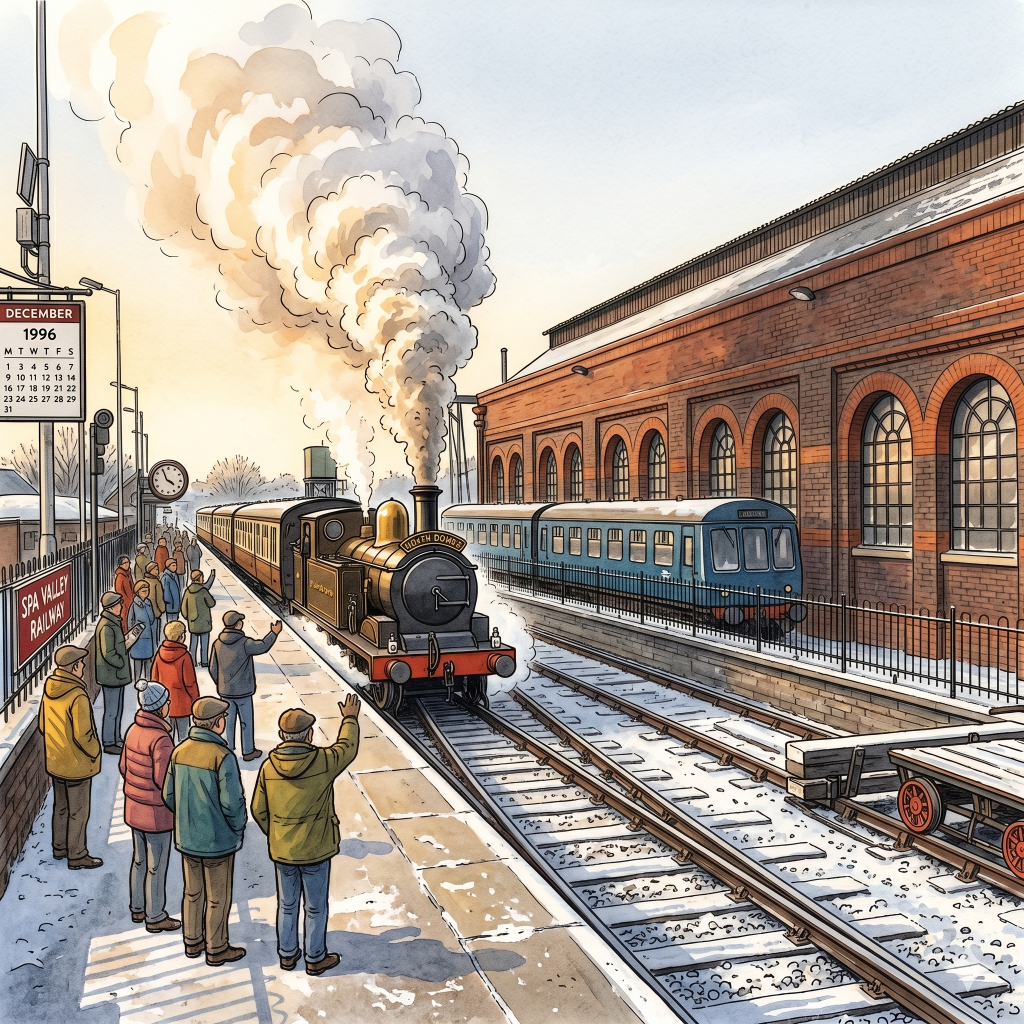
In 1994, with a loan from Tunbridge Wells Borough Council, TWERPS acquired the line. In December 1996 — eleven years after closure — the first heritage train ran from the restored station at Tunbridge Wells West toward Groombridge, hauled by a steam locomotive called North Downs. Services reached Groombridge in August 1997, Birchden Junction in 2005, and Eridge in March 2011.
The spur to Grove Junction — the peace tunnel itself, the single track bored through the hill, open to goods from 1866 and to passengers from 1876 — was sold for £1 in 2001 to Railway Paths Ltd, a subsidiary of Sustrans. It is protected by covenant: the land can only ever be used for railway purposes. It is safeguarded in the East Sussex Structure Plan. It sits there now, closed and fenced off, with no date set for any change.
The great engine shed has been restored. The platform is busy on summer weekends. Steam trains run through the High Weald to Eridge, through Groombridge and High Rocks, through the same countryside the LBSCR carved its route through in 1866.
What Remains
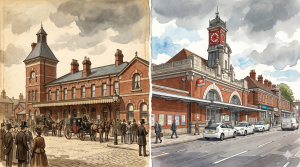
Tunbridge Wells Central — SER territory, always, is a busy commuter station. Southeastern trains to London Charing Cross, London Bridge, and Hastings. The clock tower that appears in the Victorian photographs still stands above the forecourt. The taxis queue where the horse-drawn carriages once waited.
Tunbridge Wells West is something different: a working museum, a community project, and an argument that some things are worth keeping not because they are profitable but because they are loved.
The two stations began as enemies. They ended as a pair of complementary survivors — one thriving on the main line, one thriving on nostalgia, volunteer labour, and the particular stubbornness of people who name their campaign group TWERPS and mean it.
The railway war ended in 1923. The railway, however, did not.
Go Find It Today
- The Spot: The Spa Valley Railway at Tunbridge Wells West, Linden Park Road, with its restored 1891 engine shed.
- The Route: From the town centre, walk to Linden Park Road. The station, shed and platform sit together beside the supermarket car park.
- The View or Challenge: Look for the strip of land beside Linden Park Road that was kept clear for the railway, and ask yourself how the toilet block fits in.
Fact or Fiction? The WalkTW Archive
- Did a bomb hit the West engine shed in 1940? Yes, on 20 November 1940, according to the sources behind this post.
- Was the last passenger train on 6 July 1985? That is the date in this post, though the neighbouring Old West Station post gives 1985 as the closure year.
- Did the founders really call themselves TWERPS? Yes. The Spa Valley Railway’s own history records the acronym.
- Is there a legal clause allowing a toilet block to be removed? Reported in this post as part of an agreement over the supermarket site. We have not seen the document itself. Other accounts describe an undertaking Sainsbury’s gave in 1995 to the local MP, Patrick Mayhew, to demolish the toilet block if it blocked the railway.
The Building Files is a WalkTW series exploring the hidden histories of Royal Tunbridge Wells’s most interesting addresses. Grove Tunnel is still there beneath Grove Hill, closed to trains and fenced off. It is not open to the public, so please do not try to enter it.
Enjoyed this?