The Pantiles are named after a pavement that no longer exists, laid because a small boy fell over. That is the documented story. The local version adds corrupt lords, a royal boycott and a bag of buried gold, and we will get to that too.
The Day the Duke Fell Over
In 1698, Princess Anne visited the Wells with her son, William, Duke of Gloucester. He was her only surviving child. Her earlier pregnancies had ended in miscarriage, stillbirth or infant death, so she watched him closely.
The boy was eight or nine years old when he slipped and fell while playing on the unpaved Upper Walk. Anne gave £100 to have it paved. That was roughly £10,500 in today’s money.
The money did not buy a pavement at once. According to the Times of Tunbridge Wells and Tunbridge Wells Museum, Anne returned the next year to find the work undone, and she was outraged. The inhabitants then laid the tiles, and sources date the paving to 1699 or 1700.
What They Actually Laid
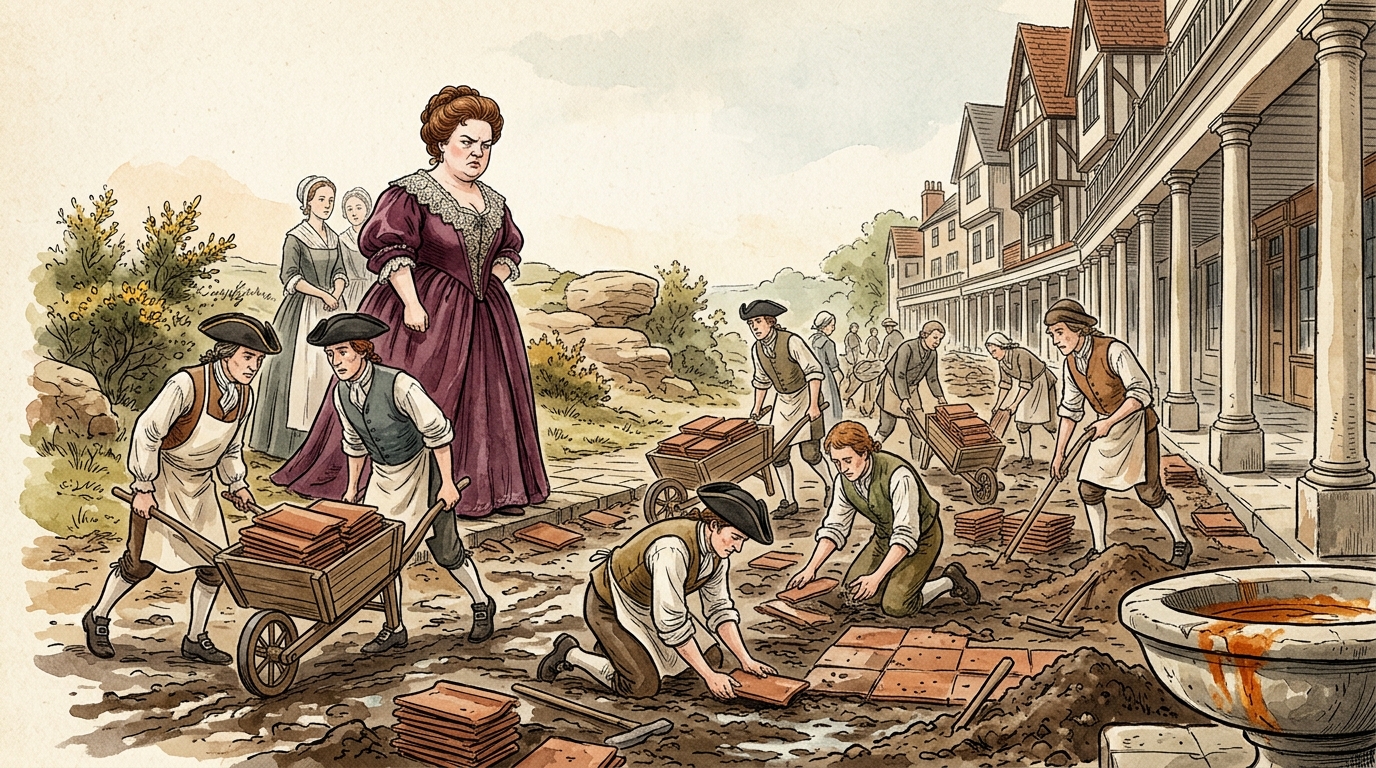
The tiles were not the curved roof tiles you might picture. They were flat, one-inch-thick squares made from heavy Wealden clay. The usual explanation is that workmen shaped each one in a wooden pan before firing it, which gave us the name “pan-tiles”.
The walkway took the name and kept it. In 1792 or 1793, local citizens raised money to replace the clay with harder-wearing flagstones. Even so, the name stayed.
A few tiles are said to have survived. A feature in the Times of Tunbridge Wells says some can be seen at the foot of the steps in Bath Square and at Tunbridge Wells Museum. Another local source says none remain, so it is worth going to look.
The Boy Who Never Became King
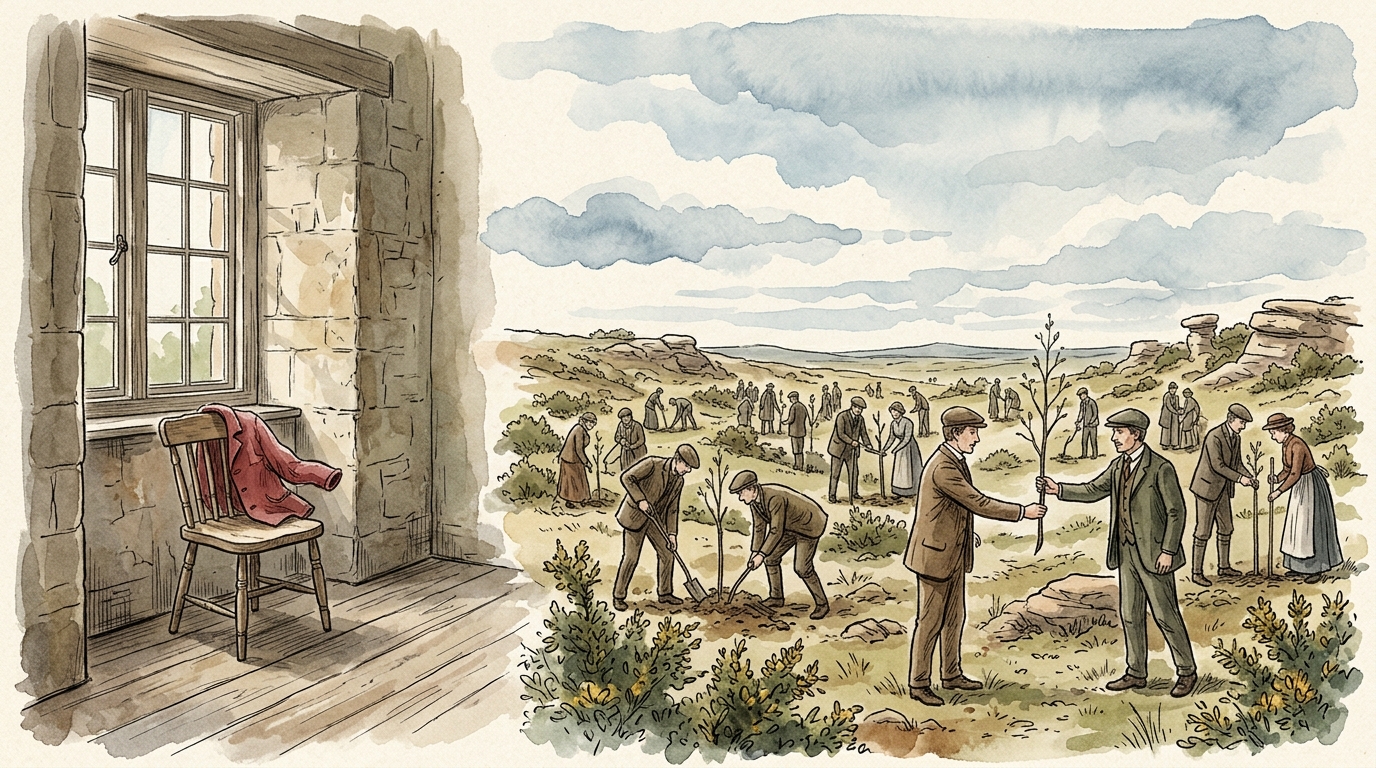
William never grew up to wear a crown. He died in July 1700, aged eleven. His death left Anne without a surviving child, and Parliament passed the Act of Settlement in 1701 to secure the succession. As a result, the Pantiles began as the response of a worried mother to one small accident.
The empty chair in the picture above says the rest. The trees beside it point to what came next. When Anne became queen, the town planted a grove on the Common to win her round, and we come to that grove below.
The Scandal That May Never Have Happened
The local retelling goes further. It says the town managers pocketed Anne’s gold and spent the winter in comfort while the Walk stayed a bog. When Anne found it unpaved, she swept out and boycotted the town. In a panic, the story goes, the town bought the cheapest tiles it could find and laid them in a rush.
The unpaved Walk and Anne’s anger are documented. The pocketed gold, the sacked managers and the boycott are not, and we have found no source for them. The same Times feature does add one real detail. Around the time Anne became queen, the town planted a grove of birch trees on the Common, the Queen’s Grove, to appease her. It did not win her forgiveness.
Fact or Fiction? The WalkTW Archive
- Did the Duke of Gloucester really slip on the Upper Walk? Yes, according to several sources. Anne gave £100 to have it paved.
- Was Anne angry when she came back? Yes. The Times of Tunbridge Wells and Tunbridge Wells Museum both say she found the paving undone and was outraged.
- Were the Pantiles roof tiles? No. The paving tiles were flat, one-inch squares of Wealden clay, not the curved roof kind.
- Did corrupt managers pocket Anne’s money? Unproven. The delay is documented, but we found no source for the theft, the sackings or the boycott.
- Did the prince fall on his left heel, so visitors stepped on with the right foot first? Local lore only. The left-heel detail appears in our Ten Tunbridge Wells Myths post.
- Is Anne’s gold buried beneath the Walk? Rumour only. We found no record of it.
- Do any of the tiles survive? Reportedly, at the Bath Square steps and in the museum. One source says none remain.
Go Find It Today
- The Spot: The Upper Walk, The Pantiles, Royal Tunbridge Wells.
- The Route: Start at the Chalybeate Spring at the north-eastern end of the Pantiles and walk the length of the Upper Walk.
- The View or Challenge: Look down at the paving. The clay tiles are long gone. Then walk to the foot of the steps in Bath Square and see whether you can spot the old tiles reported there.
- Walk it: The Upper Walk is Stop 3 of Footsteps Tour 1: The Scandalous Mile, a 35-minute self-guided walk.
Watch it: See and Be Seen: Climbing the Social Ladder in Georgian Tunbridge Wells, a four-minute WalkTW film, follows a Georgian newcomer from the subscription books to the ballroom, four steps up on the Upper Walk.
Watch next: Behind Georgian Curtains: The Pantiles Scandal, a four-minute WalkTW film, follows a day on the Walks in the visitors’ own words, from the morning glass at the spring to the balls, the gambling and a secret marriage.
Princess Anne paid for the paving but never owned the ground beneath it; who did is the first piece of The Tunbridge Wells Jigsaw.
This is the third story in our opening trilogy, after The Theatre Queen of The Pantiles and The Great Theatre Wars.
Related reading: The Last Dipper, Tunbridge Ware and Building Files: The Corn Exchange.
Enjoyed this?