The Man Who Gave Tunbridge Wells Its Best Park — Then Left
Hidden Geniuses | The Chronicles
This edition shines a spotlight on Henry Reed, whose story is one of remarkable insight and creativity.
Most people who walk through Dunorlan Park on a Sunday morning are thinking about the lake, the fountain, the ducks, or what to have for lunch. Very few are thinking about a boy from Doncaster who walked 120 miles across Tasmania at the age of twenty, built a whaling empire, preached the first recorded sermon on the future site of Melbourne, and eventually found his way to a hillside on the edge of Tunbridge Wells — where he spent a decade building the most magnificent private estate in the town, was promptly criticised for it by his fellow Christians, and left.
His name was Henry Reed. He never came back. The park is still here.
Doncaster to Van Diemen’s Land
Henry Reed was born on 28 December 1806, the youngest child of a Doncaster postmaster who died when Reed was six. At thirteen, he was apprenticed to a merchant in Hull. At twenty, he boarded the Tiger at Gravesend as a steerage passenger — the cheapest, least comfortable way to travel — and sailed for Van Diemen’s Land, the island colony that would later become Tasmania.
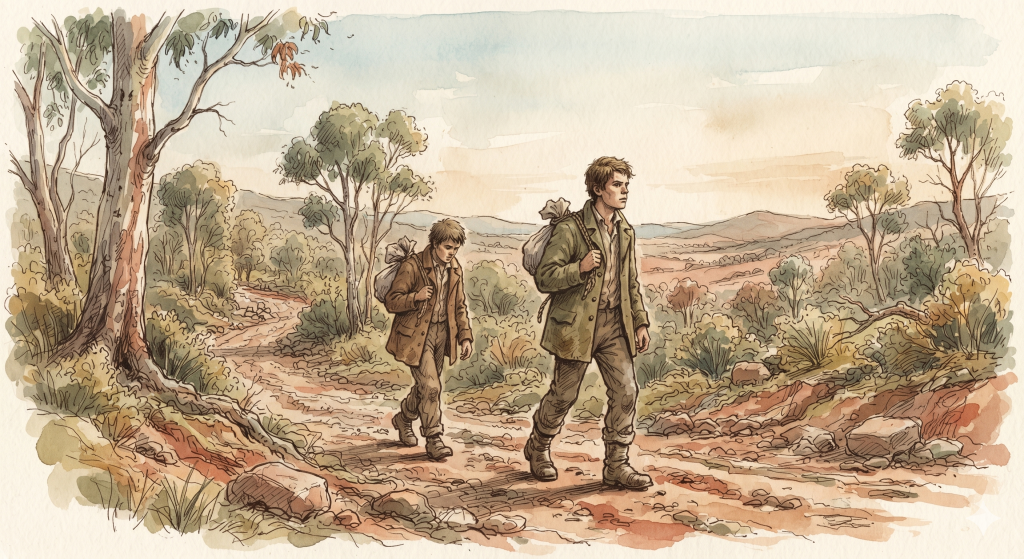
He arrived at Hobart in April 1827 after a long, hard voyage. His destination was Launceston, 120 miles to the north. No conveyance was available. So Reed and a shipmate walked.
Within a year of his arrival, the British colonial government granted him 640 acres of land at the Nile Rivulet. He was twenty-one years old. Other land acquisitions followed quickly. He established himself as a general merchant, then began buying ships.
The Making of a Fortune
The ships Reed acquired were deployed on whaling, sealing, and general trading voyages from Launceston to Hobart, Sydney, New Zealand, and London. Five of his vessels completed eighteen whaling voyages between 1834 and 1855. One of his earliest ships, simply named The Henry, gave its name to Point Henry near Geelong, Victoria — a geographical footprint that persists on Australian maps today.
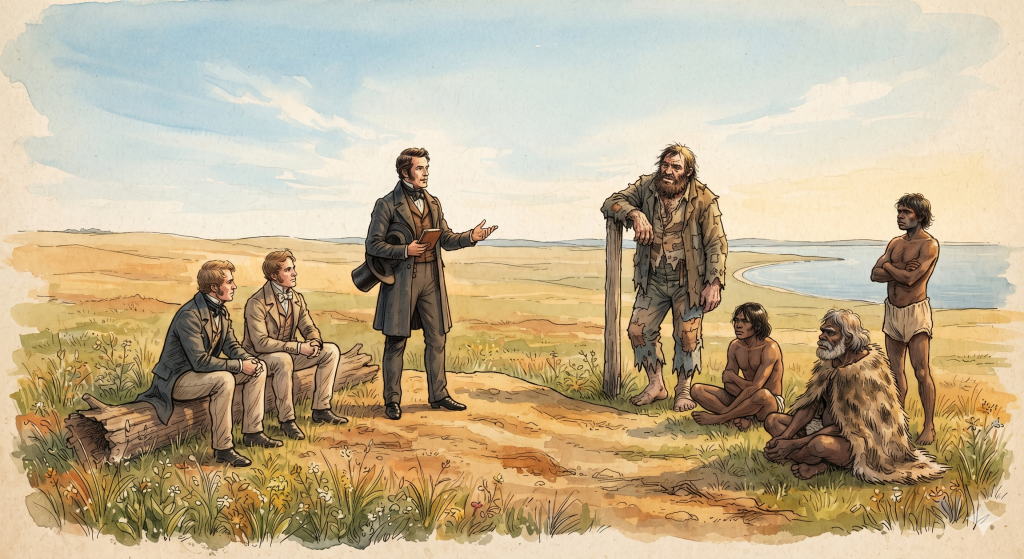
Among his associates in this period were some of the most consequential figures in early Australian history. Reed witnessed the marriage of John Batman in Launceston — Batman, the man who negotiated the original land treaty that led to the founding of Melbourne. He later lent Batman £3,000. In 1836, Reed was present at Port Phillip when a small group gathered on the land that would become the centre of one of the great cities of the southern hemisphere. He preached what is recorded as the first sermon on the future site of Melbourne. His congregation included John Batman, his brother Henry, William Buckley — the escaped convict who had lived among Aboriginal people for thirty-two years — and three Sydney Aboriginals.
Furthermore, Reed’s faith was not confined to open-air preaching. In November 1837, he arranged to be locked overnight in the cells of Launceston prison with two men condemned to be executed the following morning. He wanted to be with them in their final hours. The two men were hanged at dawn. Reed was released and went about his day.
The Tunbridge Wells Years
Reed sailed for England in December 1847, having spent twenty years building one of the most significant commercial operations in northern Tasmania. He was forty-one years old, wealthy, restless, and increasingly drawn toward evangelical work. For the next twenty-six years, he lived in England while his Tasmanian affairs continued to flourish under careful management.
In the 1850s, he purchased a farmhouse and lands on the eastern edge of Tunbridge Wells. He demolished the farmhouse. In its place, he commissioned an imposing residence — built in the Italian style from Normandy stone, completed in 1862 — which he named Dunorlan. Over the entrance, his family crest displayed a sheaf of wheat alongside the family motto: nothing without the cross.
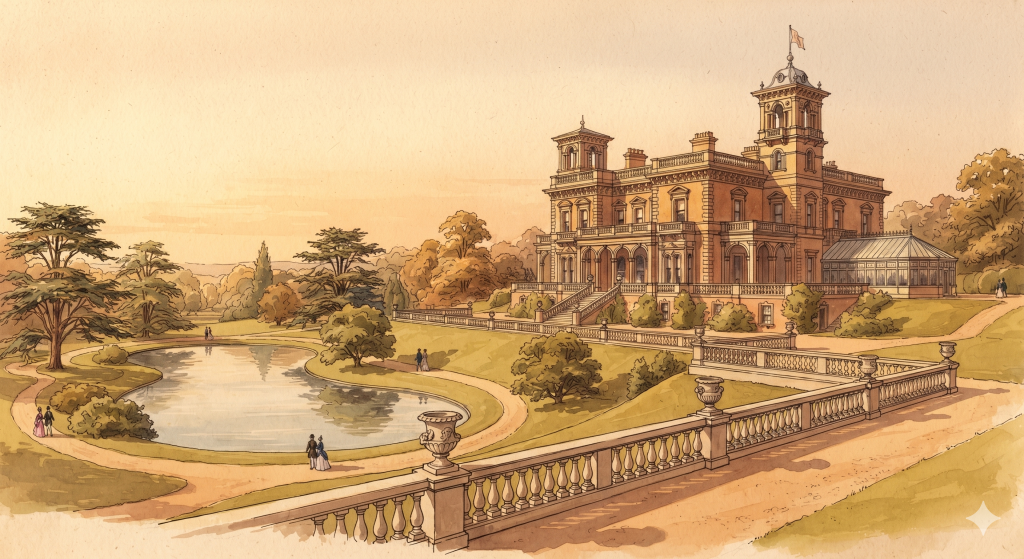
However, from the moment the foundation stones went down, the project frustrated him. His architect refused to alter the plans midway through construction, on the grounds that his professional reputation was at stake. Reed later commissioned a new wing himself. When the house was finished, he remained dissatisfied. His own assessment of the completed building was that he was not at all satisfied.
One of his servants was more specific. The house was, according to this account, “an architectural monstrosity which represented everything one might expect from a man with too much money and too little taste.”
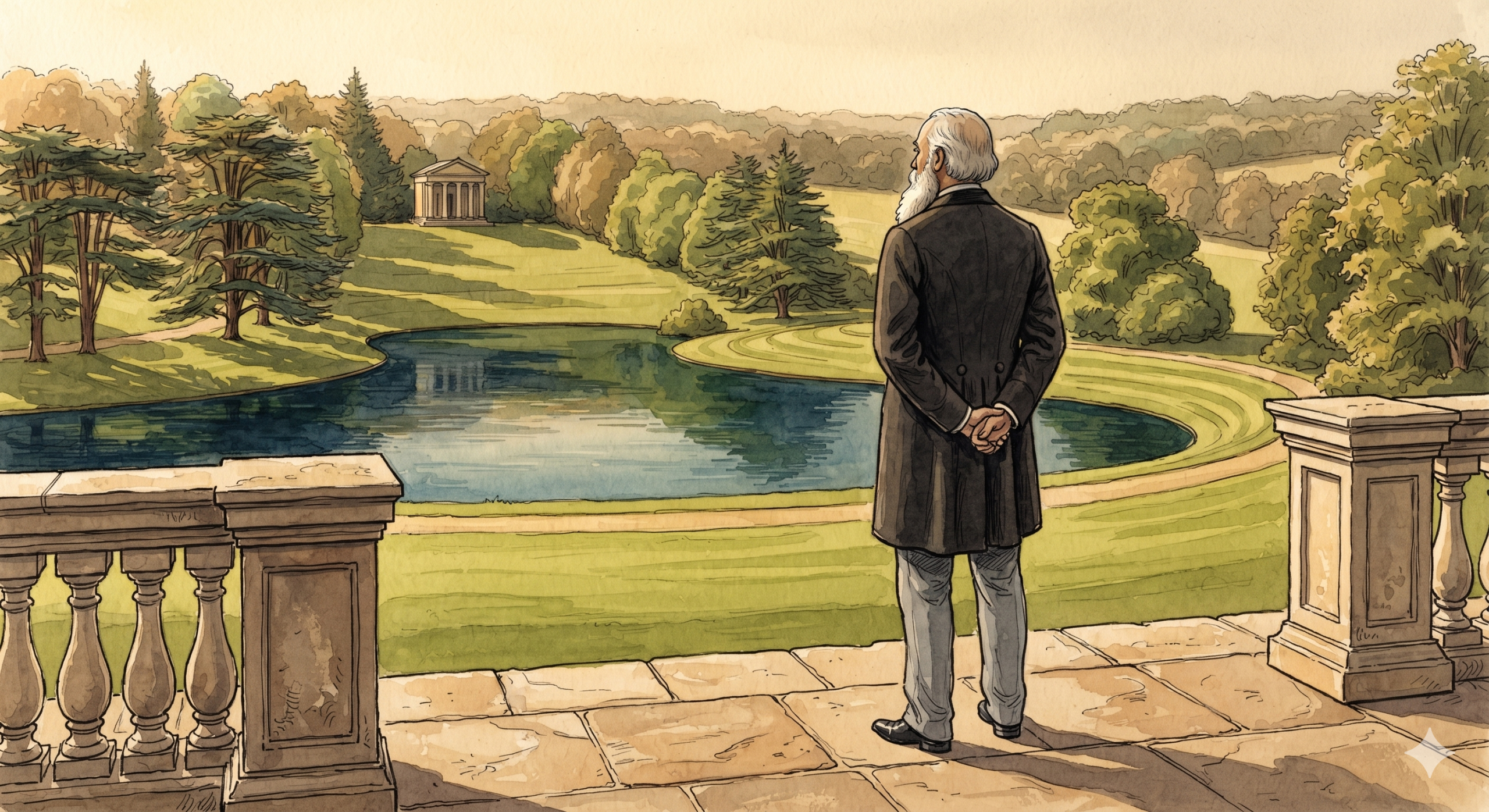
The grounds, by contrast, were widely admired. Reed engaged Robert Marnock, one of the foremost landscape designers of the Victorian era, to lay out the estate. Marnock’s philosophy of “harmony with nature” shaped a design that included a six-acre ornamental lake fed by the River Teise, a terraced cascade water garden, a Grecian temple at the top of the main avenue, and a dolphin fountain constructed in Pulhamite artificial stone by the Pulham family — a firm so celebrated that the upper section of the Dunorlan fountain was exhibited at the Great Exhibition of 1862. Reed also used the grounds for his evangelical pursuits, inviting local ministers to hold open-air services under the beech trees and sending over 500 invitations to local residents to attend.
Why He Left
Reed moved out of Dunorlan in 1870. The reason his widow gave in her memoir was straightforward: fellow Christians had found fault with him for the scale and grandeur of his house. A man committed to evangelical poverty, they implied, had no business living in a Normandy stone Italian mansion with a fountain exhibited at the Great Exhibition.
Whether Reed agreed with this judgement or simply found the criticism wearying, he left for Harrogate and put Dunorlan up for sale. Two auction attempts — in 1871 and 1872 — failed to find a buyer. Eventually, the estate was sold to Brenton Halliburton Collins, a banker from Halifax, Nova Scotia. On Collins’s death, the estate passed to his son, Carteret Fitzgerald Collins.
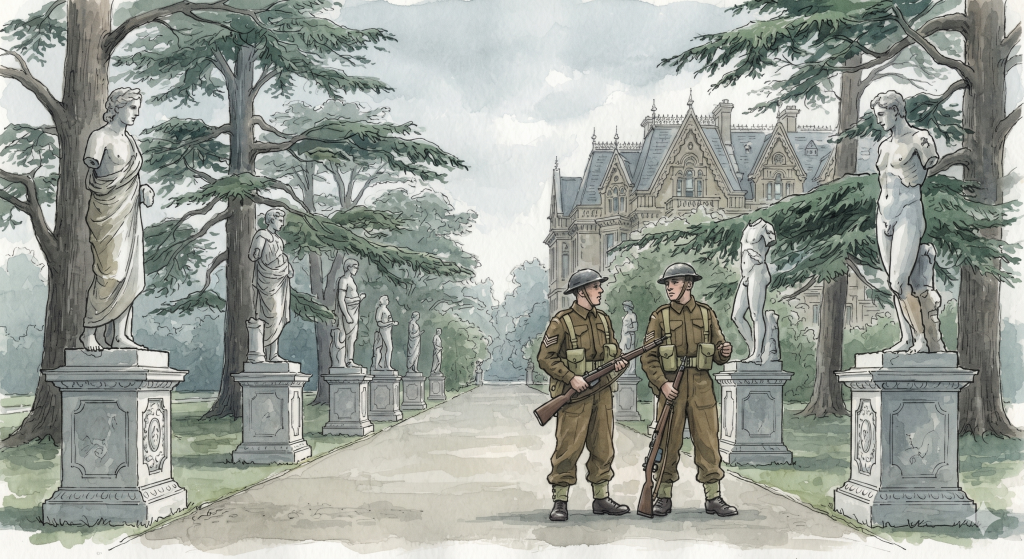
Carteret Collins died in 1941. The house was requisitioned for the war effort on 15 May of that year. Troops were billeted there and, according to the park’s records, used the statues lining the avenue from the Grecian temple to the fountain for target practice. The War Damage Commission took up residence in 1943. A fire broke out in the house in 1946 while the Commission was still in occupation. When the Commission surrendered the property back to the Council on 31 July 1957, the mansion was beyond saving. It was sold for development in September 1957 and demolished the following year. Eight houses now stand on the site.
The Council had purchased the estate for £42,000 during the war years. By 1947, thirty acres were open to the public on a temporary basis. The temporary arrangement quickly became permanent. Dunorlan Park was born.
Reed After Tunbridge Wells
Henry Reed, meanwhile, had not stopped moving. In April 1873, while preaching at a mission in Harrogate, he felt — as his widow described it — a call to return to Tasmania. He sailed with his family and attendants in the Sobraon and arrived at Launceston in December. He renovated Mount Pleasant into the finest house in northern Tasmania, continued his philanthropic work, helped establish the New Guinea Mission in 1875, and funded a steam launch for it, which was named, in his honour, Henry Reed. A bay in the New Britain archipelago was subsequently named Henry Reed Bay by the missionary George Brown. It retains that name today.
Reed died at Mount Pleasant, Tasmania, on 10 October 1880. He was seventy-three.
His grandson, Hudson Fysh, went on to co-found Qantas Airways.
What Remains
Walk through Dunorlan Park today, and most of what Marnock designed is still there. The lake. The cascade. The Grecian temple at the top of the avenue. The dolphin fountain was restored after the wartime soldiers had finished with it. The great deodar cedar trees that Marnock planted along the original drive are still standing at the Pembury Road entrance.
The house is gone. Eight suburban houses occupy the footprint where the Normandy stone mansion stood. The terrace that once led to the entrance is still there — now paved in York stone — but there is nothing at its end.
The Dancing Girl — a Victorian bronze statue gifted to the park in 1951, sculpted by William Theed, valued at £50,000 — was stolen from the Grecian temple on the night of 23 October 2006. Whoever took it drove up through the Pembury Road entrance, removed the statue from its plinth, and vanished. Its whereabouts remain unknown.
Henry Reed spent approximately a decade in Tunbridge Wells. He built something extraordinary, was criticised for it, and left. The park he commissioned outlasted the mansion, outlasted the criticism, and outlasted everyone who ever had an opinion about it.
Nothing without the cross. The motto is gone from the entrance. The park is still there.
🚶 Walk the park he built: Footsteps Tour 4 — Dunorlan Park is a self-guided trail through Reed’s Victorian landscape — the cascade, the fountain, the cedars, and the stories you won’t find on any plaque. Free to download.