Category: Hidden Geniuses

Dedicate this to the low-key revolutionaries, scientists, and eccentrics who changed the world from a desk or living room in Kent (e.g., Thomas Bayes, Eliza Phillips, Dr. Golding Bird).
  • The Writers Who Watched Us — Part 4: The Man They Laughed At 🎭✒️

    The Writers Who Watched Us — Part 4: The Man They Laughed At 🎭✒️

    There is a grave in Poets’ Corner, Westminster Abbey, that almost nobody visits.

    It lies in the most literary postcode on earth — between Chaucer and Shakespeare and Dickens and Hardy, in the stone-flagged southern transept where Britain buries its writers. It belongs to playwright and novelist Richard Cumberland. He is best known as the Richard Cumberland playwright associated with Tunbridge Well. In addition, it sits next to the grave of actor John Henderson, near the grave of his closest friend Dr Samuel Johnson.

    He died in Tunbridge Wells.

    Not visited here, not merely connected here — he died here, in the house on this town’s streets that a subsequent owner named Cumberland House in his honour. He had arrived in 1785, when the town was in visible decline after Beau Nash’s era. His presence as a celebrity resident genuinely helped attract visitors back.

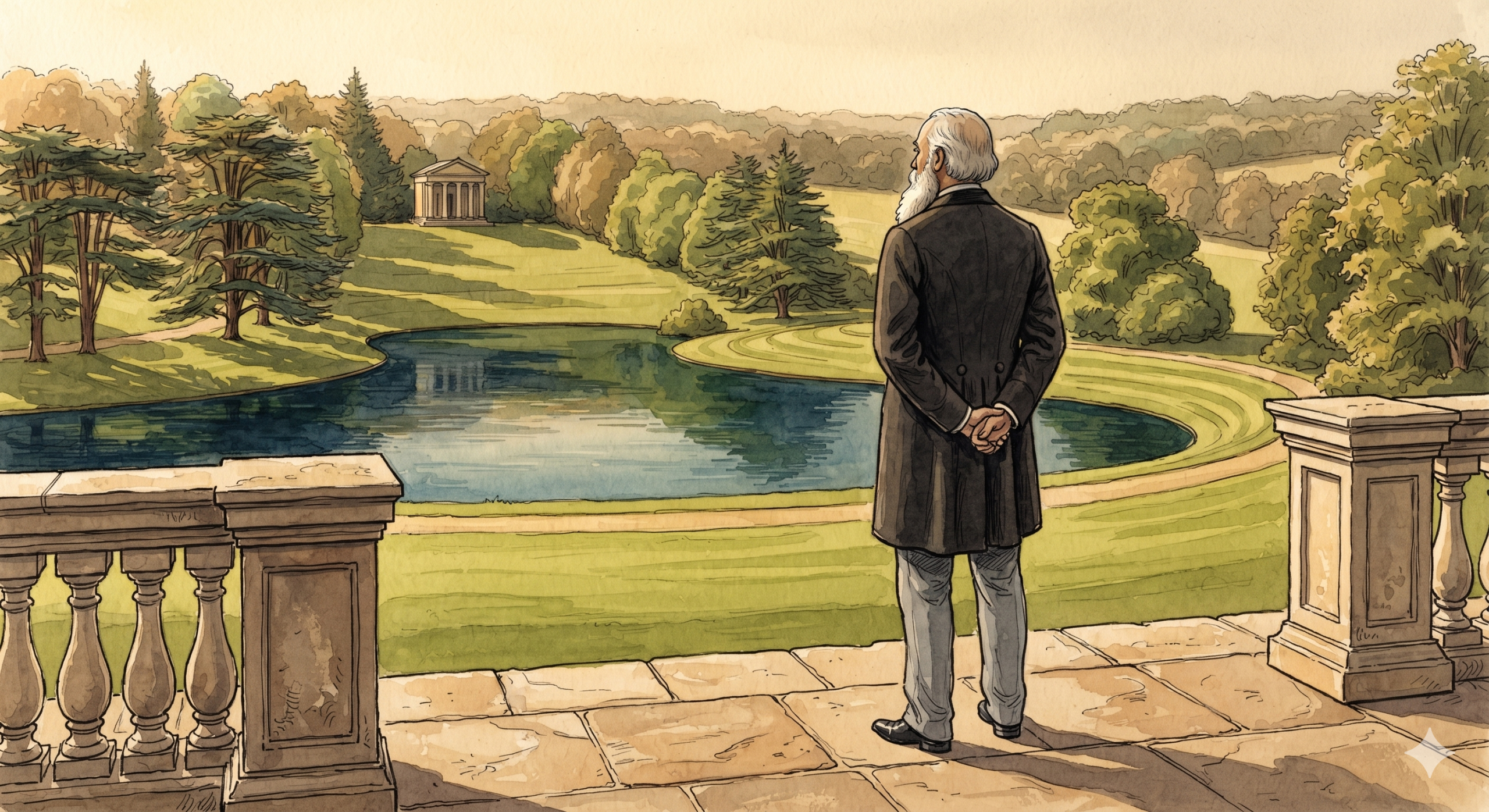
    The most famous playwright in Georgian England retired to a spa town in need of saving. He wrote his most influential essays on its streets, and then died here. His house has been knocked down. His name means nothing to the town that named a building after him.

    In Poets’ Corner, he lies near Samuel Johnson. In Tunbridge Wells, he is entirely forgotten.


    The Man at the Top of Georgian Theatre

    To understand what arrived in Tunbridge Wells in 1785, you need to understand what Richard Cumberland had been.

    He was a prolific author and playwright best known for his highly successful sentimental comedies, including The Brothers (1769) and The West Indian (1771). He also wrote tragedies and historical novels. In addition, he wrote a history of Spanish painting and an autobiography which records his friendships with some of the greatest celebrities of the day, including the actor David Garrick and the writer and critic Samuel Johnson.

    The West Indian, first produced by the great actor-manager David Garrick, enjoyed an extraordinary first run of twenty-eight nights and held the stage throughout the 18th century. Twelve thousand copies of the script were sold. When his third comedy, The Fashionable Lover, also succeeded in 1772, Cumberland was established as the leading dramatist of the sentimental school.

    He moved in the circles that defined Georgian intellectual life. At the British Coffee House, he met Samuel Johnson, Sir Joshua Reynolds, Edmund Burke and Samuel Foote. He patronised the painter George Romney, whose portrait of Cumberland now hangs in the National Portrait Gallery. He was, for a decade, the most produced playwright in England.

    And then things went somewhat sideways.


    The Secret Mission That Ruined Everything

    Here is the part of the story that nobody tells — because it is both deeply serious and faintly farcical, which is exactly the WalkTW register.

    During the American War of Independence, Cumberland was sent by the government on a secret diplomatic mission to Madrid, with instructions to negotiate a separate peace with Spain and keep the Spanish out of the war. He spent months there. He spent £4,500 of his own money on the mission. He returned to England without the desired results and discovered the money would never be repaid. With the abolition of the Board of Trade soon after his return, and with but half his salary as compensation, he retired to Tunbridge Wells, where he remained until his death.

    A failed secret agent. A government that wouldn’t cover his expenses. A job was abolished while he was abroad on its behalf. It is the kind of story that, in a different century, would make a very good television series.

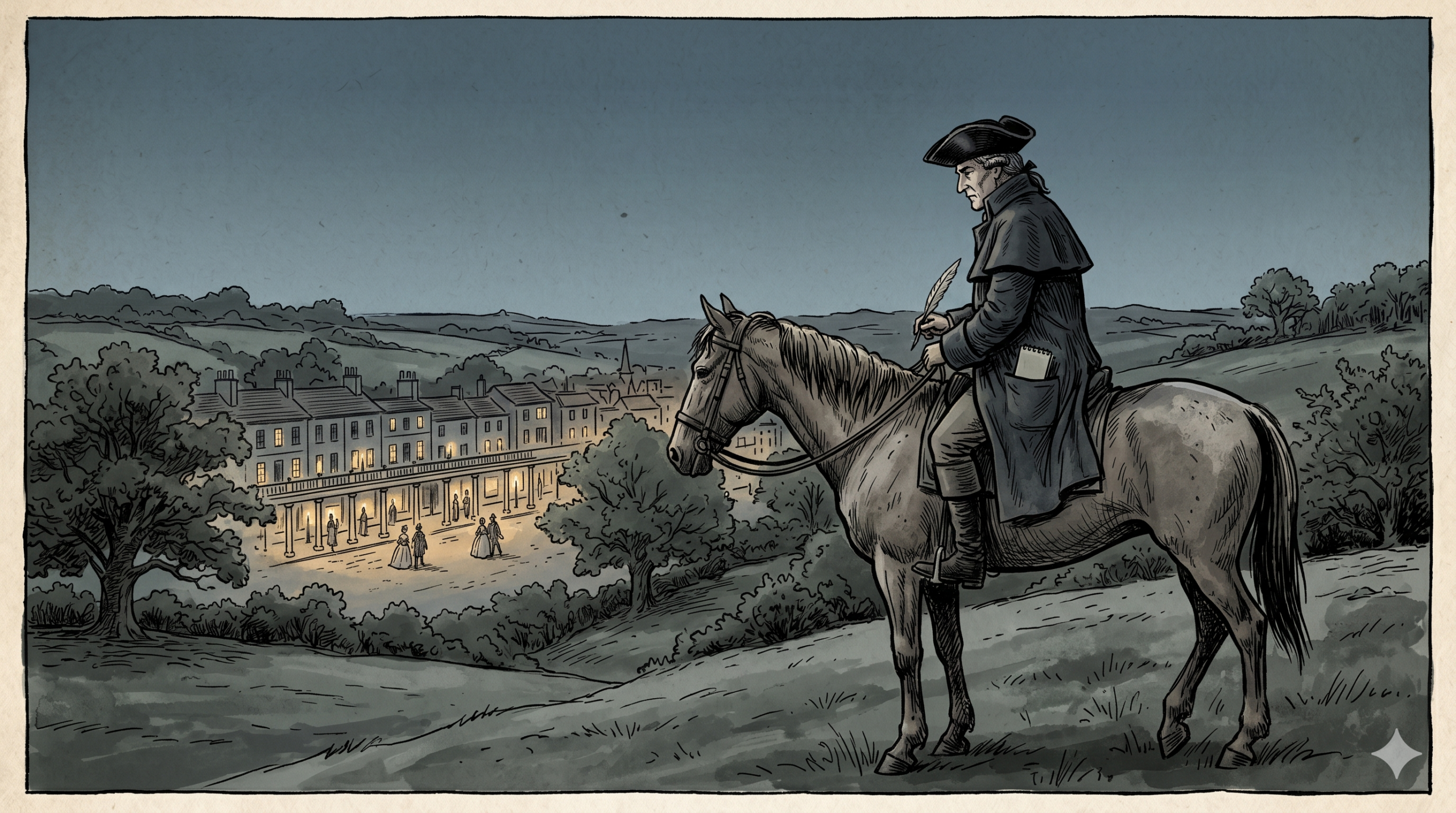
    He arrived in Tunbridge Wells in 1785: short, stout, red-faced, neatly dressed, and furious about Spain.


    Sir Fretful Plagiary — The Most Famous Joke in Georgian London

    There is one more thing he arrived carrying, invisible but heavy.

    Six years before he came to Tunbridge Wells, Richard Brinsley Sheridan had written a play called The Critic. One of its major roles, Sir Fretful Plagiary, is a caricature of Richard Cumberland — a direct satirical portrait of the vanity of authors.

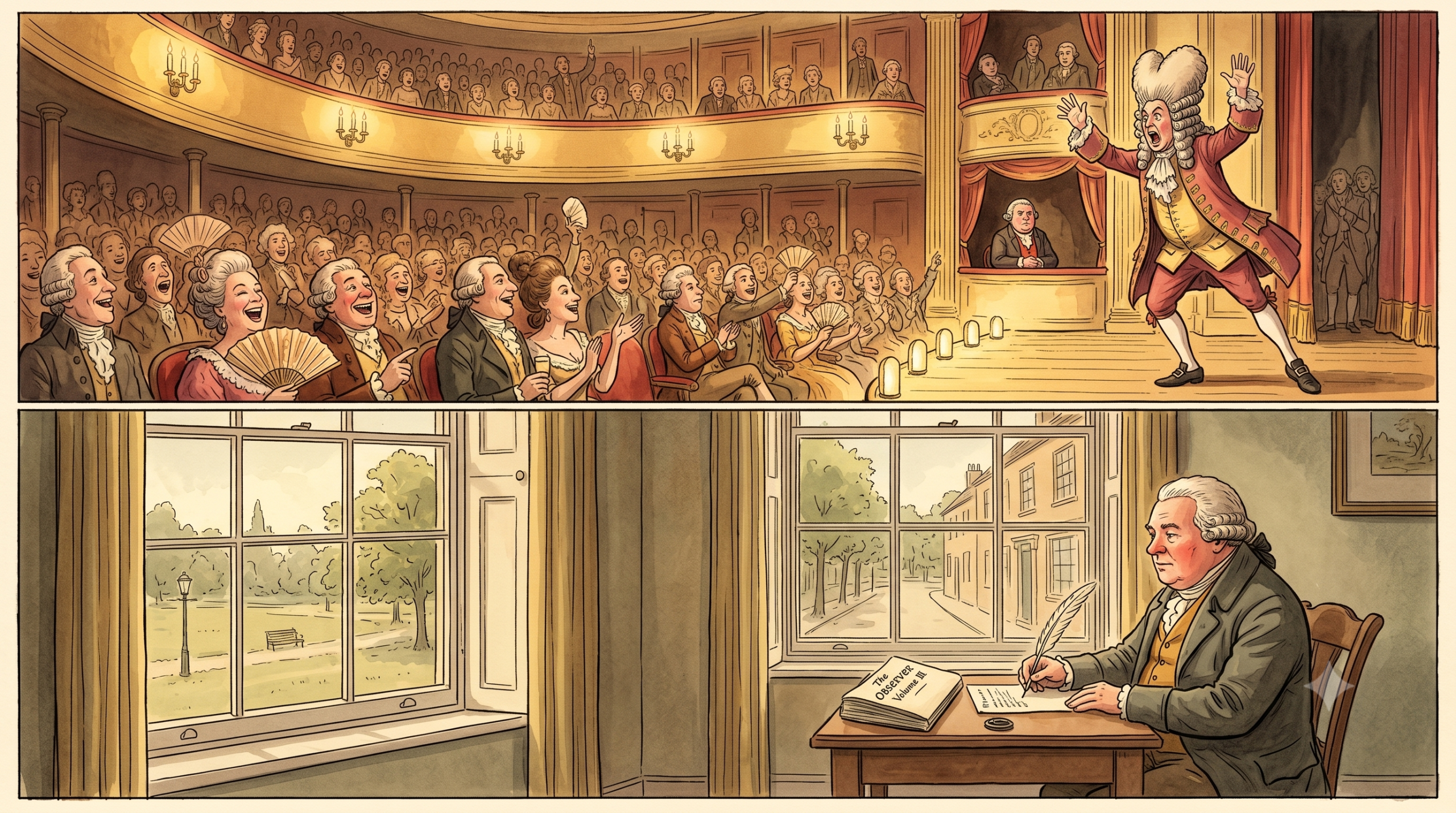
    Sir Fretful Plagiary is thin-skinned, vain, obsessively sensitive to criticism, and incapable of hearing a negative word about his work without visible distress. He is, in Sheridan’s gleeful hands, everything a playwright should not be. He was immediately recognised by Georgian audiences as Cumberland. Garrick had already called Cumberland “a man without a skin” — meaning he had no protective layer against criticism, that every barb went straight in. Sheridan took that observation and turned it into one of the most memorable comic characters of the 18th century.

    The most cutting satirical portrait in Georgian theatre was modelled on the man who would shortly retire to Tunbridge Wells. He knew it. London knew it. Everyone at the theatre knew it.

    He came to this town carrying that knowledge. He sat in Cumberland House — wherever exactly it stood, on whichever street it occupied before being knocked down — and he wrote, and he kept writing, and he refused to stop.


    What He Actually Did Here

    His next prose work was a periodical paper called The Observer, which appeared in five volumes between 1786 and 1790 and contains 152 essays. The essays range across moral, literary and familiar subjects.

    One hundred and fifty-two essays, written from this town, published over four years. Whatever the exact address of Cumberland House, 152 pieces of Georgian prose journalism were written somewhere on these streets — observations on literature, on morality, on the nature of comedy and tragedy, on the human condition as observed from a failing spa town in Kent by a man who had been to Madrid on a secret mission and come back with nothing but debt.

    The essays were widely read. They were influential. In the late 18th century, Tunbridge Wells began to attract visitors once again, at least in part due to the presence of well-known residents such as Richard Cumberland.

    He saved the town’s reputation simply by being here. The celebrity playwright in residence, writing his essays, receiving visitors, lending the place a cultural respectability it had been quietly losing since Beau Nash’s era ended. He was, without quite intending it, doing for Tunbridge Wells in the 1780s what Thackeray’s Restaurant does for the town today — giving it a reason to feel distinguished.


    The Final Irony

    Richard Cumberland is buried in Poets’ Corner, Westminster Abbey. His grave is near to the grave of his friend Dr Samuel Johnson.

    He lies among Chaucer and Spenser, Dickens and Hardy, Johnson and Garrick. The Dean of Westminster decides who receives a place in Poets’ Corner based on merit. Cumberland was considered worthy of that company.

    He had died in Tunbridge Wells. He had written his most enduring prose work here. The house that bore his name has been knocked down. There is no plaque, no commemorative bench, no reference on any heritage trail in the town.

    In Westminster Abbey, he is remembered. In the town where he spent the last quarter of his life, he is invisible.

    That is, come to think of it, the most Tunbridge Wells outcome imaginable.


    🕵️ Fact or Fiction? The WalkTW Archive

    Three questions for the comment section — and this time, one of them has a practical answer that someone in this town might actually know:

    Question #1: Where Was Cumberland House? The house Richard Cumberland lived in was named Cumberland House in his honour by a subsequent owner and has since been demolished. It stood somewhere in Tunbridge Wells. Does anyone know which street it was on, or which building replaced it? The WalkTW archive would very much like to put a pin in the map.

    Question #2: Did He Ever Watch Sarah Baker’s Theatre? Sarah Baker’s famous two-county theatre — the building now known as the Corn Exchange on The Pantiles — was operating throughout Cumberland’s years in Tunbridge Wells, from 1785 until his death. The most celebrated playwright in England was living in the same town as the most unconventional theatre manager in England. Did they ever meet? Did he ever sit in the audience? There is no record either way.

    Question #3: Sir Fretful in Tunbridge Wells. Sheridan’s The Critic, which contains the Sir Fretful Plagiary caricature of Cumberland, was regularly performed in Georgian theatres throughout the period Cumberland was living here. Is it possible that Sarah Baker’s company ever staged The Critic in Tunbridge Wells while its subject was living in the town? The possibility alone is worth contemplating.

    Drop what you know in the comments. 👇

    The Writers Who Watched Us now has four parts: Thackeray, Defoe, Richard Cobb, and Richard Cumberland, the man they laughed at, who outlasted them all in Poets’ Corner.

    #TunbridgeWells #WalkTW #RichardCumberland #TheObserver #GeorgianHistory #PoetsCorner #LocalHistory #TheWritersWhoWatchedUs #HiddenTunbridgeWells

  • The Writers Who Watched Us — Part 3: The Man Who Actually Loved Tunbridge Wells 🏘️❤️

    The Writers Who Watched Us — Part 3: The Man Who Actually Loved Tunbridge Wells 🏘️❤️

    We owe you this one.

    Two posts in, the Writers Who Watched Us series has given you a satirist who used the town as target practice, a novelist who called it hopelessly behind the times, and a government spy who noted the gaming, intriguing, fops and fools and moved on. But now, we turn our attention to The Man Who Actually Loved It Here. Every single one of them watched Tunbridge Wells and reached for their pen to skewer it.

    So here, finally, is the writer who reached for his pen to celebrate it.

    His name was Richard Cobb. He was one of the most respected historians in Britain. He was an Oxford Professor, a Legion d’Honneur recipient, a winner of the Wolfson Prize for History. He spent thirty years writing brilliant, acclaimed books about the French Revolution.

    And in 1983, near the end of his life, he sat down and wrote a book about Tunbridge Wells instead.

    He had grown up here. He had loved it completely. And almost nobody in the town he celebrated has ever heard of him.


    The Boy on Grove Hill Road

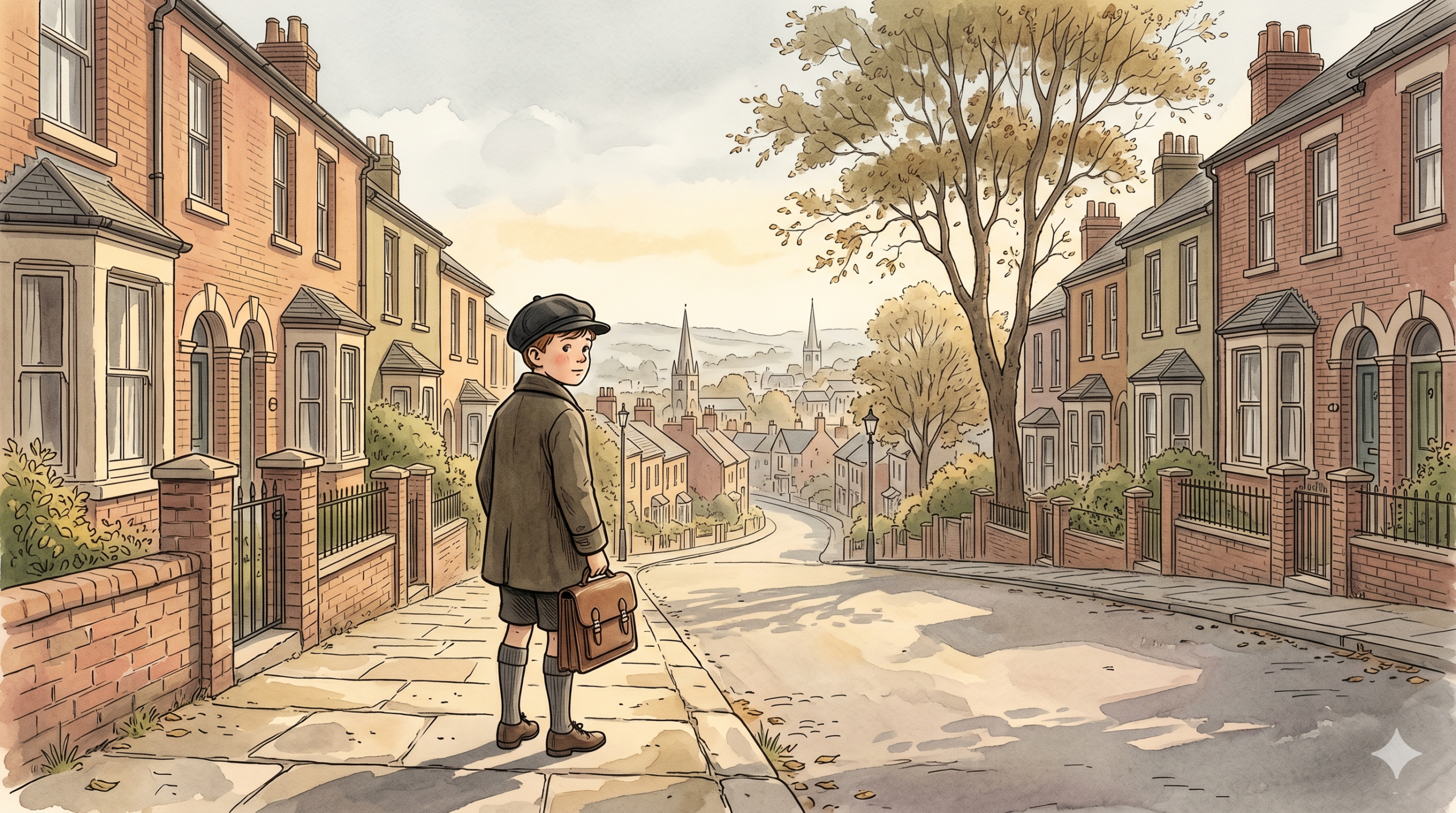
    Richard moved to Tunbridge Wells at the age of four with his mother and sister; his father, who was in the Sudan Civil Service, was only an intermittent presence until his retirement. The family moved house a good deal, from one rented place to another, but managed to retain its status among the many gradations of middle-class society in a very middle-class town.

    He grew up here through the 1920s and 1930s — walking the Common, catching the train from Central Station, learning the precise social hierarchies of the streets between Mount Sion and Mount Ephraim. He noticed everything. Down Poona Road, past the Grove Bowling Club, the young Richard Cobb conducted his reader through the streets of Tunbridge Wells in the twenties and thirties, taking us into cluttered drawing rooms and dining rooms set for tea — a chronicle of a south-eastern community, of the middle classes, their servants and an army of shopkeepers, of largely harmless snobbery, pretension and genteel scandal.

    The keyword there is “harmless.” Unlike every other writer in this series, Cobb watched the town’s pretensions and found them not outrageous but quietly, deeply human. He was not contemptuous. He was fond.


    The Book That Nobody Here Knows About

    Still Life: Sketches from a Tunbridge Wells Childhood was first published in 1984. It won the J.R. Ackerley Prize for Literary Biography. It is a classic among middle-class memoirs.

    A prize-winning literary classic. About this town. Written by someone who grew up on its streets.

    And yet ask almost anyone in Tunbridge Wells if they’ve heard of it, and you’ll get a blank look.

    The cast of characters Cobb assembled from his childhood would feel entirely at home in the WalkTW archives. Arriving at the Central Station, with its wooden staircase advertising “Carter’s Little Liver Pills,” he leads us through the town and into the lives of the characters among whom he grew up — from the mysterious Black Widow, seen always in deep yet unexplained mourning, to Baroness Olga, the town’s only victim of the Russian Revolution, with her tight-fitting cloche hat and jade earrings.

    A Russian Baroness on the streets of Tunbridge Wells. We had a victim of the actual Russian Revolution living here, and this is somehow not on every heritage trail in town.

    Then there were the Limbury-Buses. The mother never went outdoors, the son never spoke, and the whole family followed precisely the same routine each day. And Dr Footner, who made house calls in a horse-drawn carriage. And R. Septimus Gardiner, a taxidermist with a shop full of stuffed squirrels, fish, hummingbirds and badgers.

    This is not a satirist’s invented gallery of grotesques. These were real people. On real streets. Right here.


    What Made Him Different

    Every other writer in this series used Tunbridge Wells as a mirror for something they wanted to criticise about England. Thackeray saw snobbery. Forster saw constraint. Defoe saw vice and performance.

    Cobb saw people. Actual people, in all their glorious, harmless, slightly peculiar ordinariness — and he loved them.

    Richard may have been eccentric, irreverent and anarchical, but he was also someone who needed reassurance. He needed a place that would reassure him that life, however threatening it might be elsewhere, could carry on. For him, his childhood town was that place.

    There’s something enormously touching about that. This man spent his academic career immersed in the violence and chaos of the French Revolution, surrounded by guillotines and mass graves and the wreckage of an entire social order. And when he finally turned to writing about himself, he went back to the steady, familiar streets of Tunbridge Wells — the Grove Bowling Club, the Wellington Rocks, the train coming in to Central Station — as the place that felt safe. The place that held still while the world turned.

    As one reviewer put it: “Cobb has broken one of the strangest silences in English social commentary — on the missing history of the English bourgeoisie.”

    He was the first person to take the ordinary, unremarkable daily life of this town completely seriously and say: This matters. These people matter. This place matters.


    A precise, evocative vintage editorial illustration 
in watercolour and ink. A single Tunbridge Wells 
street — Grove Hill Road — shown twice in one 
frame, divided vertically down the centre 
by the spine of an open book. LEFT HALF — 1928. The same street in 
warm sepia tones: a small boy in a school 
cap and short trousers walks along the 
pavement, satchel swinging. The houses 
are the same Victorian terraces. A 
horse-drawn delivery cart is visible 
at the far end. Gas lamps. A woman 
in a cloche hat at a garden gate. 
The rooftops and bare trees are 
rendered in the same style as 
the cover of Still Life — 
loose watercolour wash, 
warm and slightly faded. RIGHT HALF — 2026. The same street 
in slightly cooler, more present tones. 
The same houses — barely changed. 
A person walks the same pavement 
looking down at a smartphone, 
Google Maps open on the screen. 
The roofline is identical. 
The trees are bigger. 
Everything else is 
almost the same. The open book sits in the centre — 
its spine the dividing line between 
then and now. Its cover illustration 
(the watercolour of rooftops) 
is visible on both sides. Palette: warm sepia and ochre 
on the left, cool grey-green 
and slate on the right. 
The book spine glows 
slightly — the warm 
amber of old paper, 
the hinge of time. Style: vintage editorial watercolour 
and ink, precise and quietly moving. 

    Go Find His Tunbridge Wells Today

    The remarkable thing about Still Life is how much of it is still here. The streets and houses Cobb describes are mostly still there — depicting the characters who inhabited them takes us into a world that, although gone, remains tangible. One Amazon reviewer noted: “Here is a tip that will enhance your enjoyment: have a computer screen with Google Street View loaded and ready to go as you begin reading.”

    The Central Station — now Tunbridge Wells West, home of the Spa Valley Railway — is still there, minus the wooden staircase and Carter’s Little Liver Pills. The Wellington Rocks, where he played as a child, are still there. Grove Hill Road is still there. The Common is still there.

    And here is perhaps the most WalkTW observation of all: the book is still in print, reissued by the wonderful Slightly Foxed quarterly as one of their most loved editions. You can buy it. You can walk the town with it. You can stand on the streets he wrote about and read his descriptions of the people who once lived there.

    No other writer in this trilogy gives you that. Most of them watched the town and left. Cobb stayed in it, in memory at least, for the rest of his life.


    🕵️ Fact or Fiction? The Final WalkTW Archive Entry

    Three last questions for the comment section — and this time, unusually for this series, at least one of them is almost certainly true:

    Myth #1: The Taxidermist’s Shop. R. Septimus Gardiner’s taxidermy shop, full of stuffed hummingbirds and badgers, is described in Still Life with such precision that local readers have spent decades trying to identify its exact location. Several candidates on the High Street and surrounding roads have been proposed. Nobody has definitively confirmed which building it was. Does anyone know?

    Myth #2: The Unrecognised Professor. Cobb apparently returned to Tunbridge Wells regularly to visit his mother, who continued living there until the 1960s. There are suggestions that late in his life, having become one of the most celebrated historians in Britain, he would walk the streets of the town entirely unrecognised — past people living in houses he’d written about in an award-winning book they’d never read. He is said to have found this completely delightful.

    Myth #3: The French Connection. Cobb’s passion for France was so consuming that French friends apparently found it baffling that this man, who had effectively become an honorary Frenchman — who wrote in French, who moved in Parisian literary circles, who received the Legion d’Honneur from the French government — had written his most personal book about a quiet English spa town in Kent. His response, reportedly, was simple: “France taught me how to look. Tunbridge Wells gave me something worth looking at.”

    Have you read Still Life? Do you recognise any of the characters? Drop your thoughts below — and if anyone can identify the taxidermist’s shop, the WalkTW archive will be forever grateful. 👇

    #TunbridgeWells #WalkTW #RichardCobb #StillLife #LocalHistory #TheWritersWhoWatchedUs #HiddenGems #GroveHillRoad

  • The Writers Who Watched Us — Part 2: The Spy Who Came to Take the Waters ☕🕵️

    The Writers Who Watched Us — Part 2: The Spy Who Came to Take the Waters ☕🕵️

    Let’s set the scene. The year is 1722. Daniel Defoe’s original ambition had been to be a businessman — but following bankruptcy, imprisonment, and the pillory, he had transformed into a lonely and secretive writer of pamphlets, novels, and a government spy.

    He had already written Robinson Crusoe. Moll Flanders had come out that same year. At this point, Daniel Defoe in Tunbridge Wells was sixty-two years old, perpetually in debt, almost certainly still working as a government intelligence agent on the side, and very probably in no mood to be impressed by anyone’s pretensions.

    He rode into Tunbridge Wells on horseback. He watched. He formed some extremely sharp opinions. And then he wrote them all down in a book that is still in print three hundred years later.

    If Thackeray took notes from a window and Nesbit took memories from a field, Defoe walked straight into the middle of the promenade, looked everyone directly in the face, and told them exactly what he thought of them.


    The Man Who Invented Modern Journalism

    Before we get to what he said about us, it’s worth understanding who was saying it.

    A well-educated London merchant, Defoe became an acute economic theorist and began to write eloquent, witty, and often audacious tracts on public affairs. A satire he published resulted in his being imprisoned in 1703, and his business collapsed. He travelled as a government secret agent while continuing to write prolifically.

    When prosecuted for a pamphlet, Defoe had spirit enough, while awaiting his ordeal, to write the audacious “Hymn to the Pillory” — and this helped to turn the occasion into a triumph, with the pillory garlanded, the mob drinking his health, and the poem on sale in the streets.

    This is the man who arrived in Tunbridge Wells. A convicted pamphleteer, a former bankrupt, a government spy travelling under cover, and the author of Robinson Crusoe and Moll Flanders — two books that had both been published that same extraordinary year of 1722. He had spent his whole career writing about fraudsters, social climbers, shipwrecked men, and women forced to reinvent themselves through sheer nerve.

    Tunbridge Wells must have felt like coming home.


    What He Actually Found Here

    Defoe arrived during an unusually busy season. When he came to the Wells, he found a great deal of good company — and what was more particular, it happened to be at the time when His Royal Highness the Prince of Wales was there with an abundance of the nobility and gentry of the country, who thronged to that place; so that at first he found it very difficult to get a lodging.

    He watched the Prince do his royal rounds, and he watched the town snap back to its ordinary self the moment the entourage left. In two or three days, things returned all to their ancient channel, and Tunbridge was just what it used to be.

    What it used to be, in Defoe’s assessment, was a place running almost entirely on performance, appetite, and the management of appearances. He described the morning ritual on the Upper Walk with the cool detachment of a man who had seen every variety of human hustle:

    The ladies that appear here are indeed the glory of the place; coming to the Wells to drink the water is a mere matter of custom; some drink, more do not, and few drink physically. But company and diversion are, in short, the main business of the place; and those people who have nothing to do anywhere else seem to be the only people who have anything to do at Tunbridge.

    Three hundred years before anyone invented the phrase, Defoe had identified the entire town as a place where people came to be seen rather than to do anything useful. He would have been absolutely lethal on social media.


    The Bit That Reads Like a WalkTW Post

    Here is where Defoe, the ex-convict government spy and author of Moll Flanders, turns unexpectedly into a social commentator of quite startling precision. Having watched the promenade for a few days, he delivered this verdict:

    As for gaming, sharpening, intriguing, as also fops, fools, beaus, and the like, Tunbridge is as full of these as can be desired, and it takes off much of the diversion of those persons of honour and virtue, who go there to be innocently recreated.

    “Gaming, sharpening, intriguing.” He named our three defining pastimes in a single sentence and barely paused for breath.

    But then he added something even better. Having noted that a lady could easily damage her reputation at the Wells, he immediately turned the blame around:

    I must own I look just the other way; and if I may be allowed to use my own sex so coarsely, it is really among the men that the ladies’ characters first and oftenest receive unjust wounds. The malice, the reflections, the busy meddling, the censuring, the tattling from place to place, and the making havoc of the characters of innocent women, are found among the men’s gossips more than among their own sex, and at the coffee-houses more than at the tea-table.

    A man. In 1722. Telling the entire assembled company of Tunbridge Wells that the real gossip was the men, not the women. At the coffee houses. Not the tea tables.

    The man had nerve, you have to give him that.


    The Final Verdict

    After all the sharp observations, Defoe landed on a conclusion that could serve as the town’s unofficial motto to this day:

    In a word, Tunbridge wants nothing that can add to the felicities of life, or that can make a man or woman completely happy — always provided they have money; for without money a man is nobody at Tunbridge, any more than at any other place; and when any man finds his pockets low, he has nothing left to think of but to be gone, for he will have no diversion in staying there any longer.

    Lovely place. Bring cash.


    Find His Tunbridge Wells Today

    The Upper Walk Defoe described — where ladies paraded in their finest and gentlemen intrigued at the coffee houses — is The Pantiles. You can walk it this afternoon. After the appearance at the Wells, you are surprised to see the walks covered with ladies completely dressed and gay to profusion, where rich clothes, jewels, and beauty dazzled the eyes from one end of the range to the other.

    The Chalybeate Spring, he dismissed as mostly a social excuse, still flows at the north end of The Pantiles, where a costumed Dipper serves the waters on summer afternoons. The Church of King Charles the Martyr, which he would have passed on his way in, still stands at the end of the walk.

    Stand there on a Saturday morning, watch the coffee shop queue, notice who is watching who, count the number of people performing casualness while very carefully being seen, and think of a sixty-two-year-old ex-convict spy sitting at a window nearby, notebook open, smiling to himself.

    He called it correctly three centuries ago. Nothing has fundamentally changed.


    🕵️ Fact or Fiction? Last Call for the WalkTW Archive

    Three rumours to close out the trilogy:

    Myth #1: The Coded Notes. Given that Defoe was actively working as a government intelligence agent during his 1722 tour, some historians have suggested that his descriptions of spa-town society contained coded reports on the political sympathies of specific noble visitors. The “fops, fools, and beaus” he mentioned may not have been random observations — they may have been specific people whose names were recorded elsewhere. Nobody has proven this. Nobody has disproven it either.

    Myth #2: The Unpublished Chapter. Word in certain literary circles suggests Defoe wrote a far more explicit account of Tunbridge Wells that his publisher refused to print — a full catalogue of specific scandals, named assignations, and identified gamblers that would have caused a legal catastrophe. The cleaned-up version is what we have. The original, if it existed, has never surfaced.

    Myth #3: The Return Visit. Defoe reportedly told a friend that of all the places he had visited on his great Tour, Tunbridge Wells was the one he most wanted to see again — not for the company, but because it was the only place in England where everyone was exactly what they appeared to be, with no pretence at anything else. The gambling was open gambling. The intrigue was open and intriguing. The performance was acknowledged. He found it, apparently, refreshing.

    Whether that’s a compliment or the sharpest insult in Georgian literature, we leave entirely to you. Drop your verdict in the comments. 👇


    And that wraps up The Writers Who Watched Us — three writers, three centuries, one town that kept giving them material. Thackeray invented the word “snob” from a window on London Road. Nesbit turned Kent’s railway cuttings into a children’s classic. And Defoe rode in on horseback, took one long look at The Pantiles, and told everyone exactly what they were doing there.

    The WalkTW Chronicles continue. Next up: we open the archive boxes. 📦

    #TunbridgeWells #WalkTW #DanielDefoe #LocalHistory #ThePantiles #BeforeTheyWereFamous #TheWritersWhoWatchedUs #GeorgianHistory

  • The Writers Who Watched Us — Part 1: The Man Who Invented the Word “Snob” 🍽️📓

    The Writers Who Watched Us — Part 1: The Man Who Invented the Word “Snob” 🍽️📓

    There’s a restaurant on London Road that looks slightly too good to be true. Odd angles, sloped ceilings, off-kilter stairways — it feels almost like something from a fantasy world. Locals walk past it every day without a second glance.

    They really should glance. Actually, many are surprised to learn that William Makepeace Thackeray once called this place home.

    Because the man who lived here didn’t just enjoy the view over the Common. He watched Tunbridge Wells, took notes on everyone he saw, and turned it all into the most brutally funny portrait of English snobbery ever written.

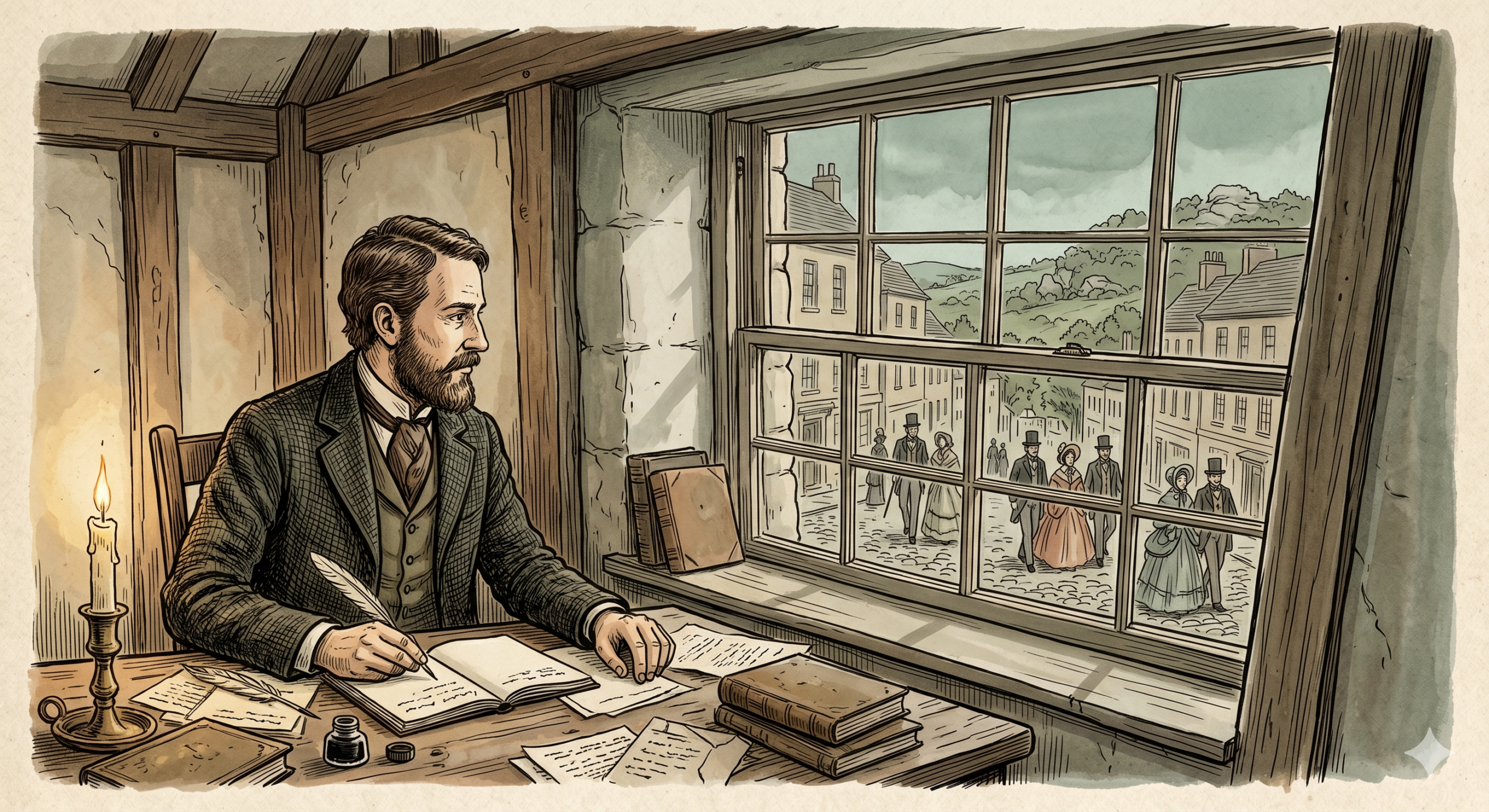
    His name was William Makepeace Thackeray. He wrote Vanity Fair there. And before he was famous, he was just a sharp, slightly bitter young writer sitting in a crooked house in our town, watching the social parade go past his window and thinking: these people are absolutely ridiculous. I’m going to write all of this down.


    The Town That Built a Masterpiece

    Here’s what made Tunbridge Wells so useful to him. The Pantiles gave him everything he needed — the aspirational aristocrats performing wealth they may or may not have actually had, the retired colonels competing over the quality of their carriages, the visiting families arriving for the “waters” with entirely different agendas from the ones they’d admit to in public. The setting was essential for Makepeace, William Thackeray’s observations about social climbing in England.

    Thackeray saw society itself as a kind of “Vanity Fair” — a carnival where virtues are routinely compromised for social standing. He didn’t have to imagine that world. He could see it from his sitting room. In fact, inspiration for William Makepeace Thackeray overflowed from the everyday spectacle around him.

    Having suffered bitterly himself due to what he considered societal constraints, he built his satire to blast the groups he felt had wronged him. Tunbridge Wells, with its magnificent parade of social climbers and status performers, handed him the raw material on a plate. A very polished, very expensive plate.

    And here’s the detail that should genuinely stop you mid-coffee: Thackeray was such an expert at writing about snobs that he actually invented the modern use of the word. Before his The Book of Snobs, “snob” was just slang for a shoemaker. His knack for playful language is another William Makepeace Thackeray trademark.

    He didn’t just satirise the snobs of Tunbridge Wells. He gave the entire category of human being a name that’s lasted nearly 200 years. You’re welcome, English language.


    The Feud That Proves His Point

    One small bonus story, because it’s too perfect to leave out. It perfectly captures the kind of literary drama William Makepeace Thackeray was never far from.

    His great rival was Charles Dickens. They were friendly competitors for years — until Thackeray made the mistake of publicly discussing an affair Dickens was having. Dickens retaliated by having a journalist write that Thackeray’s work had no heart and that his white hair made him look old. Thackeray was furious because the article quoted private conversations from a social club, which was simply not done — and the two remained enemies until Thackeray died.

    Two of the greatest writers in English history, destroyed by gossip, wounded pride, and the unspoken rules of social conduct. William Makepeace Thackeray was no stranger to drama, and it became part of his legacy.

    If that doesn’t sound exactly like a subplot from Vanity Fair, nothing does.


    Go Find It Today 🗺️

    Thackeray’s Restaurant sits at 85 London Road, inside the novelist’s former home. The slanted floors, winding hallways, and grand fireplace in the main dining room are all original. The window still looks out over the same Common he watched every morning, just as William Makepeace Thackeray did centuries ago.

    You can book dinner and sit in the exact rooms where Vanity Fair was written. Then walk down to The Pantiles afterwards and watch how people move — the subtle posturing, the sideways glances, the careful positioning near the right conversations.

    Thackeray would recognise every single one of them. He’d probably have their names written down already. In short, Tunbridge Wells remains indelibly linked to the observations and humour of William Makepeace Thackeray.


    🕵️ Fact or Fiction? You Decide

    Three rumours for the WalkTW comment section. One involves William Makepeace Thackeray, of course:

    Myth #1: Thackeray apparently drafted a dedication to “the good society of the Wells” for an early version of Vanity Fair — a pointed, sarcastic tip of the hat to the local promenade set who’d given him such rich material. His publisher reportedly killed it before print.

    Myth #2: A pompous retired officer from Mount Ephraim — famous locally for his very loud opinions about his own carriage — is said to appear almost word for word as a character in The Book of Snobs. The man reportedly refused to read it. His wife read it three times. Imagine William Makepeace Thackeray overhearing these family debates.

    Myth #3: Some literary historians believe the view from Thackeray’s window — the Common below, the grand ridge of Mount Ephraim above — directly inspired Vanity Fair‘s famous opening image of English society laid out like a fairground on a plain. Never proven. Never disproven, but that’s certainly something William Makepeace Thackeray would have enjoyed.

    Have you ever eaten at Thackeray’s and felt vaguely observed? Drop your thoughts below. 👇

    Next up: the child who played in the woods and tunnels around Tunbridge Wells and turned them into one of the most beloved books ever written. 🚂🌿

    #TunbridgeWells #WalkTW #Thackeray #VanityFair #LocalHistory #BeforeTheyWereFamous #TheWritersWhoWatchedUs

  • The Victorian “Bio-Hacker” buried in Woodbury Park Cemetery 🩺⚡

    The Victorian “Bio-Hacker” buried in Woodbury Park Cemetery 🩺⚡

    Alright, by popular demand, here is part three of our “Tunbridge Wells Hidden Geniuses” series. If you thought math and birds were cool, wait until you meet Dr. Golding Bird—a man who was basically living in the year 3000 while the rest of the Victorians were still figuring out indoor plumbing.

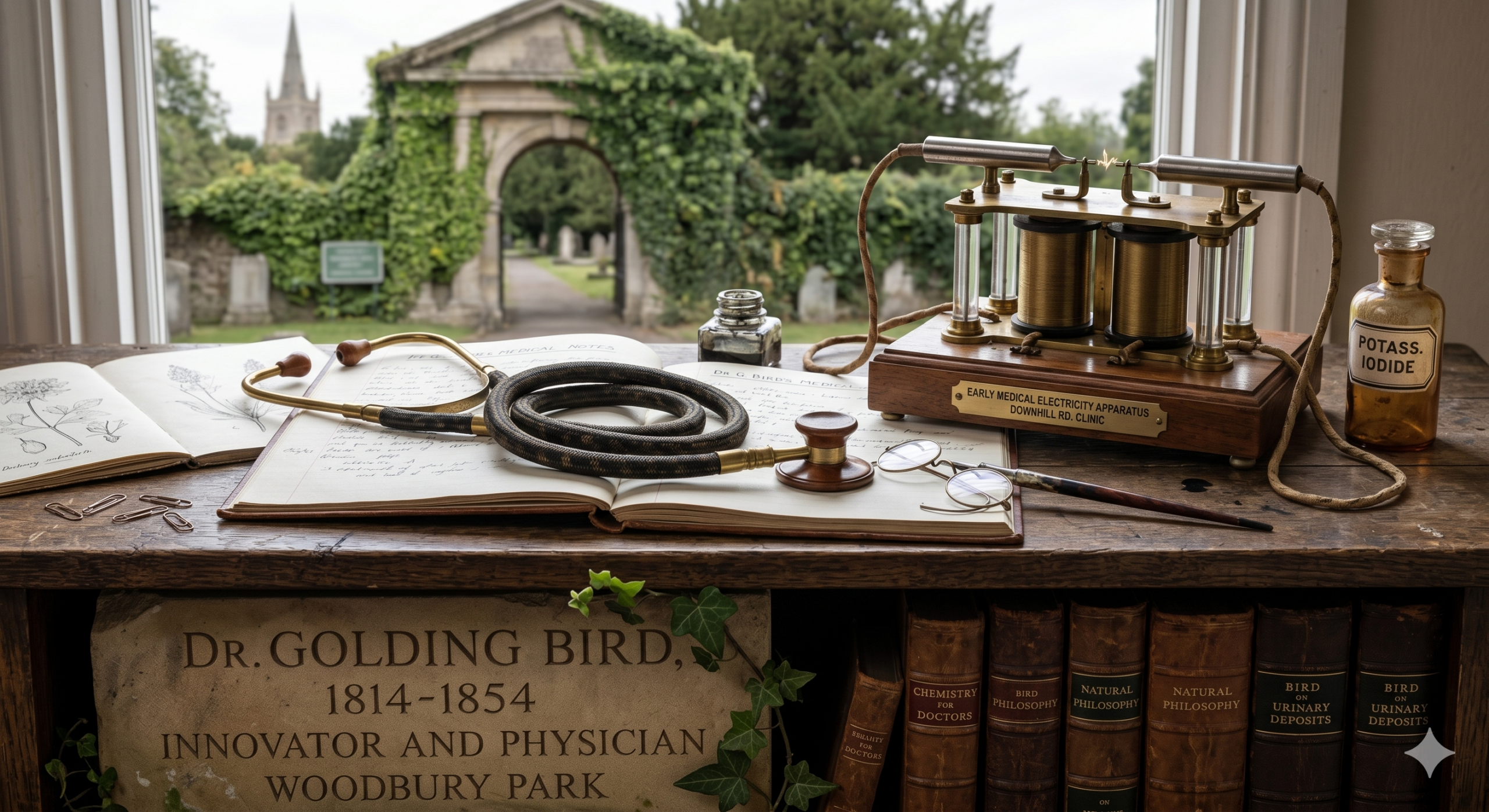
    He’s currently resting peacefully right up the road in Woodbury Park Cemetery, but during the 1840s and 50s, this guy was a medical absolute machine. It’s remarkable how Dr. Golding Bird contributed so much to medicine in such a short life.

    The Problem with the Old “Stethoscope”

    Before Golding Bird came along, if a doctor wanted to listen to your heart or lungs, they used a rigid, solid wooden tube. It was awkward, uncomfortable, and required the doctor to lean completely over you at a very weird angle. Interestingly, Dr. Golding Bird considered new ways to improve such essential tools.

    Bird looked at this and thought, “We can do better.” He went ahead and invented the flexible stethoscope—using a tube made of woven silk and wire. It changed medicine forever because doctors could finally sit comfortably next to a patient and actually move around. If you’ve ever had a checkup, you owe this guy a thank you.

    The Original “Mad Scientist” (But in a good way)

    But he didn’t stop at stethoscopes. Bird was obsessed with “medical electricity.” Long before modern physical therapy or neurological treatments, he was building custom electrical machines to send tiny, controlled currents into patients paralyzed by strokes or suffering from nervous disorders. He was essentially a Victorian bio-hacker, trying to restart the human body’s hard drive using static electricity, and the work of Dr. Golding Bird in this area was ahead of its time.

    The Ultimate “Side Hustle” Warning

    Here’s the catch: Golding Bird was a textbook overachiever. While running a massive medical practice, he was also:

    • Writing best-selling textbooks on physics and chemistry.
    • Researching kidney stones under a microscope.
    • Studying botany.

    He was so deeply addicted to his work that he quite literally worked himself to death, passing away in his late 30s. To sum up, Dr. Golding Bird stands as proof that relentless dedication may come at a cost.

    The Takeaway

    We walk past Woodbury Park all the time, completely unaware that a literal medical revolutionary is right there. Next time you see a stethoscope—or feel guilty for working late on a Tuesday—think of Dr. Golding Bird. Another brilliant mind who called our little corner of Kent home!

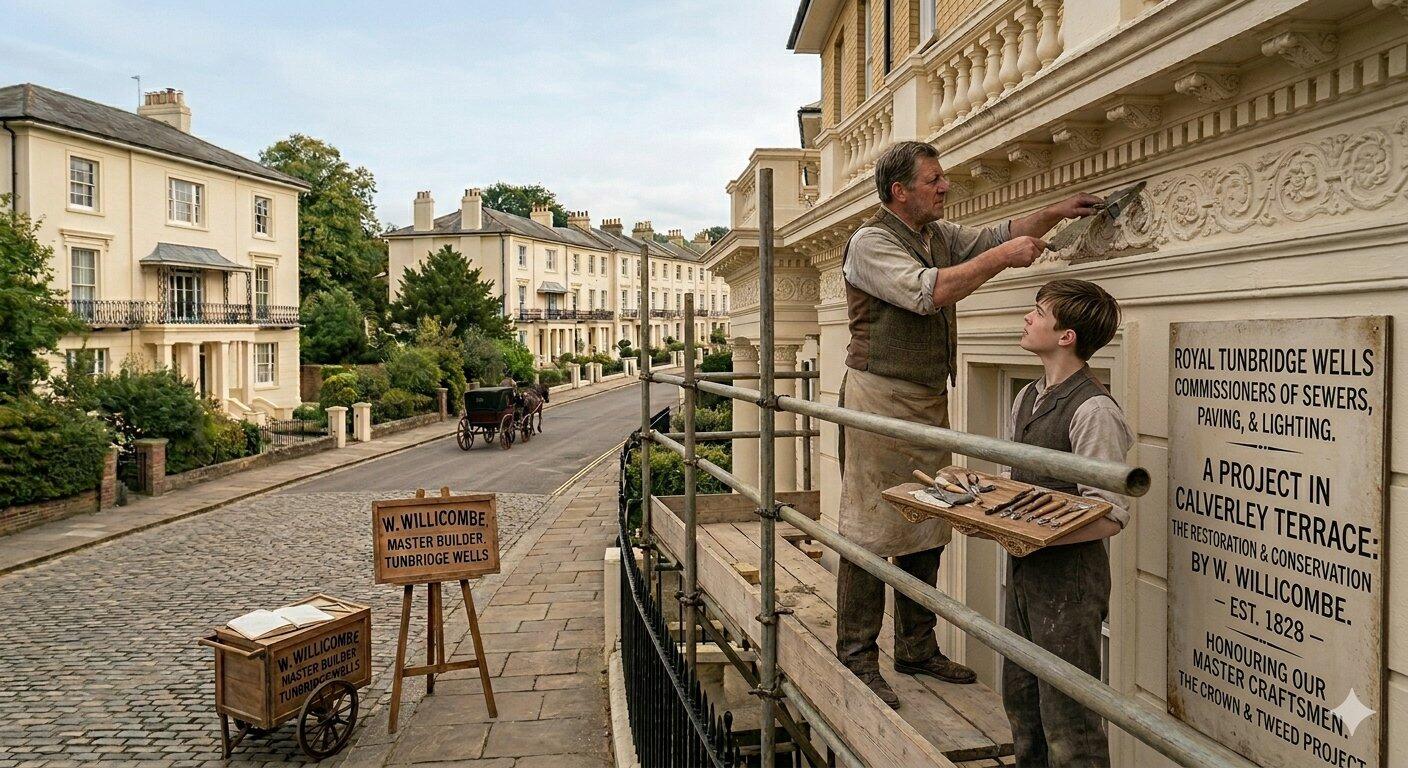
    What do we think? Should we do the final legend, William Willicombe (the bricklayer who built the town’s posh villas), next week? 🏛️🏗️

    #TunbridgeWells #LocalHistory #GoldingBird #MedicalGenius #VictorianBioHacker #WoodburyPark

  • Move over, David Attenborough… Tunbridge Wells had the original “Eco-Warrior”! 🌿🐦

    Move over, David Attenborough… Tunbridge Wells had the original “Eco-Warrior”! 🌿🐦

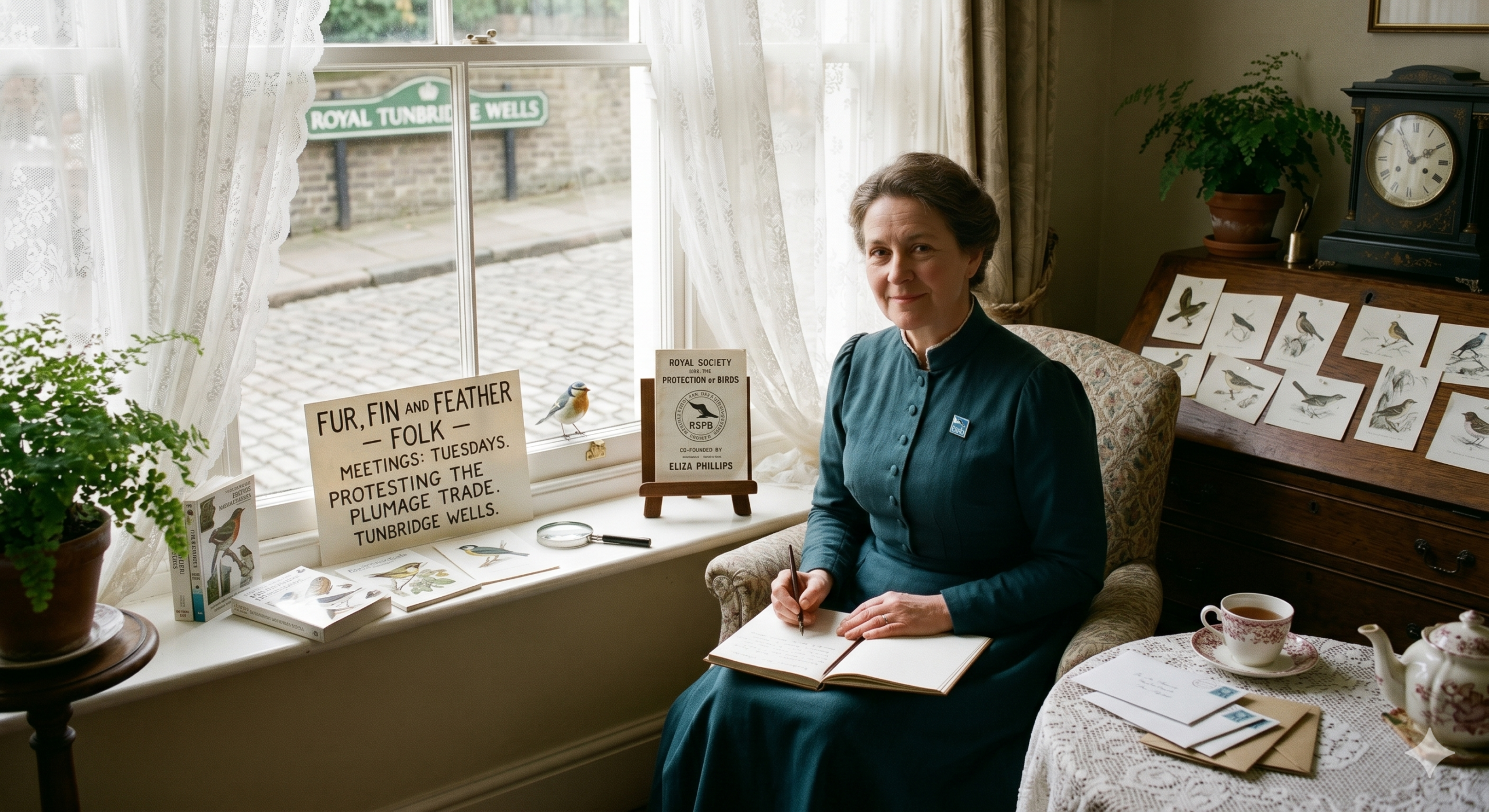
    Since you guys enjoyed the story about our local math genius Thomas Bayes, I found another “hidden in plain sight” legend from our town. Meet the remarkable Phillips Eliza, the woman who basically told the entire global fashion industry to “sod off” from her living room in Tunbridge Wells.

    The “Hat-tastrophe” of the 1880s

    Back in the late Victorian era, fashion was… well, a bit murderous. The “peak” of style was wearing entire dead birds—wings, tails, and all—on your hat. If you weren’t wearing a stuffed Grebe or an Egret on your head, were you even trying?

    For Eliza Phillips, this trend was simply unacceptable; she looked at this trend and said, “Absolutely not.”

    The Genius of the “Fur, Fin and Feather Folk”

    From her home here in town, the force of nature named Eliza Phillips co-founded what eventually became the RSPB. She started a group with the incredible name “The Fur, Fin and Feather Folk.” (Which, let’s be honest, sounds like a very niche folk-rock band you’d see at a local pub, but was actually a high-stakes activist group).

    What she did was brilliant:

    • Social Shaming (The Victorian Way): She didn’t just ask people to stop; she made it socially “uncool” to wear dead animals.
    • The Global Takedown: From a house in Kent, Eliza Phillips managed to take on the international plumage trade. She was the original environmental influencer, but with more lace and significantly more grit.

    Why she’s a local hero:

    • The RSPB Connection: Next time you see an RSPB badge or visit a nature reserve, remember it started with a fed-up lady in Tunbridge Wells named Eliza Phillips.
    • Persistence: She didn’t have Twitter or Instagram; she had stationery, stamps, and a very strong opinion, as you might expect from Phillips Eliza herself.

    The Takeaway

    Never underestimate a Tunbridge Wells resident with a cup of tea and a sense of justice. For example, Eliza Phillips proved that you don’t need a massive corporate office to change the world—sometimes you just need a living room and the guts to tell people their hats are ridiculous.

    So, next time you see a bird in Dunorlan Park or the Common, give them a little wink. They’re only there because one passionate local, Eliza Phillips, decided her neighbours’ fashion sense needed a serious intervention. ☕️🦜

    #TunbridgeWells #LocalLegends #RSPB #ElizaPhillips #EcoWarrior #HistoryWithAQuickWit

  • Did you know? We’re living in the birthplace of “Common Sense” (Math Edition)! 🧠✨

    Did you know? We’re living in the birthplace of “Common Sense” (Math Edition)! 🧠✨

    I was just reading up on some history and stumbled across a gem about one of our very own. It turns out Tunbridge Wells isn’t just famous for its Pantiles and posh coffee shops—it’s the final resting place of the man who basically invented how we “learn from experience.” Interestingly, Thomas Bayes made Tunbridge Wells a special place for mathematics enthusiasts.

    The Man, The Myth, The Minister

    Meet Thomas Bayes (died 1761). He was a Nonconformist minister right here in town who spent his free time being a low-key genius. He developed what we now call Bayesian Inference. Many regard Thomas Bayes as the reason statistics became so relevant for modern life.

    In plain English: He figured out a mathematical way to update your beliefs when you get new information.

    Why this is actually cool:

    • The Ultimate “I Told You So”: His theories are the backbone of modern AI, code-breaking, and medical diagnoses.
    • A Late Bloomer: He died without knowing he was a legend. His work wasn’t even published until 1763, and he didn’t become a household name (well, in math households) until the 1900s.
    • Local Vibes: He lived, worked, and thought deep thoughts right where we walk our dogs and complain about the traffic on Mount Pleasant. Thomas Bayes is still regarded as one of our most important locals.

    The Takeaway

    If you feel like you’re just “winging it” in life, just remember: you’re actually practicing high-level Bayesian statistics. You’re not indecisive; you’re just “updating your priors” based on new evidence!

    Next time you’re walking past the old chapels or through the town centre, give a little nod to Thomas. We’ve been a hub for big thinkers for centuries. In conclusion, it’s always worth remembering the incredible legacy of Thomas Bayes in Tunbridge Wells.

    Stay inspired, Tunbridge Wells! If a 18th-century minister can change the digital world from a desk in Kent, who knows what we’ll get up to today? ☕️📈

    #TunbridgeWells #LocalHistory #ThomasBayes #SmartTown #BayesianWay