This story is about a whole town that bent the truth instead — because for sixty years, half of Broadwater Down was convinced Field Marshal Montgomery had a secret bunker under their street.
Sixty Feet Down: Building “The Wilderness”
In 1940, with Germany’s invasion of France still fresh and Kent renamed “Invasion Corner,” the War Office ordered a network of tunnels dug sixty feet beneath Hargate Forest, on the south side of Broadwater Down. Soldiers nicknamed it The Wilderness, and building it was brutal work. A team from 172 Tunnelling Company, many of them Welsh coal miners transferred into the Royal Engineers, blasted through solid sandstone bedrock by hand. The drill bits kept jamming in cracks in the rock. Blasting powder fell into fissures and misfired constantly. One tunneller later admitted it was “quite dangerous.”
Materials arrived by rail through Tunbridge Wells West station. Lorries hauled the excavated earth away at night, and vehicles had to stay off the forest floor entirely so German reconnaissance planes wouldn’t spot fresh tyre tracks from above. By the time the work finished in late 1941, the crew had carved two parallel tunnels, each 120 yards long, linked by eight cross-passages like the rungs of a ladder. One of those passages still holds a rifle rack, bolted to the wall, exactly where the army left it.
Monty’s Command Post — Or Was It?
Here’s where the story gets genuinely strange. Locals spent decades insisting The Wilderness was Field Marshal Bernard Montgomery’s secret underground headquarters. It’s easy to see why the rumour stuck: Montgomery really was in Tunbridge Wells at the time, commanding the troops defending “Invasion Corner.” His actual headquarters, however, wasn’t sixty feet underground. It was a perfectly ordinary house — 10 Broadwater Down — barely 500 yards from the tunnel entrances.
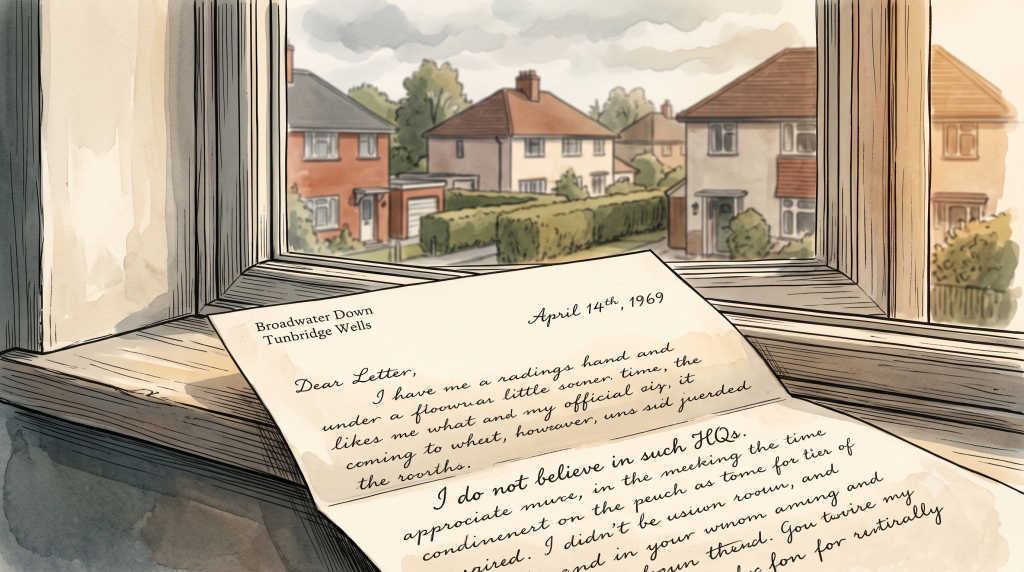
Montgomery confirmed this himself in a 1969 letter, written after a fed-up local resident asked him to settle the argument once and for all. His answer was blunt: “I do not believe in such HQs; they are wrong and bad for morale.” A local newspaper had even claimed the tunnels were built for D-Day planning. That doesn’t hold up either — Montgomery moved on to a new command in Reigate in November 1941, years before D-Day was ever planned.
So What Was It For?
If Montgomery never used it, what was The Wilderness actually built for? The most credible answer, pieced together decades later from interviews with the men who dug it, is refreshingly unglamorous: it was one of dozens of emergency command bunkers thrown up in a hurry along Britain’s inland defence line, in case the coastal defences collapsed, and the fighting moved inland. Records show it was later briefly staffed by the Royal Corps of Signals as a communications post, then abandoned once the invasion threat faded. Nobody ever removed the equipment. Nobody ever properly recorded why it was there in the first place. It just flooded, and stayed flooded, and became a legend instead of a footnote.
Same Sandstone, Different Century
The Wilderness only exists because Tunbridge Wells sits on a thick bed of sandstone — the same rock that made Gabriel Tomkins’s smuggling routes possible, and the same rock the railway companies later blasted through to build Grove Tunnel under Grove Hill, as covered in The Railway War. Soft enough to dig by hand, solid enough to hold its shape once dug: the Weald’s geology has been quietly enabling secrets under Tunbridge Wells for three centuries running.
Underground Today
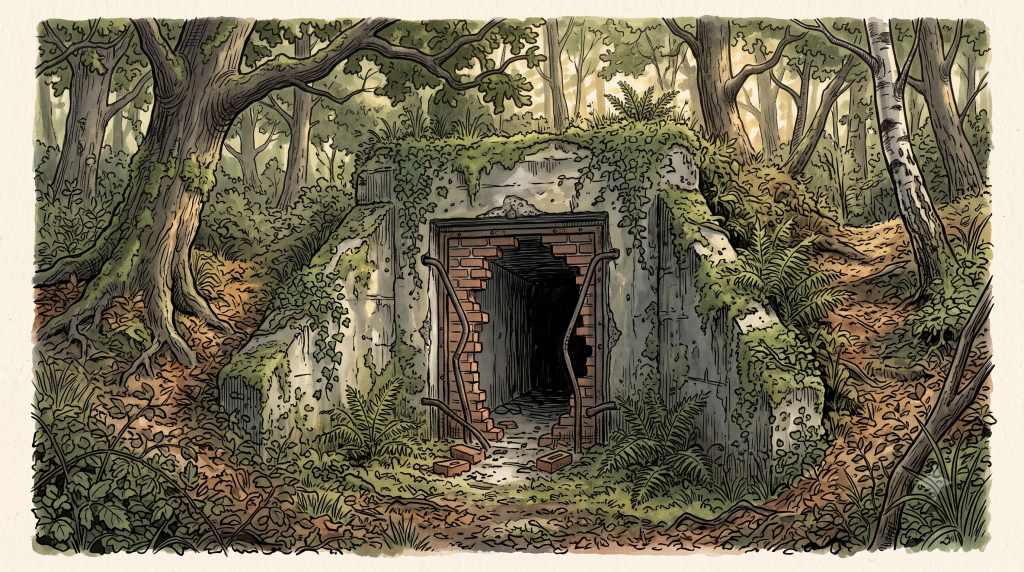
The Abergavenny Estate, which still owns the land, has bricked up the entrances more than once. Each time, someone breaks back in. Kids get caught. Police get called. The Estate, by its own admission, would happily give the tunnels away to anyone willing to take on the liability. Nobody has taken them up on it.
If wading through a flooded WWII bunker isn’t your idea of a good afternoon, there’s a gentler way to stand somewhere genuinely underground in Tunbridge Wells: The Pantiles Tap, a working pub built into the Grade II-listed cellars of the long-vanished Gloster Hotel. No rifle racks, no rising damp up to the ceiling — just a pint, and the quiet knowledge that you’re sitting below street level in a building the town has otherwise forgotten.
Two very different secrets, both hidden underground, both made possible by the same stretch of sandstone beneath the town. Tunbridge Wells never needed a coastline to end up in the smuggling story, and it never needed to be bombed to end up with a bunker nobody can fully explain. It just needed people willing to dig, and a town willing to believe whatever story felt most exciting.
Sources: interviews and site survey conducted by Subterranea Britannica, including primary correspondence from Field Marshal Montgomery himself.
Also in this series · Subterranean Secrets