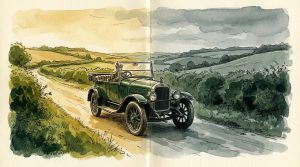
Some came to stay. Some never arrived. Some never left. The hidden Russian history of Royal Tunbridge Wells.
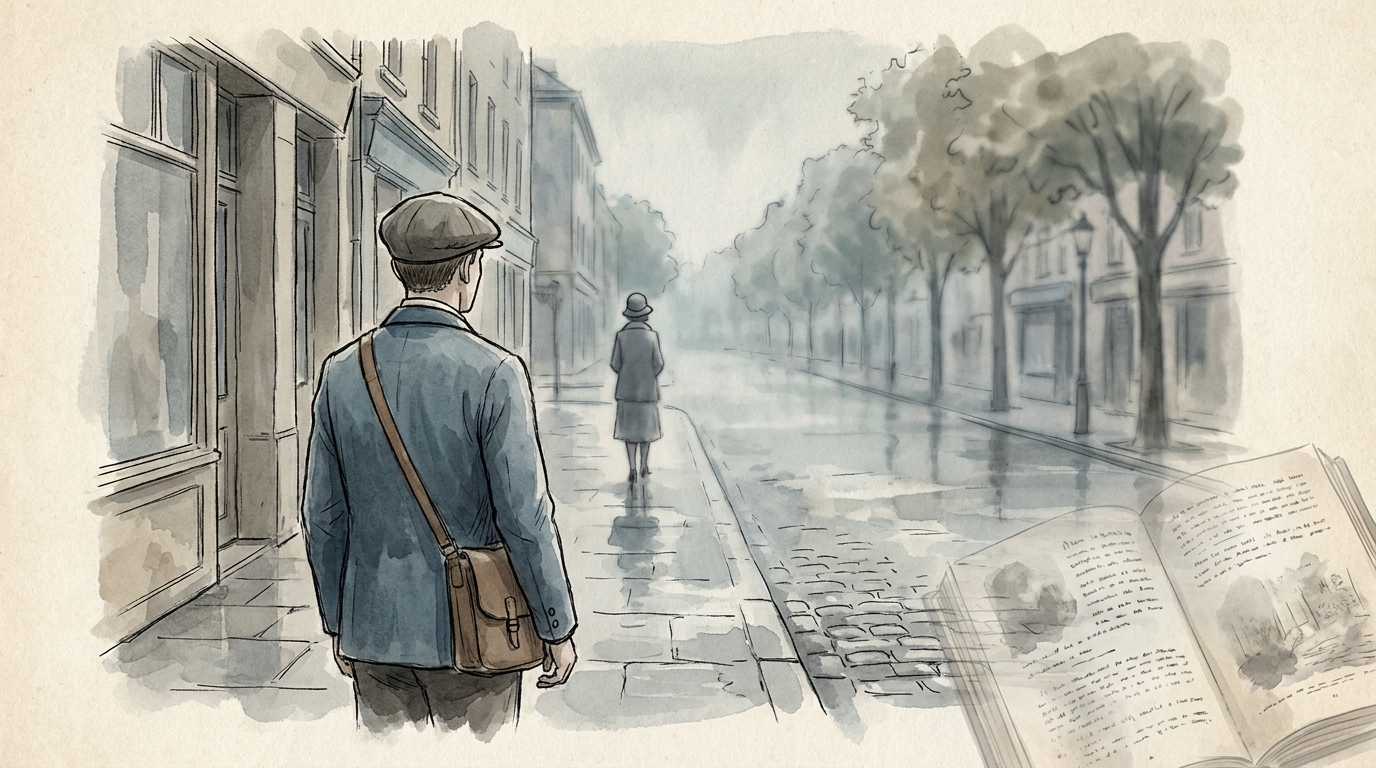
There is a woman walking down a street in Tunbridge Wells. It is sometime in the 1920s. She wears a tight-fitting cloche hat. Jade earrings catch the light. She walks with the particular bearing of someone who was once very important in a world that no longer exists.
Her name, as far as we know, is Baroness Olga. She is part of a fascinating chapter in Russian history connected to Tunbridge Wells.
She is the only person in this town, perhaps in this entire corner of England, who has lost everything — not to illness or bad luck or a poor investment, but to a revolution. The world she came from — the servants, the estates, the titles, the certainties — was dismantled in the space of a few terrible years and replaced with something entirely unrecognisable.
She ended up here. In Tunbridge Wells.
A historian’s child, Richard Cobb, watched her walk those streets and never forgot her. Sixty years later, he put her in his memoir of a Tunbridge Wells childhood. The publisher’s description calls her “the town’s only victim of the Russian Revolution.”
Only. That single word tells you everything about how invisible she must have felt.
The Revolution That Washed Up in Kent
In the years following 1917, the Russian Civil War led to the displacement of over one million people. The majority of the refugees were from Russia’s educated classes — they had fled their homes as the Whites suffered heavier defeats, first to Constantinople, then gradually on to London, Belgrade, Paris and Berlin.
Britain, however, was not exactly welcoming. Government policy was to refuse entry to all Russians unless there were exceptional circumstances. Only very small numbers were admitted — usually if they had business connections, strong personal ties, or were high-profile. Exceptions were made for upper-class Russians, who were granted entry where others were turned away.
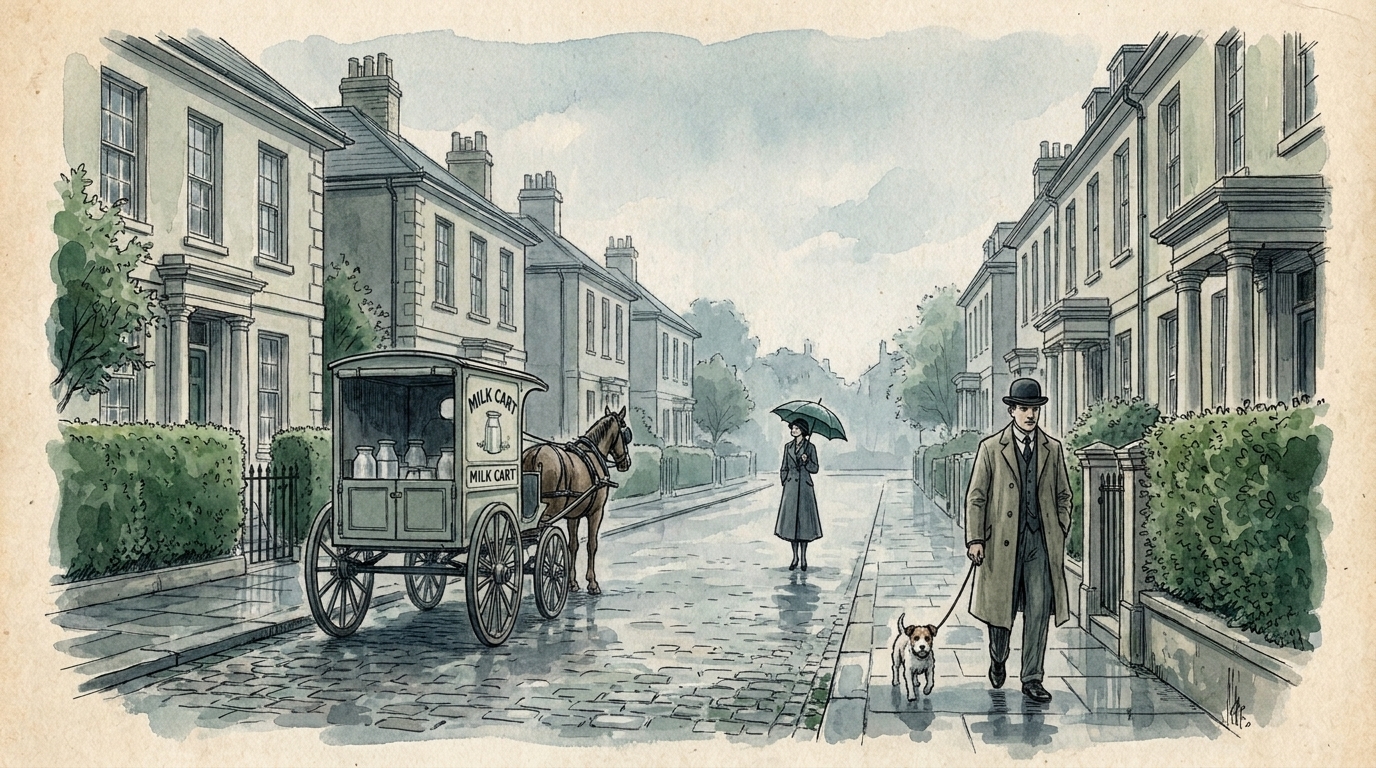
Which means Baroness Olga wasn’t just a refugee. She was a refugee who cleared a very high bar. She had connections, or a title, or both. She got in when most of her countrymen didn’t. And having got in — having survived the revolution, the civil war, the chaos of displacement, the bureaucratic machinery of a country that didn’t particularly want her — she landed in the most resolutely, comfortingly, almost aggressively ordinary English town she could find.
Tunbridge Wells. Where nothing bad ever happened. Where the biggest controversy in living memory had been an argument about who was responsible for paving The Pantiles. Where respectability was not just valued but practically load-bearing.
For a woman who had watched her entire world collapse, the appeal is clear.
What It Actually Meant to Be a White Russian in England
The early 1920s brought chaotic displacement — families fled en masse, losing properties and facing statelessness after the 1921 denationalisation. Many White Russians in Europe found themselves not just homeless but technically without a country — the Soviet Union did not recognise them as citizens, and their old passports were worthless. Nansen passports — a form of internationally recognised refugee travel document — enabled settlement and led to community formation.
Those who left included military officers, Cossacks, intellectuals, businessmen and landowners. In Paris and Berlin, the communities were large enough to be self-sustaining — the proliferation of Russian institutions abroad essentially allowed émigrés to go about their daily lives entirely in Russian, with journals, newspapers and books published in their native language.
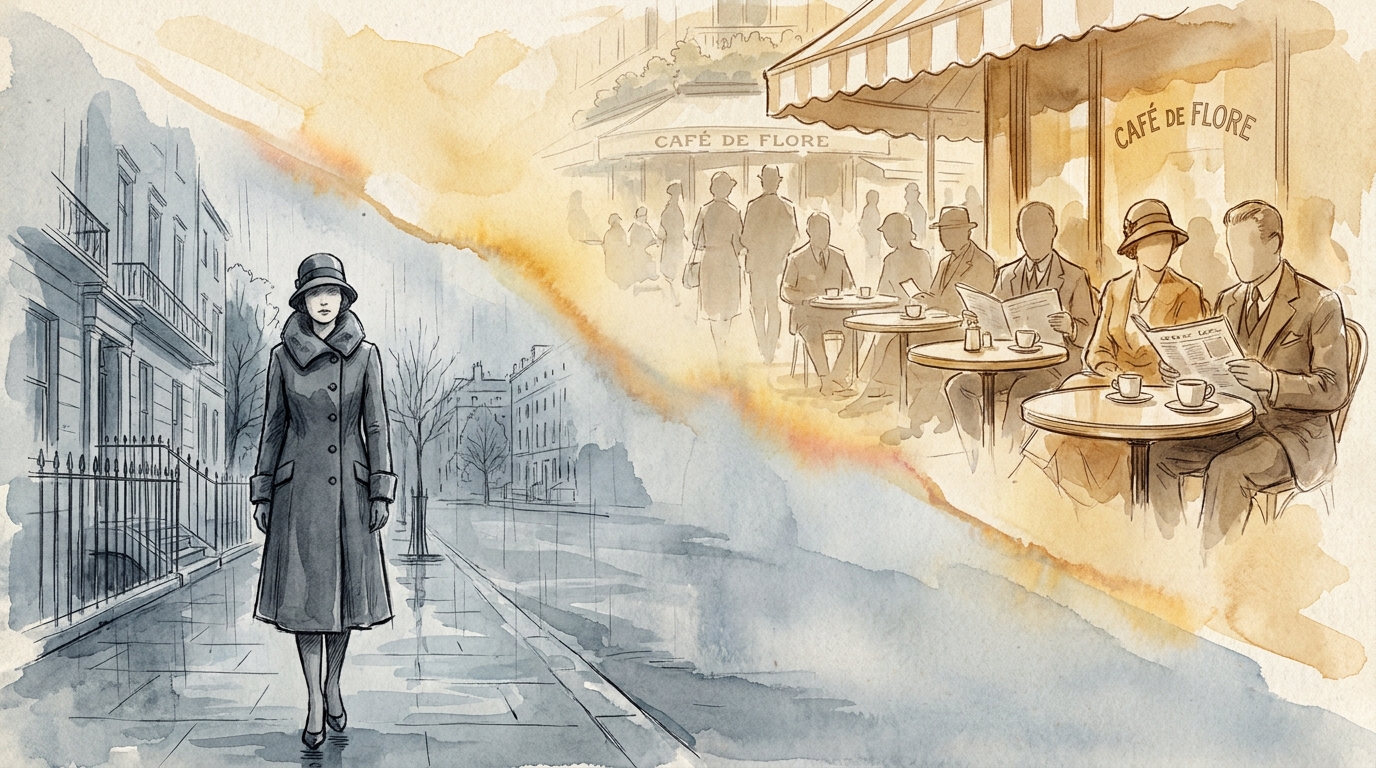
In Tunbridge Wells, there was no such community. There was Baroness Olga.
She had the cloche hat, the jade earrings, and the bearing of someone accustomed to a different kind of life. And she had the streets of a Kent spa town — the Pantiles, the Common, the High Street, the steady unhurried rhythms of a place that valued above all else the appearance of everything being perfectly fine.
In its own strange way, it might have been exactly what she needed.
The Hidden Congregation on St Luke’s Road
Here is where the story takes an unexpected turn.
Baroness Olga was not, it turns out, the town’s only Russian connection. She was simply the most visible one — noticed because she was noticed, recorded because a historian’s child happened to be watching.
Behind her, less visible, gathering quietly in borrowed spaces: a Russian Orthodox congregation.
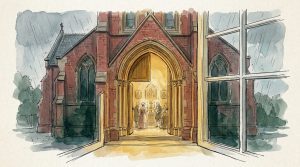
The Eucharistic Community of St Luke — part of the Diocese of Sourozh, Moscow Patriarchate — has been meeting in Tunbridge Wells since 2007, according to the diocese’s own news page. It currently meets at St Luke’s Church on St Luke’s Road, TN4 9JH. There is nothing on the outside of the building to suggest it. No Cyrillic lettering. No golden dome. Nothing that would cause a passing local to pause and think, “This is where the Russians are.”
The congregation’s news pages were last updated in 2026. It is not a historical footnote. It is happening now.
This is a later chapter of the same story. The congregation we know today is a later arrival, not a direct descendant of Baroness Olga’s world. But it carries the same tradition, gathering once a month in a Victorian church that gives nothing away from the outside, in a town that has no idea it exists.
The Personal Footnote
There is one more layer to this story — and it belongs to the present rather than the past.
Russians still come to Tunbridge Wells. Not as refugees from revolution, not as aristocrats seeking safe harbour, but as people who have found their way here by the ordinary modern routes of work and life and circumstance. Some of them have lived here for years without ever knowing that a Russian Orthodox congregation meets monthly less than a mile from their front door.
This town has a habit of keeping its Russian connections to itself.
Baroness Olga walked these streets. Richard Cobb watched and remembered her. A congregation still gathers on St Luke’s Road. And somewhere in between those facts — between the jade earrings and the borrowed Victorian church — there is a story about how places absorb the people history sends to them, quietly, without fuss, and how those people leave traces that last far longer than anyone expected.
Go Find It Today
- The Spot: St Luke’s Church, St Luke’s Road, TN4 9JH, where the Eucharistic Community of St Luke meets.
- The Route: It is a short journey from the town centre. Check the community’s news page for service dates first, because the congregation gathers only about once a month.
- The View or Challenge: Notice how little the outside of the building gives away. There is no Cyrillic lettering and no golden dome. Then walk the Pantiles and the High Street and imagine a cloche hat and jade earrings.
Fact or Fiction? The WalkTW Archive
Three questions for the comment section — and this time, we genuinely don’t know the answers:
Mystery #1: Who Was She Really? Richard Cobb names her only as “Baroness Olga.” He gives no surname, no address, no further detail. She is simply there — on the streets of Tunbridge Wells in the 1920s, walking past young Richard on his way to school. Does anyone know who she actually was? The WalkTW archive would dearly love to find out.
Mystery #2: The Church Before St Luke’s. The diocese dates the Tunbridge Wells parish to 2007, and it meets in a borrowed Anglican church. But was there an earlier Russian gathering in town, perhaps in the 1920s, among people like Baroness Olga? We have found no record either way, and we would love to.
Mystery #3: The Other Russians. The publisher of Cobb’s memoir calls Baroness Olga “the town’s only victim of the Russian Revolution,” but was she really the only one? Given that Britain admitted White Russians selectively, favouring those with connections and means, a prosperous Kent spa town with affordable Victorian villas seems like an entirely logical destination. Are there others who came and left no record at all?
If you know anything about Baroness Olga, about the history of the Orthodox community, about any other Russian connections to this town, drop it in the comments. The WalkTW archive is listening.
Read the whole Russian Tunbridge Wells trilogy
- Part 1: The Russians Who Came to Stay
- Part 2: The Russians Who Never Arrived
- Part 3: The Russians Who Never Left
Prefer to watch? The whole trilogy is also a four-minute film: watch “The Quiet Russians of Tunbridge Wells” on its film page.
Enjoyed this?