Beside the stage at Trinity Theatre hangs a marble tablet that most audiences never see. It remembers a woman who opened a school for convicts in colonial Australia, designed a chapel, and died in Tunbridge Wells in 1839. Her husband was an Arctic explorer, and his tablet hangs directly above hers.
Her name was Isabella Parry. This is her story.
The Tablet Nobody Sees
The former Holy Trinity Church still holds dozens of memorial tablets. Volunteers from the Trinity Cemetery project have recorded 23 so far. Most hang where audiences walk past. Isabella’s does not. It sits alongside the stage, so you can see it only by arrangement with the theatre, and only when the stage is not in use.
Directly above it hangs the tablet of her husband, Rear Admiral Sir William Edward Parry. Together, the two tablets tell a story that stretches from the Arctic to Australia and back to a Kent churchyard.
From Cheshire to the Arctic
Isabella Louisa Stanley was born in 1801 at Alderley, Cheshire. She was the fourth daughter of Lord Stanley of Alderley. In 1824, she met the naval officer William Edward Parry, just before he sailed on his third voyage in search of the North West Passage.
They married on 23 October 1826. In 1827, Parry tried to reach the North Pole. He failed, but his attempt set a farthest-north record that stood for around half a century. He was knighted in 1829.
A Commissioner’s Wife in Port Stephens
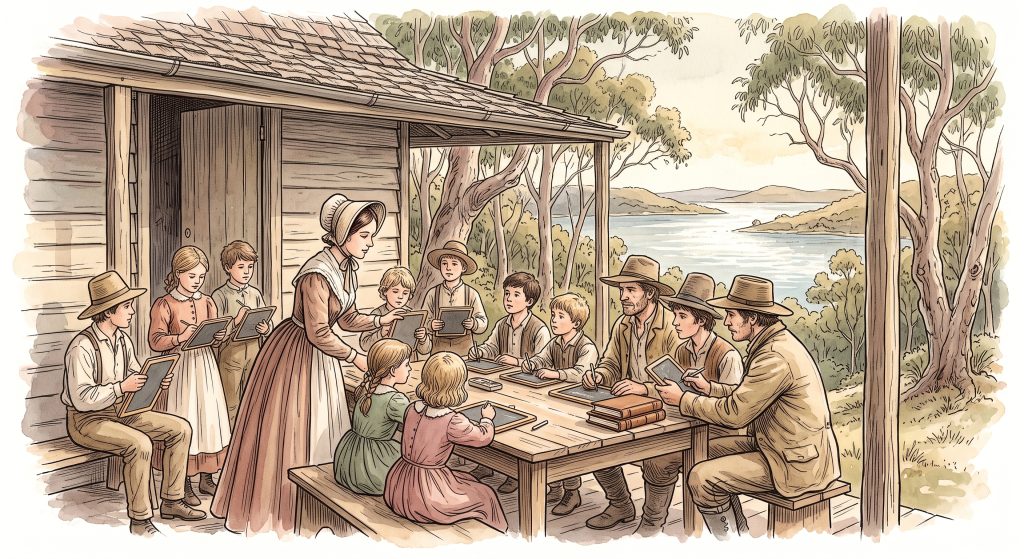
That same year, Parry accepted a new job. The Australian Agricultural Company, formed to develop wool and other exports, wanted a commissioner for its holdings in New South Wales. The couple reached Sydney in December 1829. Isabella stayed as a guest at Government House, where her twins were born. In March 1830, she joined her husband at Tahlee, on the shore of Port Stephens.
There, she did far more than run a household. First, she opened a school for local children. Next, she started another for adult convicts who wanted to learn to read and write. She also began a lending library. In addition, she designed St John’s Chapel, built in Stroud in 1833.
She collected insects, plants and Aboriginal artefacts, and she sketched the scenes around her. The Scott Polar Research Institute in Cambridge still holds her letters and diaries from 1813 to 1839. An island in Nunavut, Canada, bears her name.
A Last Visit to Tunbridge Wells
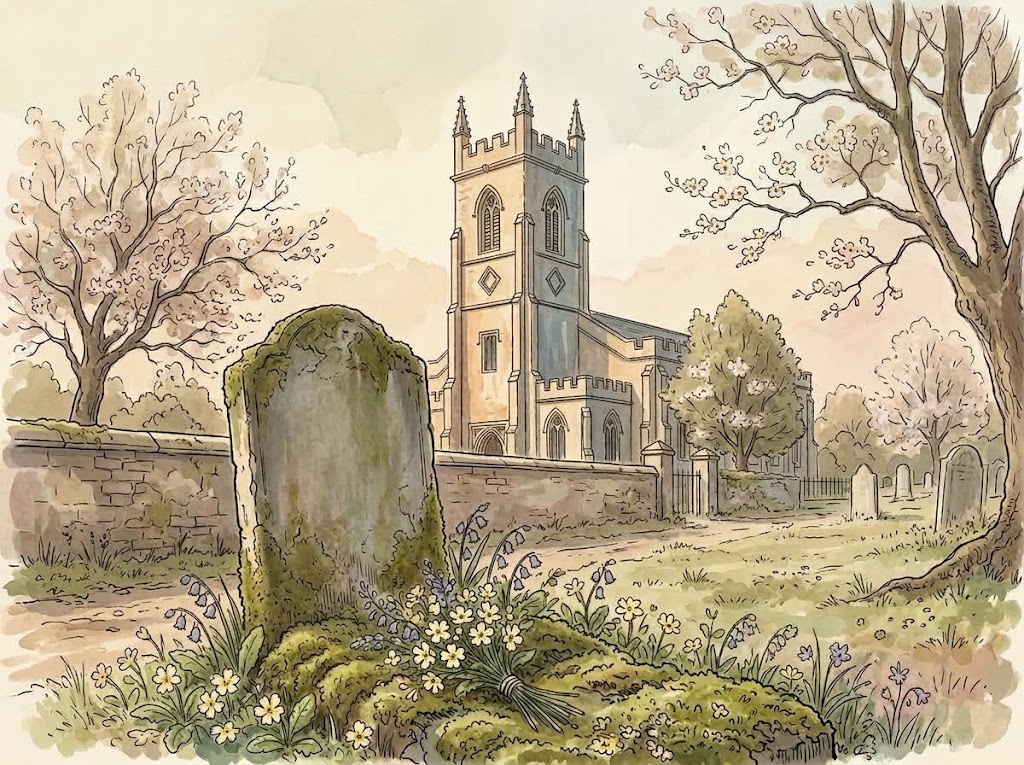
The family returned to England in 1834. In 1839, whooping cough swept through the household. According to the Trinity Cemetery researchers, the Parrys came to Tunbridge Wells for the air, and Sir Edward rented Mount Edgecumbe House.
Isabella died there on 13 May 1839. Two days earlier, she had given birth to twin sons, who did not survive. The tablet records that the infant twins were buried with their mother in the churchyard. Its inscription praises her as “exemplary as a daughter & a wife & a mother”.
Her grave, in plot C8, is now so worn that moss covers most of the lettering. However, her story did not vanish. Her husband remarried in 1841, but the tablets at Trinity keep the first family together on one wall.
The Young Soldier Opposite the Bar
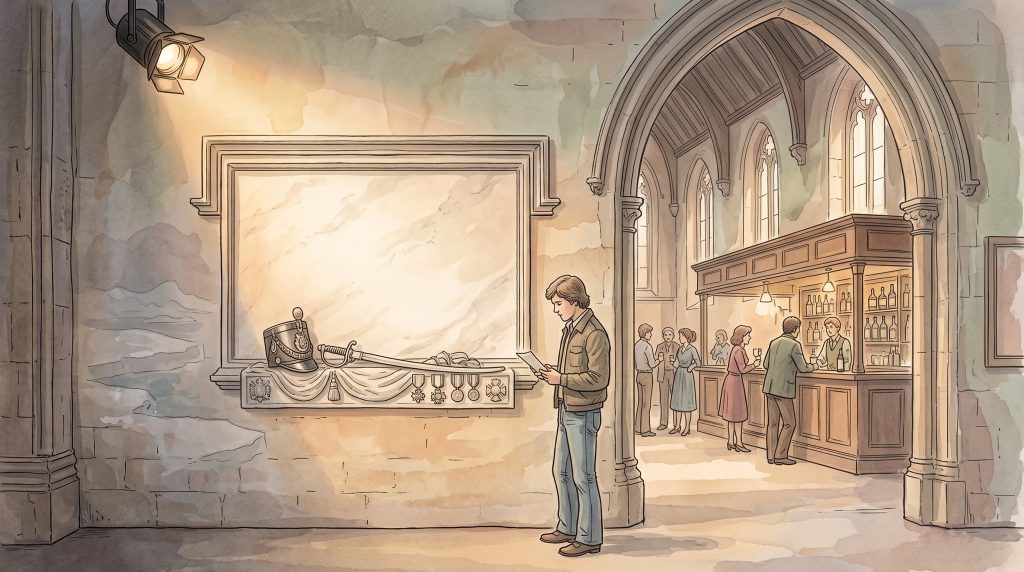
Another tablet tells a very different story. It hangs to the right of the entrance, opposite the bar, and is visible when the theatre is open.
It remembers Lieutenant Charles Newton of the 16th Bengal Grenadiers. He was the fourth son of John Newton of Calverley Park. After four years of service in Afghanistan, he was killed in December 1843 at the Battle of Maharajpur, aged 22. The sculptor Richard Westmacott made the tablet, and a shako, sword and medals are carved at its base.
The inscription says Newton refused to leave the field even though he was wounded. His brother officers later raised a monument to him at their camp. The Gentleman’s Magazine reported his death in April 1844.
Why These Tablets Matter
Trinity’s history includes many famous names, from Decimus Burton to Canon Hoare. Yet the tablets remember people who rarely make the headlines. Isabella ran schools and designed a chapel on the far side of the world. Charles Newton grew up among the villas of Calverley Park.
Tunbridge Wells has a habit of overlooking women who ran things, as Bell Causey’s story shows. Time may change, but people don’t. The tablets by the stage are a small reminder of that.
Fact or Fiction? The WalkTW Archive
- Is Isabella Parry buried at Trinity? Yes. Her grave is in plot C8 of the churchyard, and the tablet says her twin sons were buried with her.
- Did she really run schools in Australia? Yes. The National Portrait Gallery of Australia records schools for children and for adult convicts, plus a lending library.
- Did Sir Edward Parry die in Tunbridge Wells? No. He died at Bad Ems, Germany, in 1855.
- Can anyone see the tablets? Newton’s tablet is visible whenever the theatre is open. Isabella’s can be seen only by arrangement.
Go Find It Today
- The Spot: Trinity Theatre, Church Road, Tunbridge Wells, TN1 1JP.
- The Route: Walk to Church Road from the town centre (about 7 minutes).
- Walk it: Trinity Churchyard is Stop 4 of Footsteps Tour 2: The Hidden Geniuses and Untamed Greens, a 40-minute self-guided walk. Trinity Theatre itself is Stop 1 of Footsteps Tour 9: Stage Fright, Theatres, Pianos & Playwrights, a walk of about 45 minutes.
- The View or Challenge: Find Charles Newton’s tablet opposite the bar and read the date of the battle. Records of the inscription differ, so check what the stone itself says. Then ask the theatre about seeing Isabella’s tablet by arrangement.
Related reading: Too Religious for a Theatre, Calverley Park and The Woman He Replaced.
Watch this story in under a minute →
Enjoyed this?