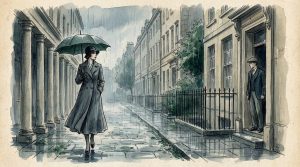
Some came to stay. Some never arrived. Some never left. The hidden Russian history of Royal Tunbridge Wells.
On 8 April 1909, King Edward VII granted the spa town in Kent the right to be known as Royal Tunbridge Wells — one of only three towns in England with the Royal prefix. The story of the Romanovs in England — the Royal connection to Tunbridge Wells — is a fascinating part of the town’s unique history.
The original proposal was to rename it “Royal Kentish Spa,” but the King preferred “Royal Tunbridge Wells,” and this was the name formally granted. The prefix recognised the town’s long history of royal and aristocratic visitors, stretching back to the earliest days of its fame as a spa.
It was a moment of quiet civic triumph. The town had been trying to modernise, to compete, to position itself as something more than a faded Georgian resort. The Royal prefix was its reward.
What nobody in Tunbridge Wells could have known was that the King who signed that warrant had less than thirteen months left to live. That his son George, who would inherit both the throne and the family’s Russian connections, would within eight years face one of the most agonising decisions in the history of the British monarchy. And that the Russian cousins who might, in a different history, have found their way to this corner of Kent would instead end their lives in a cellar in the Ural Mountains.
The year Tunbridge Wells became Royal was also, almost exactly, the last year things were still going to be fine.
Georgie and Nicky: The Cousins Who Looked Like Twins
To understand what was lost, you need to understand what existed.
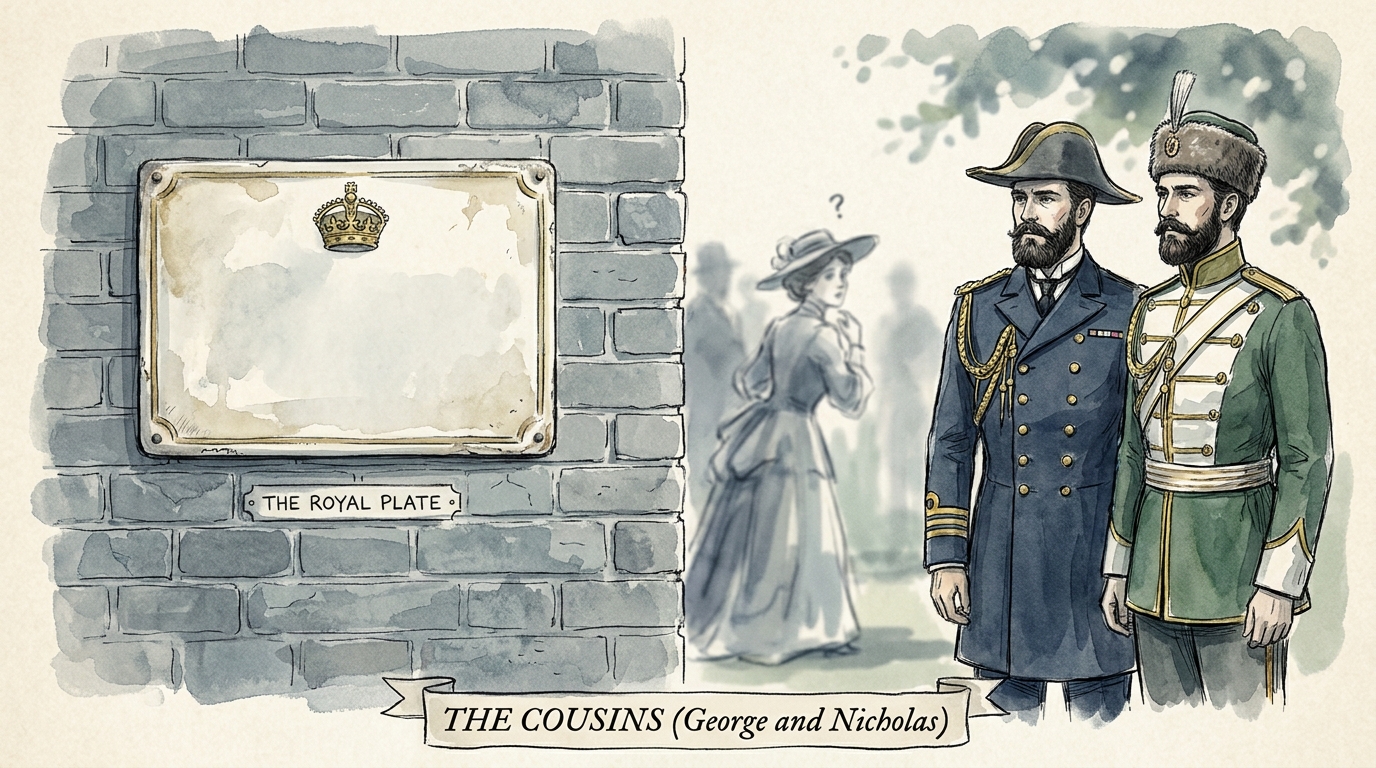
Tsar Nicholas II of Russia and King George V of Great Britain were first cousins and bore a striking resemblance to each other — the same blue eyes, the same beard, similar in size and build. They often wrote to each other using the nicknames “Nicky” and “Georgie.” Their own relatives sometimes mistook them for one another from behind.
By all accounts, the relationship was warm and affectionate — cousins who seemed almost as close as siblings. They holidayed together with their families. Although George and Nicholas shared a close bond when young, the weight of the monarchy and political unrest in Russia would gradually impose distance between them.
They were cousins in the deepest Victorian sense — products of Queen Victoria’s extraordinary habit of marrying her children into every royal house in Europe. George and Nicholas were grandchildren of Queen Victoria, bound to one another by history even as history would ultimately tear them apart.
In the summer of 1909 — the same year Tunbridge Wells received its Royal prefix — the Romanov and Windsor families met at Cowes for Regatta Week. Three generations. The last entirely happy family photograph. Four years later, in 1913, they gathered again in Berlin for a cousin’s wedding. It would be the final meeting of the great European royal families before the start of the First World War — and perhaps the last amiable occasion before the Romanov dynasty’s collapse.
The Romanov Who Actually Lived in England
Here is something most people don’t know. A member of the immediate Romanov family didn’t just visit England in the years leading up to the revolution. He lived here.
Grand Duke Michael Alexandrovich — tall, handsome, the younger brother of Tsar Nicholas II — arrived in England in 1913, taking up residence at Knebworth House in Hertfordshire on a one-year lease. He had been exiled from Russia by his own brother for entering into a morganatic marriage — marrying beneath his station — with a twice-divorced commoner named Natasha. The couple had been forced to live a peripatetic existence in Switzerland, on the French Riviera and finally in England.
He walked English lanes. He photographed the English countryside. A photo album of some 200 photographs he took during his time at Knebworth sold at auction for the equivalent of $34,000. He was, in every practical sense, a Russian Grand Duke living an English country life — attended by an English governess for his children, watched by Russian secret police who had followed him across Europe, excluded from English high society because his wife was divorced.
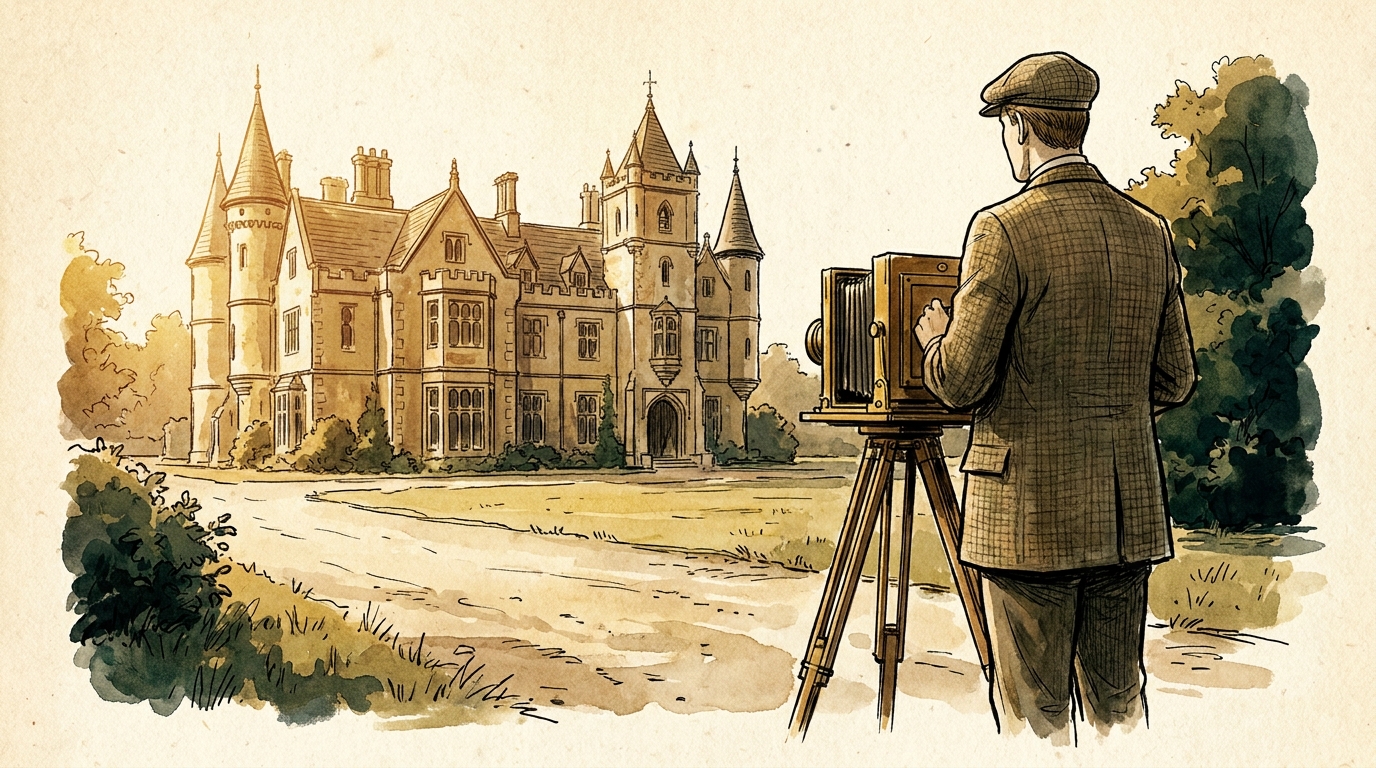
When Russia mobilised its troops in 1914, Michael sought permission to return to Russia and fight for his country. He went back. He need not have.
In 1917, after Nicholas abdicated, Michael was named in the abdication manifesto as potential Tsar — he deferred acceptance until ratification by an elected assembly and was never confirmed as Emperor. Grand Duke Michael and Countess Brasova were kept under house arrest on the Gatchina estate.
He never saw England again.
Grand Duke Michael Alexandrovich was murdered on 13 June 1918 in Perm, Russia, aged 39. He was the first of the Romanovs to be killed. His brother Nicholas and the rest of the imperial family followed in Yekaterinburg one month later.
The English countryside he had photographed from Knebworth continued quietly without him.
The Refusal That Changed Everything
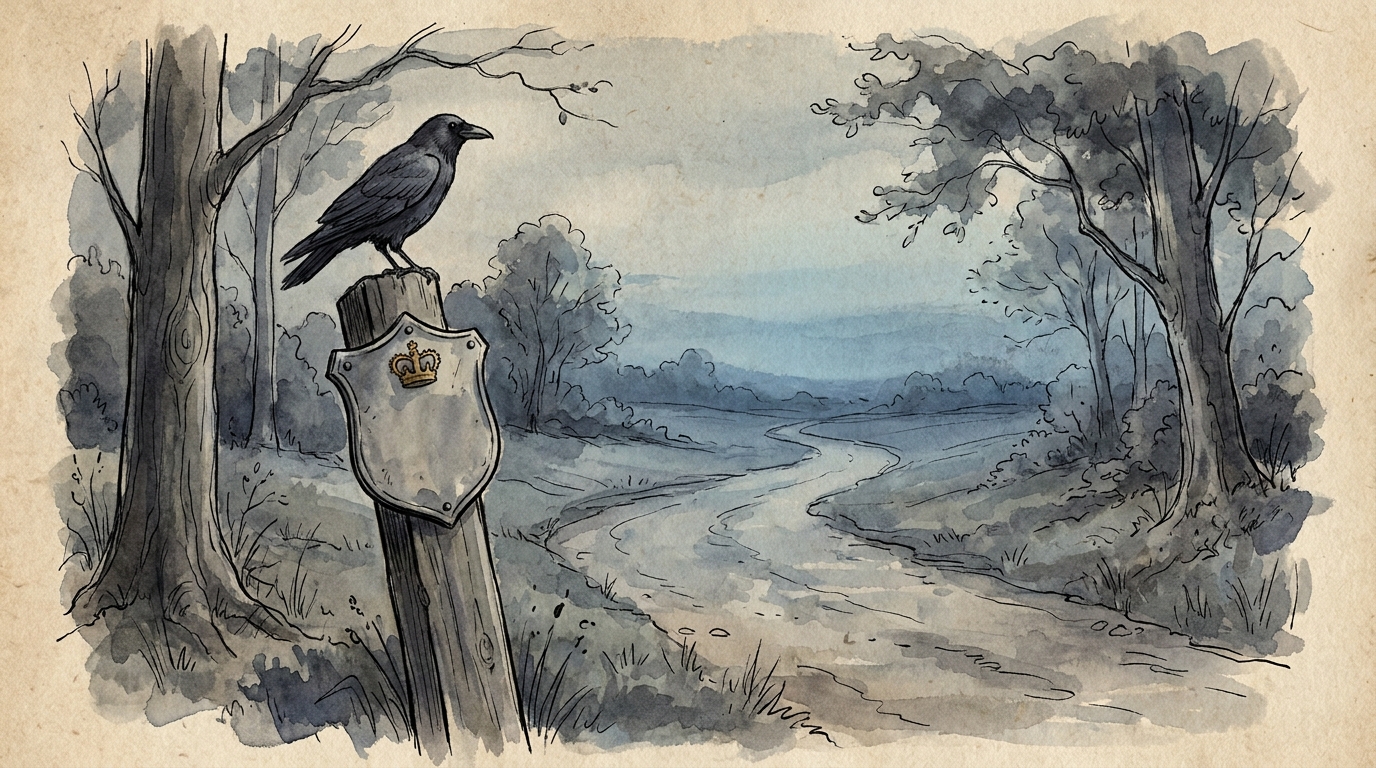
In March 1917, the British Foreign Office wrote to the British Ambassador in Petrograd to offer “asylum to the Emperor and Empress in England, which it is hoped they will take advantage of during the war.” Later, owing to fears of growing anti-monarchical sentiment and possible revolution at home, King George V and Parliament opposed the idea.
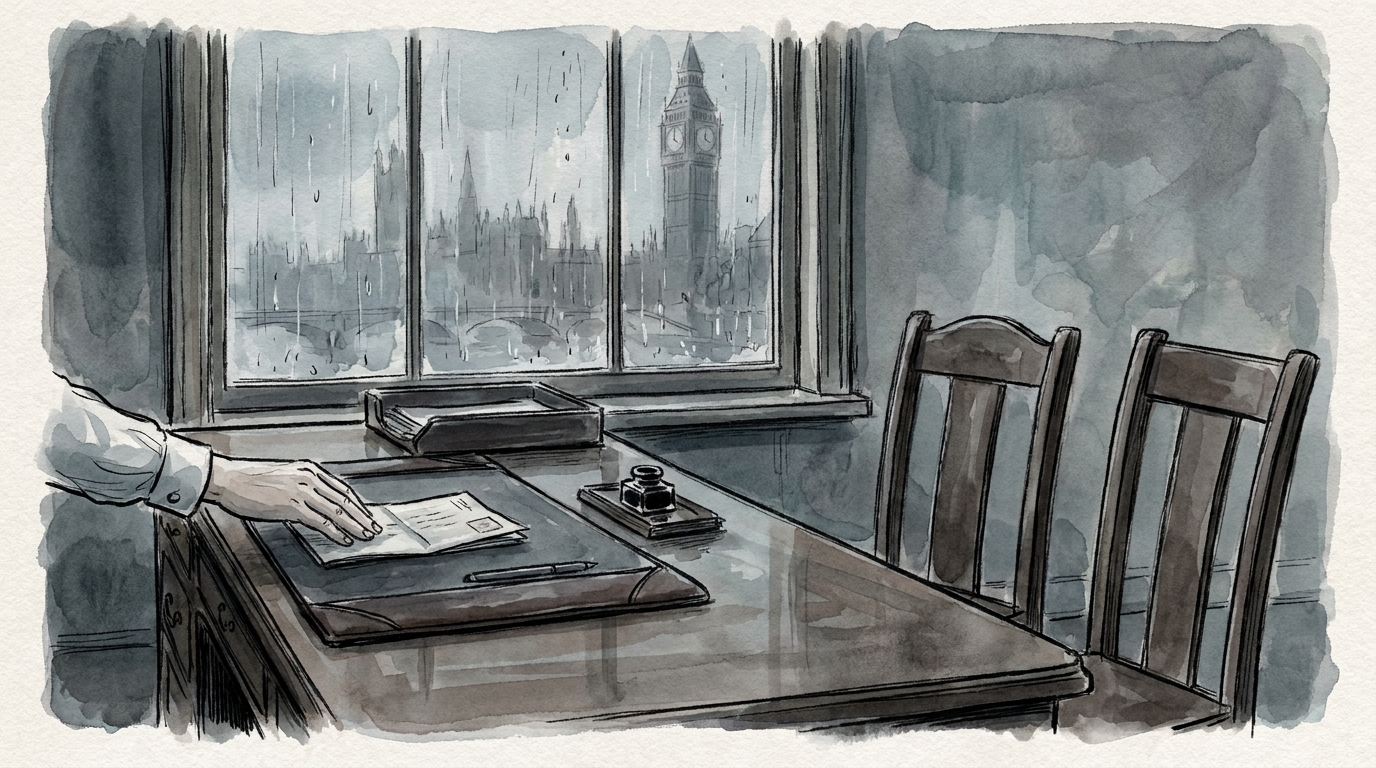
The king’s own doubts were among those that counted, and historians continue to debate how much weight to give them. The political calculation was cold and clear: bringing “Bloody Nicholas” and his German Empress to England would look bad. Britain was a constitutional monarchy in which a king’s power was subject to the people. Nicholas was radioactive, and George needed to protect himself. He wasn’t “Georgie” anymore.
It was unfortunately not considered acceptable to offer asylum to the Tsar or any male members of the Russian Imperial family. The British government needed to keep Russia in the war as an ally and did not want to upset the Provisional Government, which they had already recognised as the legitimate rulers of Russia.
George V wrote to Nicholas after his abdication: “I shall always remain your true friend.”
He did not save him.
After the murder, he wrote in his diary that it was a foul murder, and that he had been devoted to Nicky, who was the kindest of men and a thorough gentleman. The diary entry has the particular quality of a man who knew exactly what he had done and could not say so.
What Tunbridge Wells Might Have Contained
This is the counter-history. The paths that nearly crossed. The houses that might have had different occupants.
Grand Duke Michael had lived in England and never saw it again. His sister Xenia — Nicholas’s favourite sibling — was George V’s favourite cousin. He gave her Frogmore Cottage as a grace-and-favour home in 1925, and she used to go to Windsor Castle to see the King and Queen. She lived in England until she died in 1960 at Hampton Court Palace. The Tsar’s sister died in Hampton Court Palace. His nephew, Prince Andrei Alexandrovich, was born in the Winter Palace, St Petersburg, and died at Provender House, Faversham, Kent, on 8 May 1981.
The Tsar’s family — the ones who survived — ended up in Kent anyway. One branch of the Romanovs has been in this county for over a century. They just arrived as exiles rather than as royalty, by a longer and more terrible route than anyone intended.
And in Tunbridge Wells, in the 1920s, a woman in a cloche hat and jade earrings walked the streets — the town’s only acknowledged Russian Revolution refugee, remembered by a historian’s child who happened to be watching.
The Royal prefix the town received in 1909 came from a king who would shortly face a choice between family and politics, and choose politics. The word “Royal” on our street signs is, among other things, a small monument to a friendship that couldn’t hold when it mattered most.
Go Find It Today
- The Spot: The word “Royal” itself, which the town has carried since the grant of 8 April 1909. Look for it on signs, on the station and on Tunbridge Wells Town Hall, Civic Way.
- The Route: Start at the Chalybeate Spring on The Pantiles and finish at the Town Hall. It is about 0.6 miles and flat all the way.
- The View or Challenge: Count how many times you see “Royal” on the way. Each one is a small monument to the year when everything was still going to be fine.
- Walk it: Footsteps Tour 5: One Spring, One Town
Fact or Fiction? The WalkTW Archive
Three questions for the comment section:
Question #1: Did He Come to Kent? Grand Duke Michael Alexandrovich leased Knebworth House in Hertfordshire in 1913. We have found no record that he, or his wife Natasha, ever visited Kent during those months. Does anyone know? The WalkTW archive would very much like to find out.
Question #2: The Photograph Album. Grand Duke Michael took 200 photographs of English country life during his time at Knebworth in 1913-14. They later sold at auction. Has anyone ever seen them? Knebworth is in Hertfordshire, not Kent, so we cannot say whether any of them show the Wealden countryside around Tunbridge Wells.
Question #3: Did They Pass Through? The railway line from London to the Sussex coast runs through Royal Tunbridge Wells. The station exists. The timetables existed. Is it possible that a Romanov passed through Tunbridge Wells Central on a trip to the coast and never left a record of it? We cannot prove it. We cannot disprove it either.
Drop your thoughts below. The archive is listening.
Read the whole Russian Tunbridge Wells trilogy
- Part 1: The Russians Who Came to Stay
- Part 2: The Russians Who Never Arrived
- Part 3: The Russians Who Never Left
Prefer to watch? The whole trilogy is also a four-minute film: watch “The Quiet Russians of Tunbridge Wells” on its film page.
Enjoyed this?