How Tunbridge Wells Produced Sid Vicious — and Then Politely Declined to Remember Him
Before They Were Famous | Hidden Geniuses
Every plaque tells you who a town wants to be remembered for. It’s the plaques that got rejected that tell you who a town actually was.
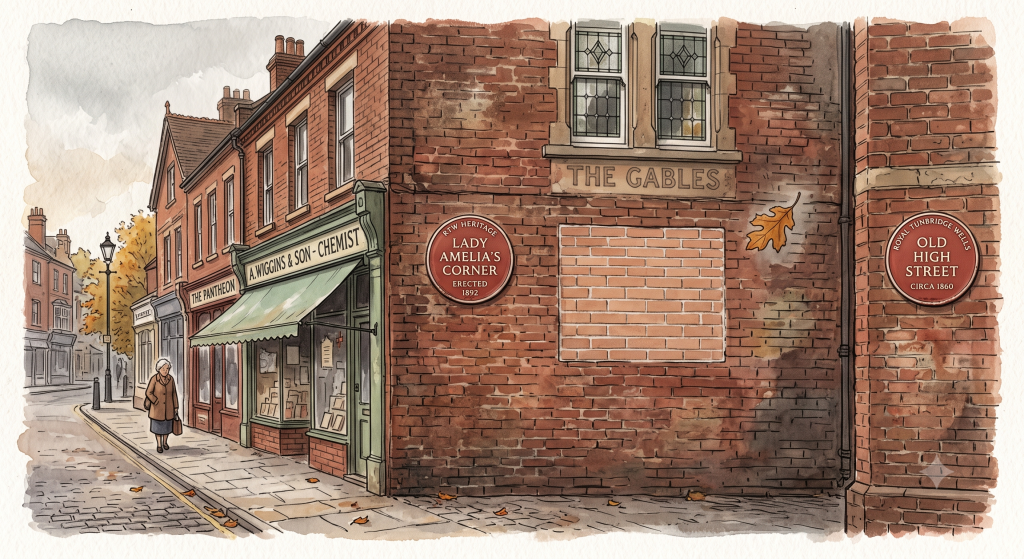
In 2017, the Royal Tunbridge Wells Civic Society considered adding a red plaque to their Writing on the Wall trail — the scheme that honours notable former residents. Among the names on the shortlist was a former pupil of Sandown Court Secondary Modern School, a “world-renowned” figure by any reasonable definition. The Society looked at his file, considered his fame, and decided his connection to the town was, in their words, too slight to merit recognition.
The person they turned down was Sid Vicious.

John Simon Ritchie, Formerly of Nowhere in Particular
Before he was Sid Vicious, he was Simon John Ritchie, born in Lewisham on 10 May 1957. His father was a guardsman at Buckingham Palace who also played trombone semi-professionally on the London jazz scene. His mother, Anne, had left school early and joined the RAF, where she met him.
The marriage didn’t last, and neither did the father’s presence. Shortly after Simon’s birth, Anne took him to Ibiza, expecting her husband to follow. He never did, and provided no financial support. Anne got by however she could — reportedly, at times, by selling marijuana — until the British Embassy in Spain helped mother and son return to England.
They needed somewhere to land. They landed in Tunbridge Wells.
Six Years in the Conservative Heartland
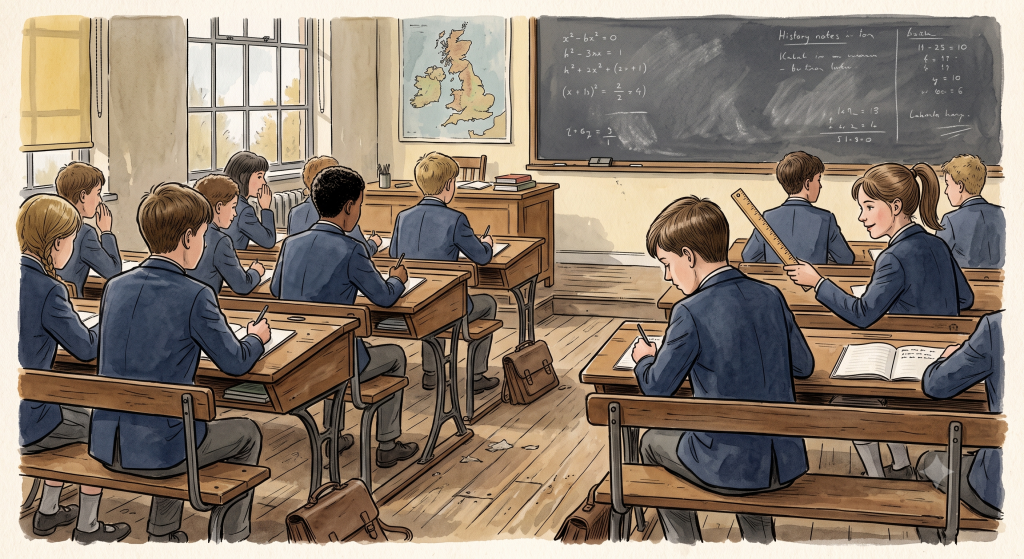
Anne Ritchie settled in the town with her young son around 1965, and he stayed there until 1971 — roughly the whole of his primary and early secondary schooling. He attended Sandown Court Secondary Modern School, on the site now occupied by Skinners’ Kent Academy, from 1968.
What makes this genuinely startling isn’t just that punk’s most notorious bassist grew up in a Kent spa town famous for its conservatism. It’s what his former classmates actually remember about him.
Lin Cousins, who sat behind him in class and once poked him in the neck with a ruler, recalled him as quiet and mild-mannered — she half-blamed herself, only half-joking, for how he later turned out. Margaret Willingham’s brother told her much the same: Simon was very quiet at school. Andy Bush, who overlapped with him at Sandown Court, remembered nothing remarkable about his academic record or behaviour at all — noting, with a dry local awareness of the irony, that the school’s reputation was “somewhat frowned upon by the Disgusted of Tunbridge Wells element.”
The future icon of dark, decadent, nihilistic punk — the man who, within a decade, would define an entire subculture’s aesthetic of controlled chaos — was, by every surviving account, a shy boy who kept his head down in a Tunbridge Wells classroom and got poked with a ruler.
What the Town Actually Produced
Ritchie left Tunbridge Wells in 1971, before adolescence properly set in. What followed — Ibiza again, Bristol, Stoke Newington, a mother whose addiction deepened rather than steadied, a household so unstable that by the time he was a teenager he was effectively unsupervised — belongs to a story that has very little more to do with this town.
He met John Lydon, not yet Johnny Rotten, at further education college. He fell in with Vivienne Westwood and Malcolm McLaren’s orbit around the King’s Road shop SEX. In February 1977 he joined the Sex Pistols to replace Glen Matlock, despite barely being able to play bass. His image — safety pins, swastikas, a padlock around his neck, a performance of controlled violence — became one of the most recognisable in the history of British youth culture. He died in New York in February 1979, aged 21, of a heroin overdose, less than four months after the death of his girlfriend Nancy Spungen.
None of that happened here. What happened here was quieter, earlier, and — by every account available — almost entirely unremarkable.
The Plaque That Wasn’t
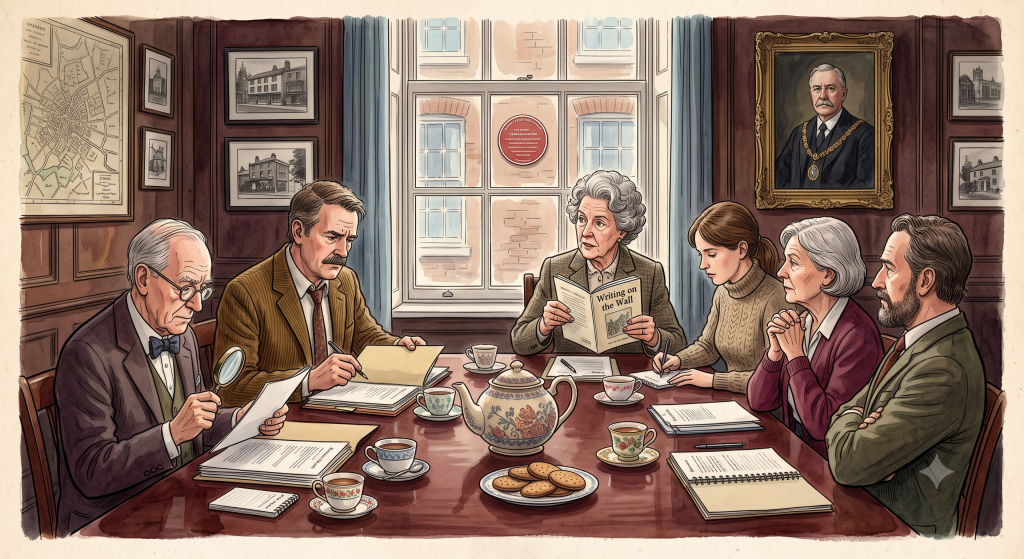
Which brings us back to 2017, and the Civic Society’s Writing on the Wall booklet — a list of 42 notable former residents considered worthy of a red plaque on a building somewhere in town.
Sid Vicious’s name came up. The Society acknowledged the basic facts: world-famous, genuinely resident in the town for six years, attended a real local school that still exists under a different name. And then they said no. Alastair Tod, editor of the booklet, confirmed the decision — the connection was judged too slight.
It is worth sitting with the shape of that rejection for a moment. This is not a town saying “we’ve never heard of him.” This is a town that clearly has heard of him, has looked carefully at the evidence, and has decided that the association itself is the problem, however real the residency was.
Tunbridge Wells will, without hesitation, put up a plaque for a Victorian bio-hacker buried in Woodbury Park Cemetery, or a probability theorist who never sought fame in his lifetime. What it apparently cannot quite bring itself to formally commemorate is the shy boy from Sandown Court who grew up to embody everything punk found threatening about respectable England — including, presumably, respectable Tunbridge Wells itself.
The Town’s Own Joke, At Its Own Expense
There is something almost too perfect about this story for a WalkTW post. A town whose defining national stereotype is the outraged, disapproving letter-writer — the subject of our own Disgusted of Tunbridge Wells investigation — quietly produced the genuine embodiment of everything that stereotype exists to be disgusted by, and then, decades later, declined to put his name on a wall.
Sid Vicious never asked for a plaque. He would very likely have found the entire debate — the committee, the booklet, the careful weighing of “too slight to merit recognition” — exactly as absurd and beside the point as everything else about respectable English institutions. In that sense, the town’s refusal might be the single most fitting tribute it could have offered him: a rejection so polite, so procedurally correct, and so quietly disapproving that it could have been written by Disgusted of Tunbridge Wells himself.
He was here. The records confirm it. The classmates remember it. The school, under a different name, still stands.
The plaque, for now, does not.