Let’s set the scene. The year is 1722. Daniel Defoe’s original ambition had been to be a businessman — but following bankruptcy, imprisonment, and the pillory, he had transformed into a lonely and secretive writer of pamphlets, novels, and a government spy.
He had already written Robinson Crusoe. Moll Flanders had come out that same year. At this point, Daniel Defoe in Tunbridge Wells was sixty-two years old, perpetually in debt, almost certainly still working as a government intelligence agent on the side, and very probably in no mood to be impressed by anyone’s pretensions.
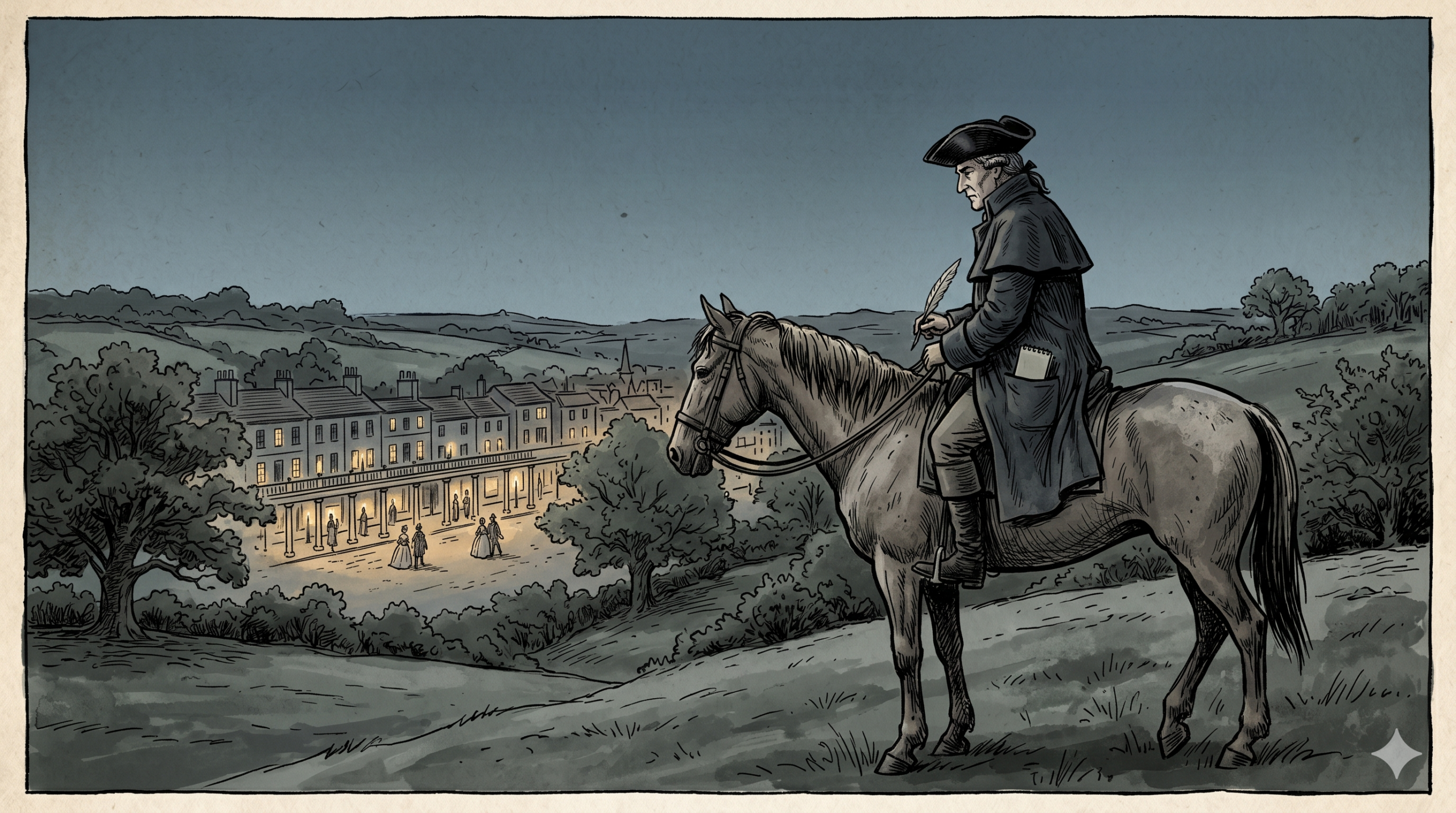
He rode into Tunbridge Wells on horseback. He watched. He formed some extremely sharp opinions. And then he wrote them all down in a book that is still in print three hundred years later.
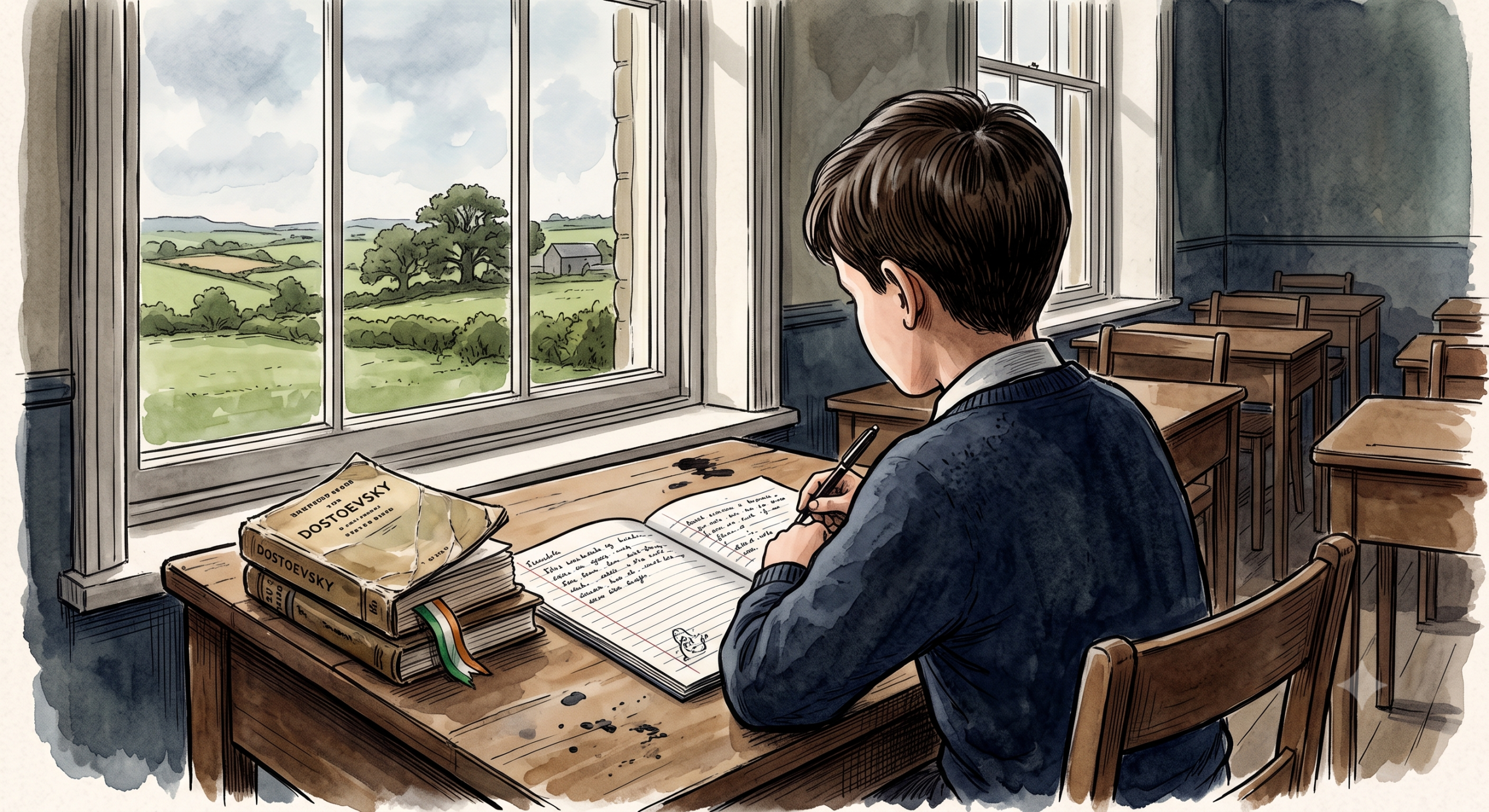
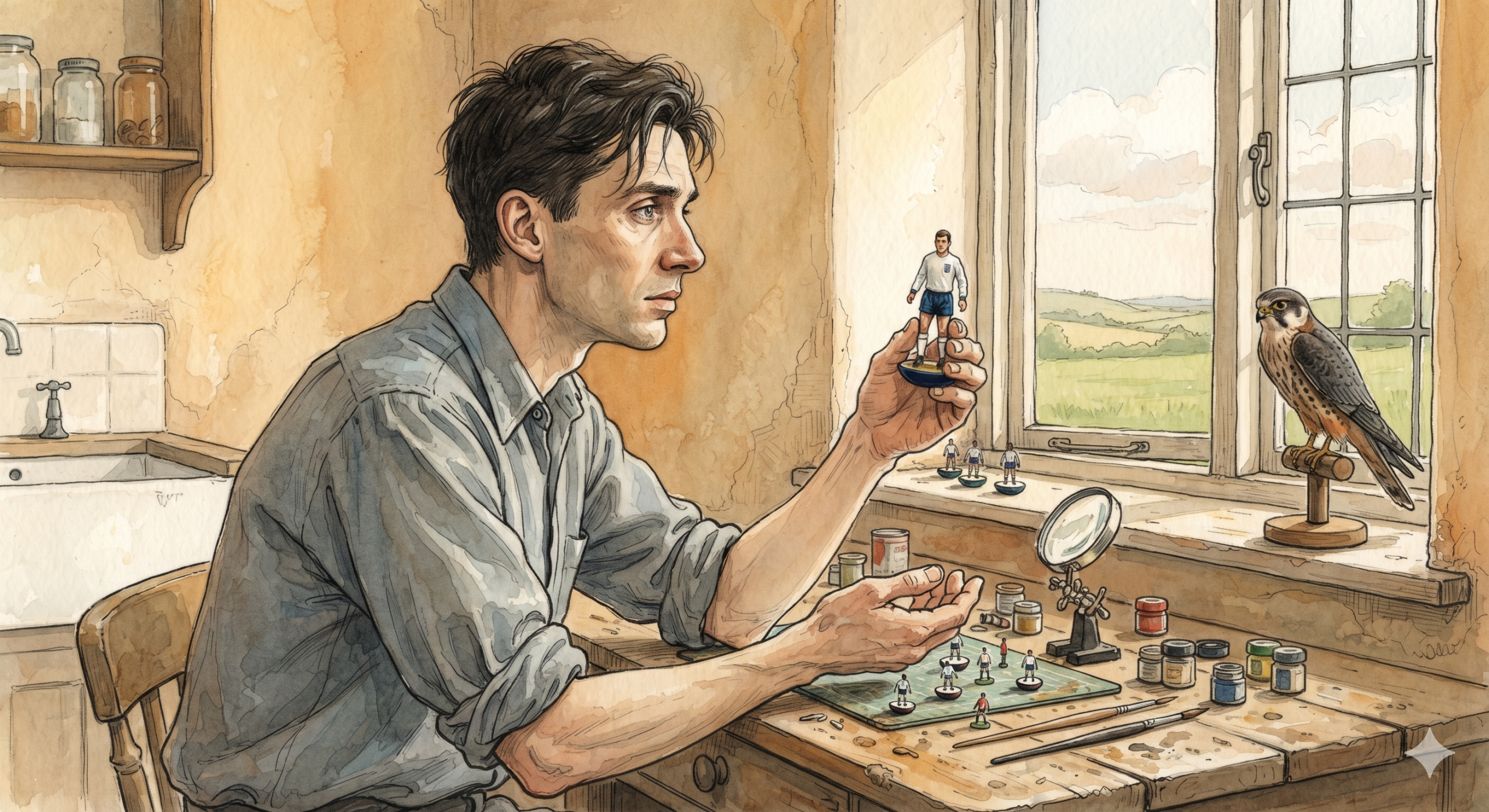
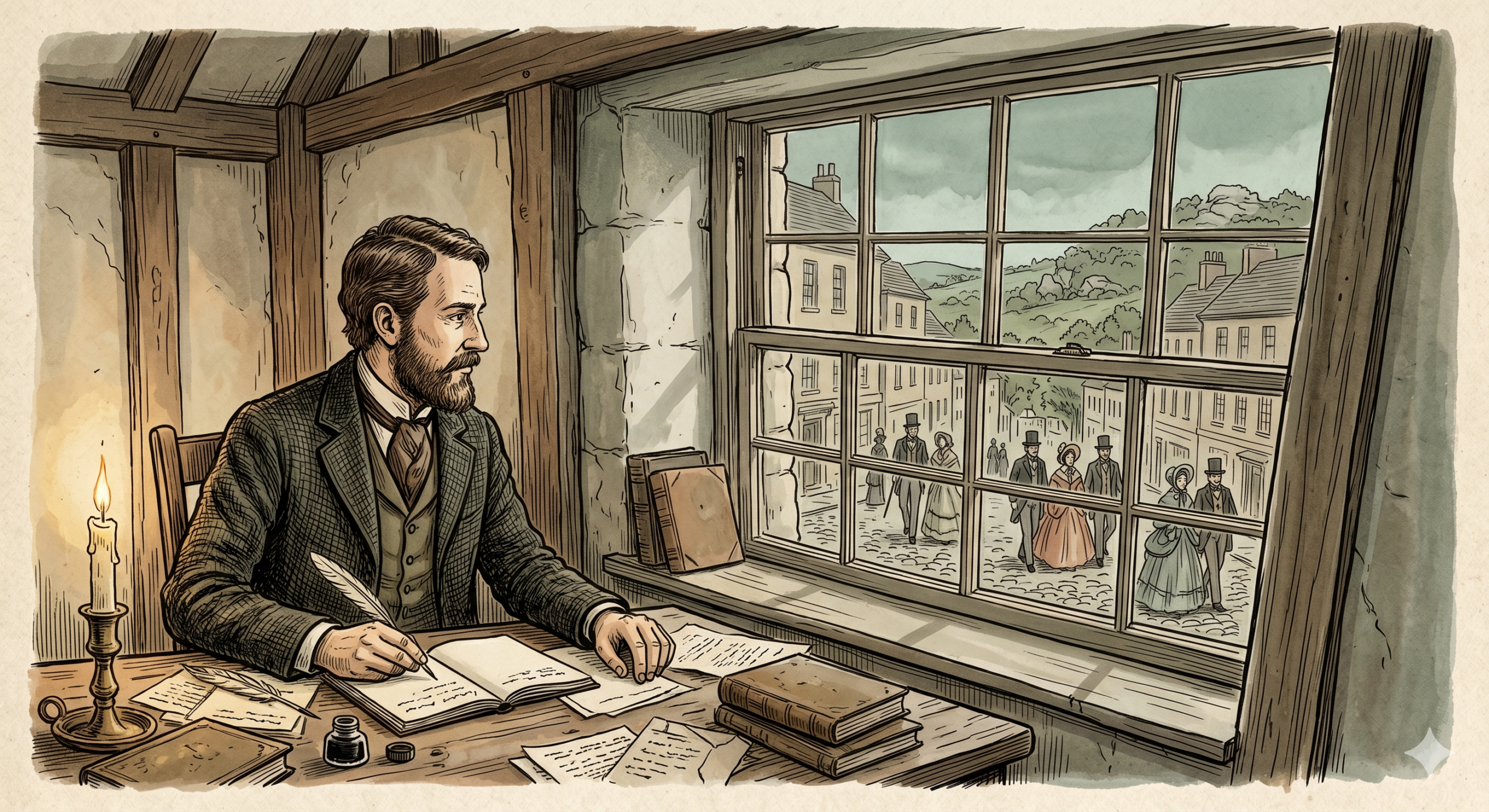
If Thackeray took notes from a window and Nesbit took memories from a field, Defoe walked straight into the middle of the promenade, looked everyone directly in the face, and told them exactly what he thought of them.
The Man Who Invented Modern Journalism
Before we get to what he said about us, it’s worth understanding who was saying it.
A well-educated London merchant, Defoe became an acute economic theorist and began to write eloquent, witty, and often audacious tracts on public affairs. A satire he published resulted in his being imprisoned in 1703, and his business collapsed. He travelled as a government secret agent while continuing to write prolifically.
When prosecuted for a pamphlet, Defoe had spirit enough, while awaiting his ordeal, to write the audacious “Hymn to the Pillory” — and this helped to turn the occasion into a triumph, with the pillory garlanded, the mob drinking his health, and the poem on sale in the streets.
This is the man who arrived in Tunbridge Wells. A convicted pamphleteer, a former bankrupt, a government spy travelling under cover, and the author of Robinson Crusoe and Moll Flanders — two books that had both been published that same extraordinary year of 1722. He had spent his whole career writing about fraudsters, social climbers, shipwrecked men, and women forced to reinvent themselves through sheer nerve.
Tunbridge Wells must have felt like coming home.
What He Actually Found Here
Defoe arrived during an unusually busy season. When he came to the Wells, he found a great deal of good company — and what was more particular, it happened to be at the time when His Royal Highness the Prince of Wales was there with an abundance of the nobility and gentry of the country, who thronged to that place; so that at first he found it very difficult to get a lodging.
He watched the Prince do his royal rounds, and he watched the town snap back to its ordinary self the moment the entourage left. In two or three days, things returned all to their ancient channel, and Tunbridge was just what it used to be.
What it used to be, in Defoe’s assessment, was a place running almost entirely on performance, appetite, and the management of appearances. He described the morning ritual on the Upper Walk with the cool detachment of a man who had seen every variety of human hustle:
The ladies that appear here are indeed the glory of the place; coming to the Wells to drink the water is a mere matter of custom; some drink, more do not, and few drink physically. But company and diversion are, in short, the main business of the place; and those people who have nothing to do anywhere else seem to be the only people who have anything to do at Tunbridge.
Three hundred years before anyone invented the phrase, Defoe had identified the entire town as a place where people came to be seen rather than to do anything useful. He would have been absolutely lethal on social media.
The Bit That Reads Like a WalkTW Post
Here is where Defoe, the ex-convict government spy and author of Moll Flanders, turns unexpectedly into a social commentator of quite startling precision. Having watched the promenade for a few days, he delivered this verdict:
As for gaming, sharpening, intriguing, as also fops, fools, beaus, and the like, Tunbridge is as full of these as can be desired, and it takes off much of the diversion of those persons of honour and virtue, who go there to be innocently recreated.
“Gaming, sharpening, intriguing.” He named our three defining pastimes in a single sentence and barely paused for breath.
But then he added something even better. Having noted that a lady could easily damage her reputation at the Wells, he immediately turned the blame around:
I must own I look just the other way; and if I may be allowed to use my own sex so coarsely, it is really among the men that the ladies’ characters first and oftenest receive unjust wounds. The malice, the reflections, the busy meddling, the censuring, the tattling from place to place, and the making havoc of the characters of innocent women, are found among the men’s gossips more than among their own sex, and at the coffee-houses more than at the tea-table.
A man. In 1722. Telling the entire assembled company of Tunbridge Wells that the real gossip was the men, not the women. At the coffee houses. Not the tea tables.
The man had nerve, you have to give him that.
The Final Verdict
After all the sharp observations, Defoe landed on a conclusion that could serve as the town’s unofficial motto to this day:
In a word, Tunbridge wants nothing that can add to the felicities of life, or that can make a man or woman completely happy — always provided they have money; for without money a man is nobody at Tunbridge, any more than at any other place; and when any man finds his pockets low, he has nothing left to think of but to be gone, for he will have no diversion in staying there any longer.
Lovely place. Bring cash.
Find His Tunbridge Wells Today
The Upper Walk Defoe described — where ladies paraded in their finest and gentlemen intrigued at the coffee houses — is The Pantiles. You can walk it this afternoon. After the appearance at the Wells, you are surprised to see the walks covered with ladies completely dressed and gay to profusion, where rich clothes, jewels, and beauty dazzled the eyes from one end of the range to the other.
The Chalybeate Spring, he dismissed as mostly a social excuse, still flows at the north end of The Pantiles, where a costumed Dipper serves the waters on summer afternoons. The Church of King Charles the Martyr, which he would have passed on his way in, still stands at the end of the walk.
Stand there on a Saturday morning, watch the coffee shop queue, notice who is watching who, count the number of people performing casualness while very carefully being seen, and think of a sixty-two-year-old ex-convict spy sitting at a window nearby, notebook open, smiling to himself.
He called it correctly three centuries ago. Nothing has fundamentally changed.
🕵️ Fact or Fiction? Last Call for the WalkTW Archive
Three rumours to close out the trilogy:
Myth #1: The Coded Notes. Given that Defoe was actively working as a government intelligence agent during his 1722 tour, some historians have suggested that his descriptions of spa-town society contained coded reports on the political sympathies of specific noble visitors. The “fops, fools, and beaus” he mentioned may not have been random observations — they may have been specific people whose names were recorded elsewhere. Nobody has proven this. Nobody has disproven it either.
Myth #2: The Unpublished Chapter. Word in certain literary circles suggests Defoe wrote a far more explicit account of Tunbridge Wells that his publisher refused to print — a full catalogue of specific scandals, named assignations, and identified gamblers that would have caused a legal catastrophe. The cleaned-up version is what we have. The original, if it existed, has never surfaced.
Myth #3: The Return Visit. Defoe reportedly told a friend that of all the places he had visited on his great Tour, Tunbridge Wells was the one he most wanted to see again — not for the company, but because it was the only place in England where everyone was exactly what they appeared to be, with no pretence at anything else. The gambling was open gambling. The intrigue was open and intriguing. The performance was acknowledged. He found it, apparently, refreshing.
Whether that’s a compliment or the sharpest insult in Georgian literature, we leave entirely to you. Drop your verdict in the comments. 👇
And that wraps up The Writers Who Watched Us — three writers, three centuries, one town that kept giving them material. Thackeray invented the word “snob” from a window on London Road. Nesbit turned Kent’s railway cuttings into a children’s classic. And Defoe rode in on horseback, took one long look at The Pantiles, and told everyone exactly what they were doing there.
The WalkTW Chronicles continue. Next up: we open the archive boxes. 📦
#TunbridgeWells #WalkTW #DanielDefoe #LocalHistory #ThePantiles #BeforeTheyWereFamous #TheWritersWhoWatchedUs #GeorgianHistory