Part 3 of The Royal Visitors
The Dandy Chronicles | The Chronicles
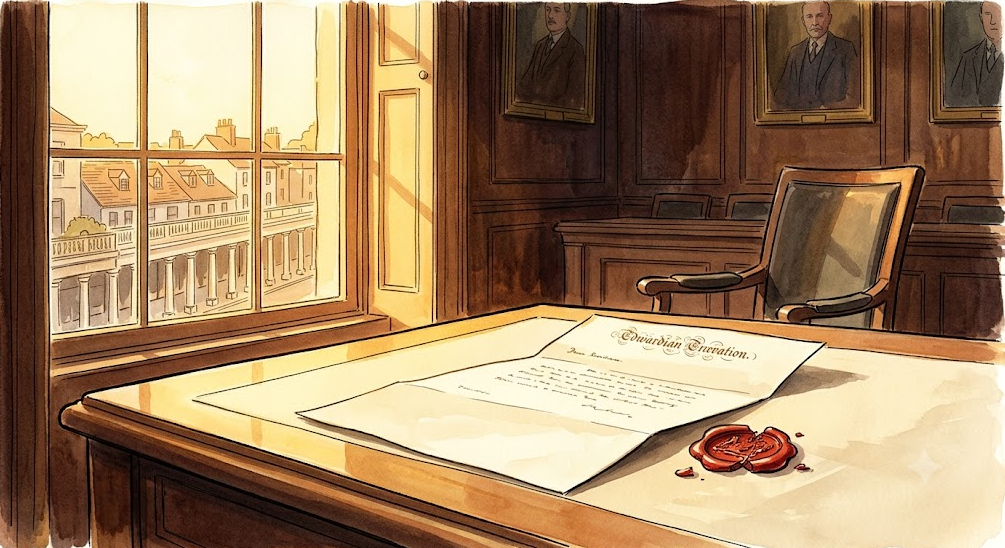
On 8 April 1909, a letter arrived that changed the name over every shopfront in town.
It came from Buckingham Palace. It granted a single word — Royal — to a Kent spa town that had, by then, spent nearly three centuries hosting queens, princesses, and kings, usually with nowhere proper for them to sleep. The word has appeared on every official document, every road sign, every tourist brochure since. It is also, very nearly, not the word the town asked for.
A Town Trying to Get Noticed
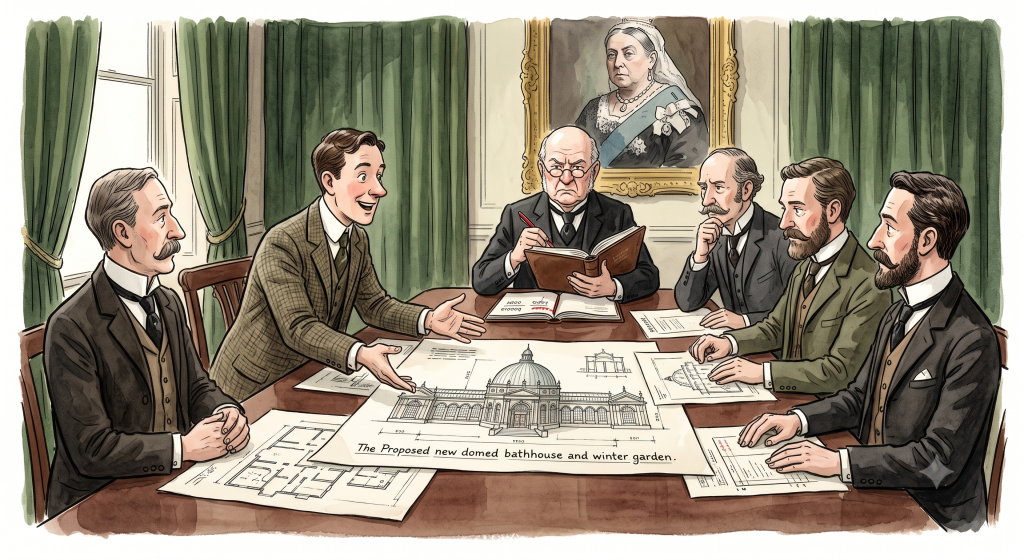
By 1904, Tunbridge Wells had a problem. The great spa era was long over — sea bathing had won decades earlier, and the fashionable world had moved on to Brighton, then further afield again, as covered in our South of France piece. The Council set up an Improvement Committee to work out how to bring the town, in its own words, “abreast with other watering places.” There was talk of grand new baths, a Kursaal or Winter Garden, an orchestra, concerts of a high-class description. Most of it went nowhere; the newly formed Ratepayers’ League made sure of that.
What the town did have, however, was history. Three centuries of it. And in 1909, someone on the Borough Council had an idea considerably cheaper than a new bathhouse: ask the King for a better name.
Royal Kentish Spa
The Council’s original proposal was not “Royal Tunbridge Wells.” It was Royal Kentish Spa.
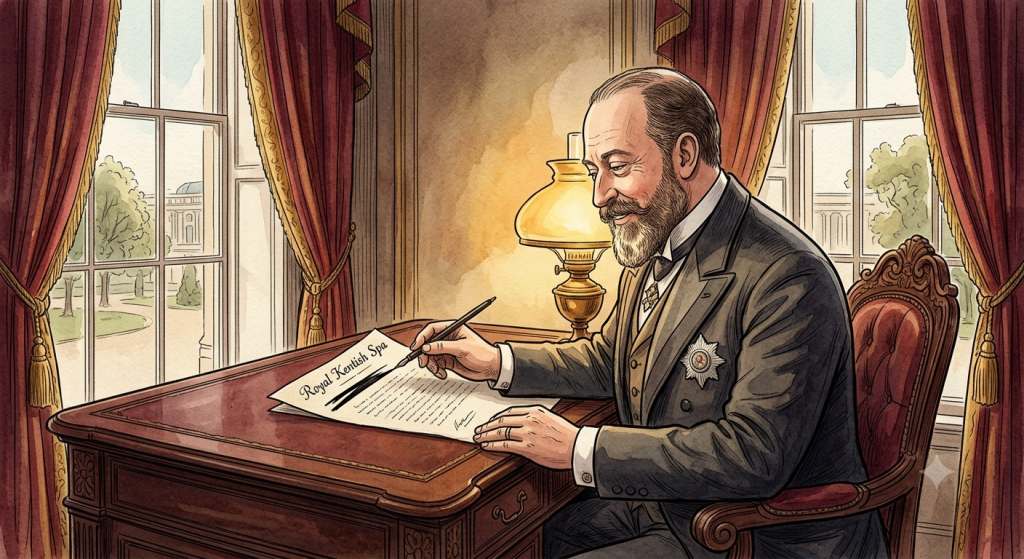
The petition was sent to Edward VII, laying out the town’s long royal connections in careful detail: Henrietta Maria’s six weeks under canvas on the Common in 1630, covered in Part 1 — The Queen Who Slept in a Tent of this series; Charles II and Queen Catherine’s visits from 1663; the Duke of York’s popularising of the High Rocks in 1670; and — the strongest card in the hand by far — the King’s own mother, Queen Victoria, and her donkey rides along Church Road in the 1820s and 1830s, the subject of Part 2 — The Princess and the Donkey.
Edward VII read the petition and made one change. He did not want Royal Kentish Spa. He wanted the town’s actual name, dignified rather than replaced. The grant, formally issued on 8 April 1909, created Royal Tunbridge Wells.
The Kent and Sussex Courier reported the news on 10 April, with an editorial enthusiasm that has aged rather well: “We trust that the prosperity and importance of Tunbridge Wells as the Royal Kentish Health Resort will be enhanced.” The paper, evidently, hadn’t quite let go of the original proposal either.
The Small Print
Some of the finer legal detail is worth pausing on, because it explains exactly how a king can rename a town.
Royal styles of this kind are not granted casually. The reigning monarch decides, acting on petitions that typically arrive via the Prime Minister or Cabinet — though, as with Tunbridge Wells, requests from a borough council itself can also succeed. The change becomes legally valid on the day the sovereign signs and seals the Letters Patent. No parliamentary vote, no referendum, no plebiscite among residents who might have preferred, say, to keep things as they were. Just a signature.
Tunbridge Wells is one of only three towns in England ever to receive this honour. The others are Royal Leamington Spa — granted by Victoria herself in 1858, more than half a century earlier — and Royal Wootton Bassett, granted as recently as 2011 in recognition of the town’s repatriation ceremonies for British service personnel. Royal Tunbridge Wells sits between them: not the first, not the most recent, but arguably the one whose royal connections took the longest to earn.
What Else Was Happening That Year
It is worth remembering that the Royal grant was not the only thing occupying Tunbridge Wells in 1909. Local historian Chris Jones has documented the wider context with evident relish: Boy Scouts and suffragettes were both active in the town that year. Right-to-work marchers passed through. Débutantes were presented at Court. A clergyman denounced the debased tastes of his congregation from the pulpit. Workhouse inmates complained — formally — because they had been served Grape Nuts instead of gruel for breakfast.
Nationally, the political weather was considerably stormier. Lloyd George was attempting to raise money for old age pensions and Dreadnoughts simultaneously. The House of Lords, in rejecting his budget, was steering the country toward a full constitutional crisis. Against that backdrop, the granting of a ceremonial prefix to a Kent spa town was a small, quiet, almost gentle piece of news — a town being told, in the middle of a difficult year for the nation, that its three centuries of hospitality had been noticed.
The Word That Stuck
Most residents today say “Tunbridge Wells” without the prefix, and the Wikipedia article on the town notes as much. The Royal only really appears on official signage, formal documents, and — appropriately — the top of every WalkTW Chronicles page.
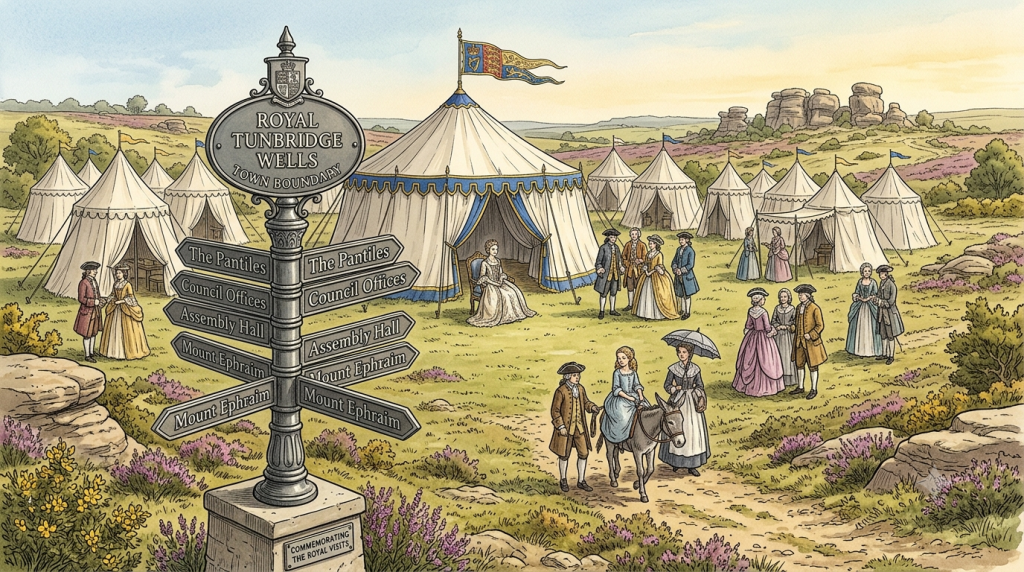
However, the word did its job. It closes the loop this entire trilogy has been tracing: a queen with nowhere to sleep in 1630, a princess on a donkey two centuries later, and a letter in 1909 that turned three hundred years of royal hospitality into a single, permanent, official word.
The tents are long gone. The donkey rides ended when Victoria took the throne. The Royal Victoria Grove still stands on the Common, a quieter monument than the prefix but the one that started it all. And every time the town’s full name is written out — Royal Tunbridge Wells — it is, in effect, still thanking a fifteen-year-old girl for riding her donkey along Church Road, nearly two hundred years ago.
This concludes The Royal Visitors trilogy. Start from the beginning: Part 1 — The Queen Who Slept in a Tent and Part 2 — The Princess and the Donkey.