Tag: The Pantiles

Stories set on or around The Pantiles — the colonnaded promenade at the heart of Royal Tunbridge Wells, and the site of the original chalybeate spring discovery.

  • The WalkTW Building Files — Corn Exchange – Issue 2 🏛️🔍

    The WalkTW Building Files — Corn Exchange – Issue 2 🏛️🔍

    The Building That Broke the Law by Existing

    The Corn Exchange, 49 The Pantiles, Royal Tunbridge Wells, TN2 5TN is also known for being the historic Corn Exchange building at Pontiles Tunbridge Wells.

    Walk south along The Pantiles on any summer afternoon. Pass the Chalybeate Spring, pass the coffee shops and the collonaded walkway. Stop when you reach the building with the statue on the roof.

    Look up. She’s been there since 1844 — Ceres, the Roman goddess of grain and harvest, standing on a parapet flanked by cornucopias, scythe in hand, looking out over The Pantiles with the expression of someone who has seen everything and is mildly amused by most of it.
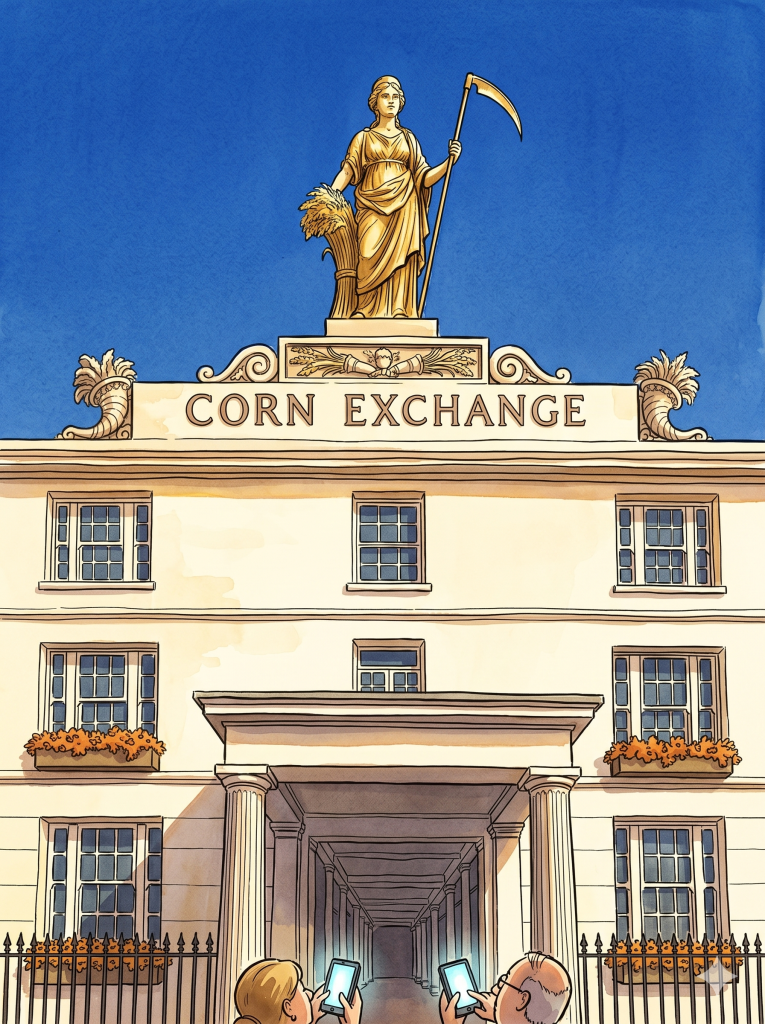
    The Historic England listing describes her simply as “a statue of a female figure with scythe and sheaf of corn.” However, she is considerably more interesting than that. She is watching over a building that began its life as a theatre, hosted two of the greatest actors in British history, straddled a county border, and was — at one point — technically in two different counties simultaneously.

    The Corn Exchange is not what it appears to be. In fact, it never has been.


    How a Fairground Performer Built a Theatre on The Pantiles

    Sarah Baker was an illiterate fairground performer who became one of the most successful self-made women of her time. Born in 1737, she grew up travelling the country with her mother and younger sister, entertaining crowds at country fairs and race meetings. In the early 1770s, recently widowed and with three young children, she took over the small family troupe.

    In the face of fierce opposition from male rivals, she began building a theatre empire across Kent. It was not until 1789 that Sarah — well into her fifties by then — opened the first of what she described as her “great grand” Kentish theatres in Canterbury. She went on to build three more purpose-built theatres in the county: Rochester in 1791, Maidstone in 1798, and Tunbridge Wells in 1802.

    All four were built to the same plan and similar dimensions, to allow for scenery to be easily moved between them. As a result, Sarah ran what was effectively a theatrical touring circuit across the entire county — moving actors, sets and costumes between four identical buildings, each playing to a different Kent audience.

    The Tunbridge Wells theatre cost her approximately £1,600 to build. It officially opened on 8 July 1802, designed in the neoclassical style, built in brick with a stucco finish, and featuring a symmetrical main frontage of three bays facing onto The Pantiles.

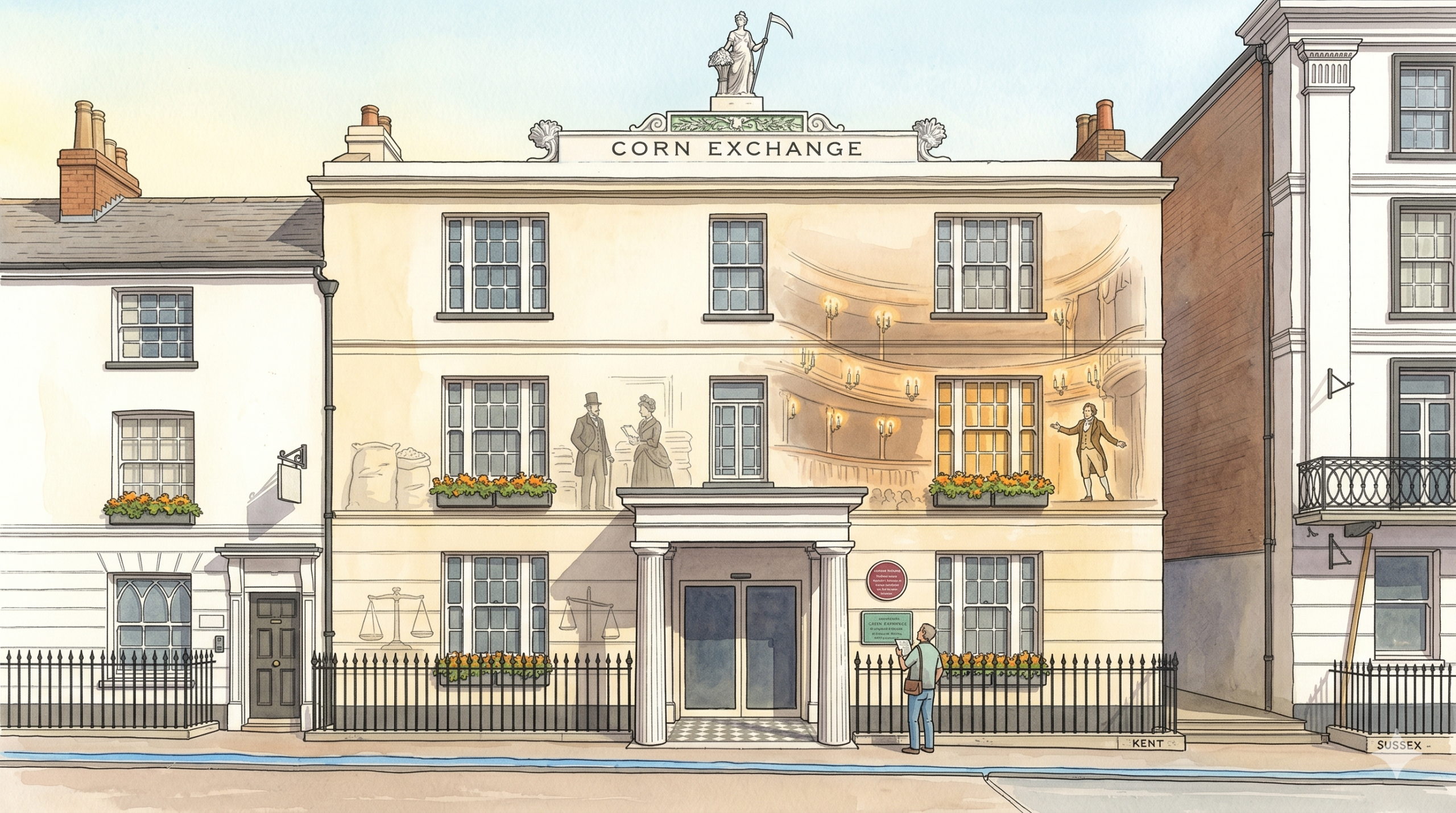
    That original frontage is still exactly what you’re looking at today.


    The Stage in Sussex, The Audience in Kent

    Here is the detail that belongs on every heritage trail in this town and is on none of them.

    The Corn Exchange was built in 1802 over the Grom Brook, which carried the county boundary between Kent and Sussex. As a result, the actors on the stage would perform in Sussex while the audience watched from Kent.

    Think about what that means in practice. Every actor who walked onto that stage stepped from Kent into Sussex. Every entrance was a county crossing. Every exit was a return to England’s garden county. The audience, meanwhile, sat in Kent and watched people perform in a different county entirely.
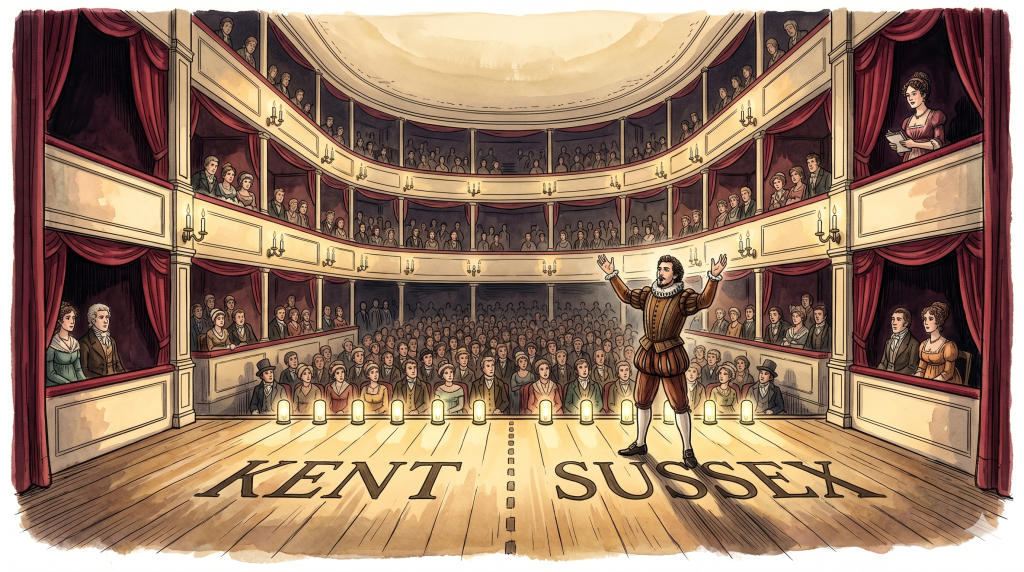
    Before the alteration of the county boundary, the theatre had the stage in Sussex and the auditorium in Kent. It later became the Corn Exchange. In 1894, however, the administrative boundary was redrawn to encompass the entire expanding town. Under the Local Government Act 1894, the boundary between the Administrative County of Kent and the Administrative County of East Sussex was moved two miles south, incorporating the entirety of the growing town.

    Therefore, the county-straddling stage disappeared not because anything about the building changed, but because a government act moved the border. The theatre didn’t move. England simply redrew itself around it.


    The Actor Who Left Town Ahead of a Mob

    The actors Edmund Kean and Charles Kemble both performed on the stage in the building in the first half of the 19th century. In addition, the plaque on the wall outside confirms this plainly. However, the plaque does not mention what happened next.

    Edmund Kean went on to become arguably the greatest Shakespearean actor of the 19th century. He was one of the greatest of English tragic actors — a turbulent genius noted as much for his megalomania and ungovernable behaviour as for his portrayals of villains in Shakespearean plays.

    Before all of that, however, he was a young actor in Mrs Baker’s company at Tunbridge Wells. He joined Mrs Baker’s company in Tunbridge Wells and spent a year there. Furthermore, he probably would have stayed longer, except he found himself in trouble with a townsman — he had seduced the man’s wife — and was forced to leave just ahead of a vengeful mob.

    The man who would later be described by Coleridge as watching his acting being “like reading Shakespeare by flashes of lightning” left Tunbridge Wells one step ahead of an angry husband. He then went to Gloucester, met a woman called Mary Chambers, married her, and eventually became the most celebrated actor in England.

    The stage where all of this began is now an antiques market. However, the frontage is unchanged. Next time you walk past, note the three neoclassical bays, the fluted Doric columns at the porch, and the parapet above. That is exactly what Edmund Kean saw when he first arrived — and rather hastily when he left.


    From Theatre to Grain Market to Antiques

    After Baker died in 1816, the theatre passed to her son-in-law, William Dowton. However, audiences dwindled, and the theatre closed in 1843.

    In consequence, the building became a corn exchange — a market where grain was bought and sold. The corn exchange conversion was completed, and the building reopened in November 1844 by John Nevill, 3rd Earl of Abergavenny, whose seat was at Eridge Park. Furthermore, it was at this point that the Ceres statue appeared on the roof — the Roman goddess of grain, finally appropriate to the building’s new purpose.

    For a century, therefore, the building that Sarah Baker built as a theatre sold wheat. Then it became a Tourist Information Centre. Finally, it is today an antiques and fine art market — Grade II listed, officially designated on 20 May 1952.

    However, the interior you see today is not entirely original. The building was extensively reconstructed in 1989. As a result, the original theatrical interior — the stage, the auditorium, the boxes where Georgian audiences watched performances in a different county — is gone. What remains is the 1802 frontage, unchanged and still facing The Pantiles.


    What the Plaque Doesn’t Tell You

    There is a green plaque on the wall. It reads, accurately, that this was formerly the Tunbridge Wells Theatre, built in 1802 by Sarah Baker, that Edmund Kean and Charles Kemble performed here, and that the stage was in Sussex while the auditorium was in Kent.

    However, it doesn’t mention that Sarah Baker was illiterate. She reputedly never learned to write more than her name, yet when she died at Rochester in February 1816, just months before her eightieth birthday, her estate was estimated at more than £20,000 — equivalent to well over £1.5 million today.

    Furthermore, it doesn’t mention that Edmund Kean left the building toward an angry mob. It doesn’t mention the county boundary running beneath the stage, or the Grom Brook that carried it. It doesn’t mention that the woman watching from the roof has been standing there since 1844, long before anyone now alive was born, watching everything that happens on The Pantiles with the patient attention of someone who has absolutely nowhere else to be.


    🗺️ Go Find It Today

    The Corn Exchange is at 49 The Pantiles, TN2 5TN — on the south side of the Lower Walk, impossible to miss. Look for Ceres on the roof. The green plaque is on the wall to the right of the entrance.

    The antiques market inside is open most days. Therefore, this is the one Building File entry where you can walk around inside the building freely — browsing furniture and vintage prints on the site of a stage that was once in a different county.

    Meanwhile, if you want the full Sarah Baker picture, the Theatre Wars post and the Theatre Queen of The Pantiles cover the remarkable story of how she built her empire in much more detail.


    🕵️ The Open Questions

    Three things the WalkTW archive cannot yet answer:

    Question 1: The Grom Brook. The county boundary ran along the Grom Brook, which flowed beneath the building. However, where exactly is the Grom Brook today? It has clearly been culverted — built over, diverted underground — at some point between 1802 and the present. Does it still flow beneath The Pantiles? Does anyone know where it goes?

    Question 2: The Mob. Edmund Kean left Tunbridge Wells ahead of a vengeful townsman whose wife he had seduced. The sources confirm this. However, they do not name the townsman, the wife, or the street. Does any local record — newspaper archive, diary, parish record — fill in the gap?

    Question 3: The Original Interior. The 1989 reconstruction removed the theatrical interior entirely. However, before it was reconstructed, did anyone photograph the original auditorium? Was there anything left of the Georgian theatre inside by 1989 — original boxes, gallery ironwork, backstage machinery? Does anyone know what was lost?

    Drop what you know in the comments. The Building Files are open. 👇

    The WalkTW Building Files continue. Next up: the hotel on The Pantiles where a young woman leapt from a window, a ghost has been throwing furniture in Room 16 since at least 1997, and the building itself has been watching the promenade since before Tunbridge Wells was Royal.

    #TunbridgeWells #WalkTW #BuildingFiles #CornExchange #ThePantiles #SarahBaker #EdmundKean #LocalHistory #HiddenTunbridgeWells
  • The Great Paving Scandal (The Royal Slip-and-Slide) 👑🧱

    The Great Paving Scandal (The Royal Slip-and-Slide) 👑🧱

    If you’ve ever walked down the elegant, sunlit promenade of The Pantiles, dodging dog walkers and tracking down a morning flat white, you’re stepping on the results of a massive, 17th-century royal temper tantrum.

    Today, it’s one of the most beautiful avenues in Kent. But back in 1698, it was a total mud bath. The entire identity of our town—and its most famous landmark—was accidentally decided because a future king lost his footing. Additionally, a furious queen lost her patience, and a pair of corrupt local lords tried to pocket the development cash. This is just one of the curious stories you’ll discover when exploring Pantiles history. In fact, Pantile’s history is filled with colourful incidents and memorable characters.

    The Day the Prince Ate Dirt

    Our story begins with an adorable, five-year-old boy named Prince William, Duke of Gloucester. He was the only surviving child of Princess Anne (who would later become Queen Anne). In addition, he was the absolute obsession of high society. Because the young prince was a bit sickly, his mother brought him down to Tunbridge Wells for the summer to drink the iron-rich spring waters. Furthermore, understanding Pantiles’ history helps us appreciate the significance of this royal visit.

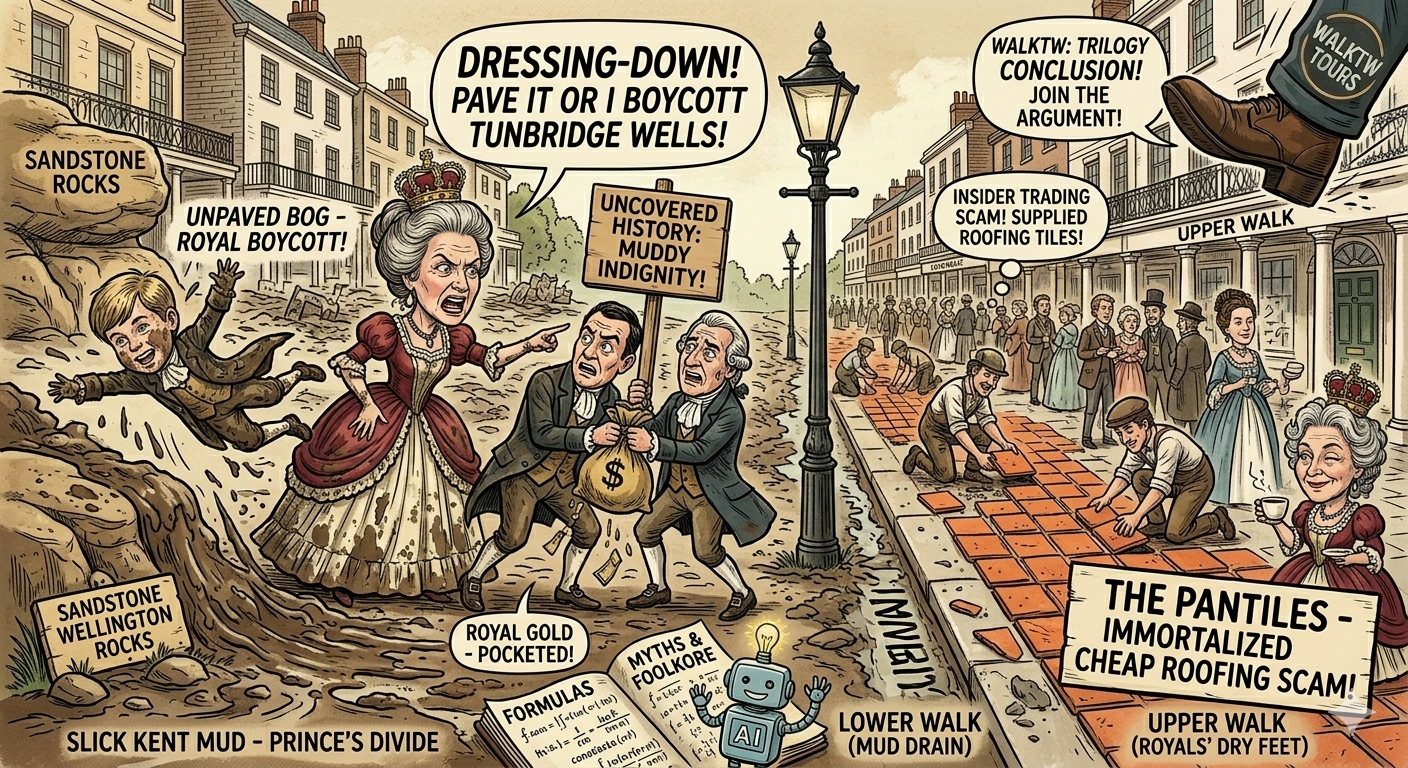
    On a particularly damp afternoon, the young prince was charging along the Upper Walk when he hit a patch of classic, slick Kent mud.

    Before his royal handlers could intervene, the heir to the British throne went flying, wiping out spectacularly in the dirt. Princess Anne was absolutely horrified. Muddy, furious, and fiercely protective, she rounded on the local town managers and gave them an absolute dressing-down.

    She demanded that the promenade be paved immediately so her son would never have to brave the muddy indignity again. To make sure it happened, she handed over a massive sum of cash. Then she told them she’d be back next year, and swept out of town.

    2. The Rogue Managers and the Missing Cash

    Enter our villains: a pair of local, smooth-talking lords who were in charge of the town’s upkeep.

    Instead of immediately hiring stonemasons, they looked at the heavy sack of royal gold and thought, “Well, the Princess won’t be back for twelve whole months…” They pocketed the cash, spent the winter living the high life, and completely ignored the promenade. The road remained a treacherous, muddy bog. Consequently, this episode of Pantiles history adds intrigue to the town’s legacy.

    Summer 1699 rolled around, and Princess Anne’s carriage rattled back into Tunbridge Wells. She stepped out, looked down, and saw that the Upper Walk was just as filthy and unpaved as the day her son had taken his royal dive.

    Anne was utterly dynamic in her rage. She didn’t just write a strongly worded letter; she effectively boycotted the entire town. She hopped back into her carriage, swore she would never return to Tunbridge Wells until the place was properly paved, and took her massive, high-spending royal entourage down to rival spa towns instead.

    The Pan-Tiling Panic

    The local business owners went into an absolute meltdown. The town’s economy was heavily reliant on royal favour, and the corrupt managers had just starved them of their best customers.

    In a desperate, frantic rush to win back the future Queen, the local authorities fired the managers and bought the cheapest, fastest-available paving materials on short notice: baked clay tiles called “pan-tiles.” They weren’t smooth, elegant flagstones; they were rough, orange-red, square earthenware tiles usually used for roofing. Workers laid them down in a record-breaking scramble. As a result, they created a bizarre, brightly coloured, heavily textured walkway that became central to Pantiles’ history.

    The emergency rebrand worked. The walkway became known across the country as “The Pantiles.” Even though those cheap clay tiles were eventually stripped up and replaced with grander stone in the 1790s, the name stuck for centuries. Therefore, a corrupt local scam and a royal slip-and-slide were immortalised.

    What to Spot in 2026

    You don’t need to look hard to see the echoes of the great paving panic today:

    • The Topographical Dip: Notice how the Lower Walk sits significantly lower than the Upper Walk. That structural split was emphasised during the frantic paving scramble to ensure water drained away from the main promenade. As a result, the royals would always have dry feet.
    • The Surviving Tiles: While the orange clay pan-tiles were largely replaced with stone, look closely at the threshold steps of some of the oldest, untouched shop entrances along the Upper Walk. You can still spot a few heavily weathered, deep-red clay inserts hidden in the brickwork.

    🕵️‍♂️ Fact or Fiction? Join the Investigation!

    Our trilogy is wrapping up, which means it’s time for the final WalkTW detective meeting in the comments. What do you think is historical truth, and what is pure local folklore? Without a doubt, there are still mysteries to be uncovered in Pantiles history.

    • Myth #1: The Cursed Left Foot. An old legend says the young Prince slipped specifically on his left heel. For decades, highly superstitious Georgian visitors would only step onto the Upper Walk with their right foot first. This was done to avoid “the Prince’s bad luck.”
    • Myth #2: The Hidden Royal Cache. A rumour persists that the corrupt managers didn’t actually spend all of Princess Anne’s gold—they buried a portion of it in a lead box right beneath the foundations of the walk to keep it hidden when she returned in a rage.
    • Myth #3: The Roofing Conspiracy. Some historians joke that the local tile-maker who supplied the emergency pan-tiles was actually the brother-in-law of one of the town managers. Therefore, the entire “emergency rush” was just a highly orchestrated insider trading scam to clear out excess warehouse stock.

    What’s your verdict? Have you ever taken a clumsy trip on the stones after a rainy Kent afternoon? Let us know your thoughts in the comments! 👇

    And that concludes our opening trilogy! A massive thank you to everyone who has read, shared, and argued over these stories. We are just getting started.

    #TunbridgeWells #ThePantiles #PavingScandal #QueenAnne #LocalHistory #WalkTW #RoyalGossip

  • The Theatre Queen of The Pantiles 🎭👑

    The Theatre Queen of The Pantiles 🎭👑

    Picture this: It’s 1801. The morning mist is rising off the Chalybeate Spring, and the self-appointed town bosses are smoothing down their waistcoats, desperate to keep Tunbridge Wells a quiet, sleepy, perfectly proper spa town. But behind the scenes, something new was about to arrive: the Sarah Baker Theatre. They want the visiting aristocrats to sip their rust-flavoured water, go for a polite stroll, and go to bed early.

    Then, marching right down the middle of the Lower Walk, comes Sarah Baker. It was her presence that brought the energy and audacity that defined the iconic Sarah Baker Theatre in local history.

    If you think getting planning permission in town is a nightmare today in 2026, imagine the sheer panic when a widowed, self-made businesswoman—who started her career as a fairground dancer—decided to drop a massive, rowdy, brick-and-stone temple of raw drama right in the middle of their elite, male-dominated promenade. Overnight, the Sarah Baker Theatre changed the cultural map of Tunbridge Wells.

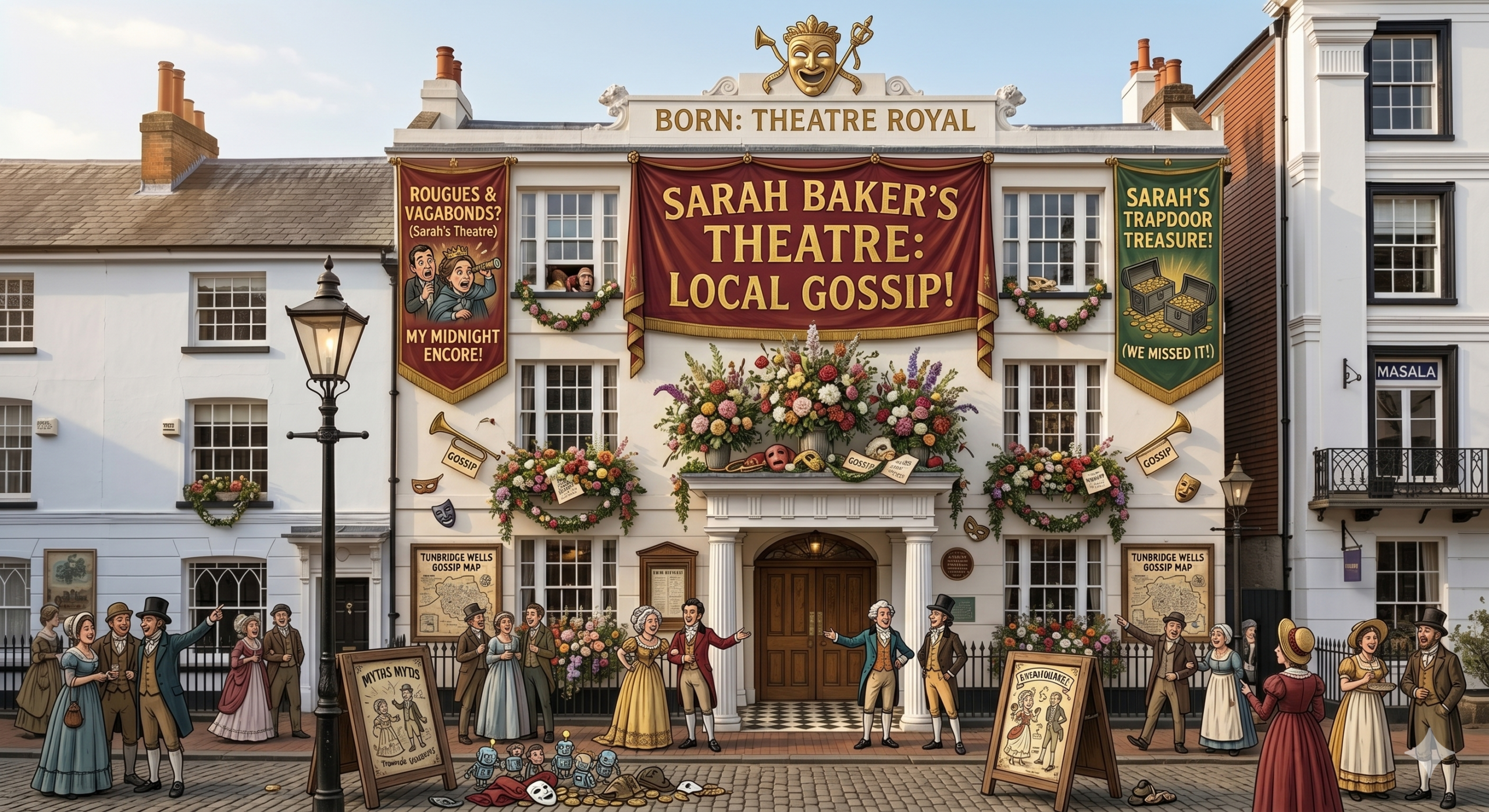
    The local authorities were horrified. To them, actors and theatre crews were little better than “rogues and vagabonds” threatening to ruin the town’s peaceful image. But Sarah looked at the bored rich people wandering the streets and knew a fundamental human truth: they didn’t just want water. They wanted a show.

    The Roar of the Crowd on the Lower Walk

    Defying local protests and furious glares, Sarah built her theatre, and it became an absolute sensation. Suddenly, the quiet pathway of the lower walks was the loudest, most vibrant hotspot in Kent. On any given night, you could hear high-stakes Shakespearean tragedies clashing with the roaring laughter of late-night pantomimes. This crowd energy made the Sarah Baker Theatre legendary throughout the region.

    Sarah ran the place with an iron fist and a razor-sharp wit. She was a master of handling snobbery. Whenever wealthy patrons tried to look down on her because of her humble roots, she didn’t argue. Instead, she would stand right at the box office herself, loudly and aggressively counting the night’s massive cash take right in front of their faces.

    She brought the biggest stars of the era, like the legendary Edmund Kean, straight to our doorstep. For a golden era, Sarah didn’t just run a business—she owned the town’s cultural heartbeat.

    Swapping Out the Drama for the Harvest

    But as the decades rolled on and the Victorian era took hold, the town’s mood shifted again. High society started favouring sober, industrious commerce over late-night theatrical chaos. In the late 1830s, the curtain came down on Sarah’s stage for the last time, and the building was converted into the Corn Exchange, becoming a bustling hub for agricultural trading.

    To make the rebrand official, they hoisted a massive statue of Ceres, the Roman Goddess of Harvest, onto the roof. It was the ultimate Victorian cover-up: replacing Sarah Baker’s dramatic, rebellious flair with a polite, stone face of serious business.

    Step into Sarah’s Footsteps Today (2026 Edition)

    The best part about this story? You can walk right into the middle of it on your next weekend stroll. Next time you’re walking down the Lower Walk of The Pantiles, stop and look up at the Corn Exchange. Indeed, the Sarah Baker Theatre was at the heart of this historic site.

    • The Sentry on the Roof: Look right up at the roofline, and you’ll see Ceres still standing guard, looking down at the modern shoppers, coffee drinkers, and weekend markets.
    • Standing on the Stage: Walk through the main entrance of the building. While the interior is now a beautifully vibrant space filled with independent shops and cafes, your feet are resting on the exact physical footprint where Regency actors once projected their voices to packed, cheering crowds.

    🕵️‍♂️ Fact or Fiction? You Decide!

    Because Sarah’s theatre was such a lightning rod for local gossip, our archives are riddled with some legendary rumors. We need our WalkTW community to weigh in—what sounds like genuine history, and what is pure local mythology?

    • Myth #1: The Secret Royal Box. Word has it that a young Princess Victoria used to sneak away from her lodgings on the Common, throw on a commoner’s cloak as a disguise, and sit in the back row just to laugh at Sarah’s rowdiest comedies.
    • Myth #2: The Midnight Encore. Shop owners inside the Corn Exchange have whispered for generations that if you find yourself alone in the building past midnight, the air goes cold, and you can hear the faint, muffled sound of a crowd applauding, followed by a woman’s voice calling out “Places, everyone!”
    • Myth #3: The Trapdoor Treasure. Legend says that Sarah completely inherently distrusted local banks. Rumour has it she built a hidden trapdoor right beneath the centre of the stage where she buried iron lockboxes filled with gold coins from her ticket sales—and it was completely missed during the Victorian renovations.

    What do you think? Have you ever felt a bit of dramatic energy walking past the Corn Exchange, or is it just the caffeine hitting from your morning flat white? Let’s argue about it in the comments below! 👇

    Next up in the trilogy: The Great Paving Scandal—how a royal slip-and-slide in the mud and a pair of corrupt local managers accidentally gave The Pantiles its iconic name. Stay tuned! 👑🧱

    #TunbridgeWells #ThePantiles #SarahBaker #CornExchange #LocalHistory #WalkTW #RegencyGossip #SarahBakerTheatre


    You might also like