Every two months, Oliver Engleback climbs through a small hatch at the top of St Peter’s tower with a bottle of castor oil. Eight bronze bells, about two and a half tonnes, hang there on the same bearings they were given in 1919.
“I have to go up there every two months and put oil on them,” he told us over coffee on Camden Road. “Currently, all the bells pivot on plain bearings installed in 1919, which require lubrication with castor oil every two months or so.” Plant-based castor oil, to be exact.
Those eight bells are the only ones in Tunbridge Wells hung for full-circle, English-style change ringing. Other churches in town have bells, but they chime. Only St Peter’s rings. In 1886 the Courier called it “the only peal in Wells”, and 140 years later that is still true.
Now the bells need help, and so does the band that rings them.
Eight, Not Twelve
Let’s settle one rumour first. You may have heard that St Peter’s has twelve bells. It doesn’t, and it won’t.
“It is eight. There will never be 12, because you cannot fit them in there,” Oliver says. The eight hang in an oak frame that takes up almost all the space in the bell chamber at the top of the tower, leaving no room for any more. Rings of twelve do exist, but they belong to cathedrals and big city churches with the space, money, and influence.
Eight is plenty, though. On eight bells there are 40,320 different orders to ring them in. In 1879, the Courier calculated that ringing them all would take about 28 hours. It did not say what the neighbours thought.
A Church for Windmill Fields. The community built
St Peter’s in 1874–75 for Windmill Fields, a fast-growing working district east of the town centre. Holy Trinity’s congregation had held services there in a schoolroom, but it had become too small.
They laid the foundation stone on 30 July 1874, and consecrated the church on 4 October 1875. According to the Courier, it was a thank-offering for Canon Hoare’s recovery from a serious illness. Architect H. H. Cronk designed it in local sandstone. A year later, in 1876, St Peter’s became its own parish.
The bells came later. Records differ on when the first five were cast: 1875, 1876 and 1877 all appear in print. However, the date they first rang out is clear. On Thursday 7 June 1877 the church held special services “in connection with its completion and the opening of the bells”, and ringers from Speldhurst rang changes all day.
Eight Bells, Eight Ladies
The tower was built with a frame for eight bells from the start. Filling it took nine years.
John Warner & Sons of London built the first five, which arrived in 1877. A sixth followed, and the six rang together for the first time on Friday 17 January 1879. Two trebles completed the octave in January 1886.
Here is the lovely part. The 1886 Courier noted that two ladies gifted the last two bells. Then it added that “a singular fact is that the other six are all the gifts of ladies”. Oliver confirms it. Sadly, nobody knows their names.
Warner’s was one of the big Victorian founders. It had also cast the first Big Ben, which cracked during testing in 1857 and had to be recast at Whitechapel. St Peter’s bells had better luck, at least for a while.
The Clockmaker’s Bells
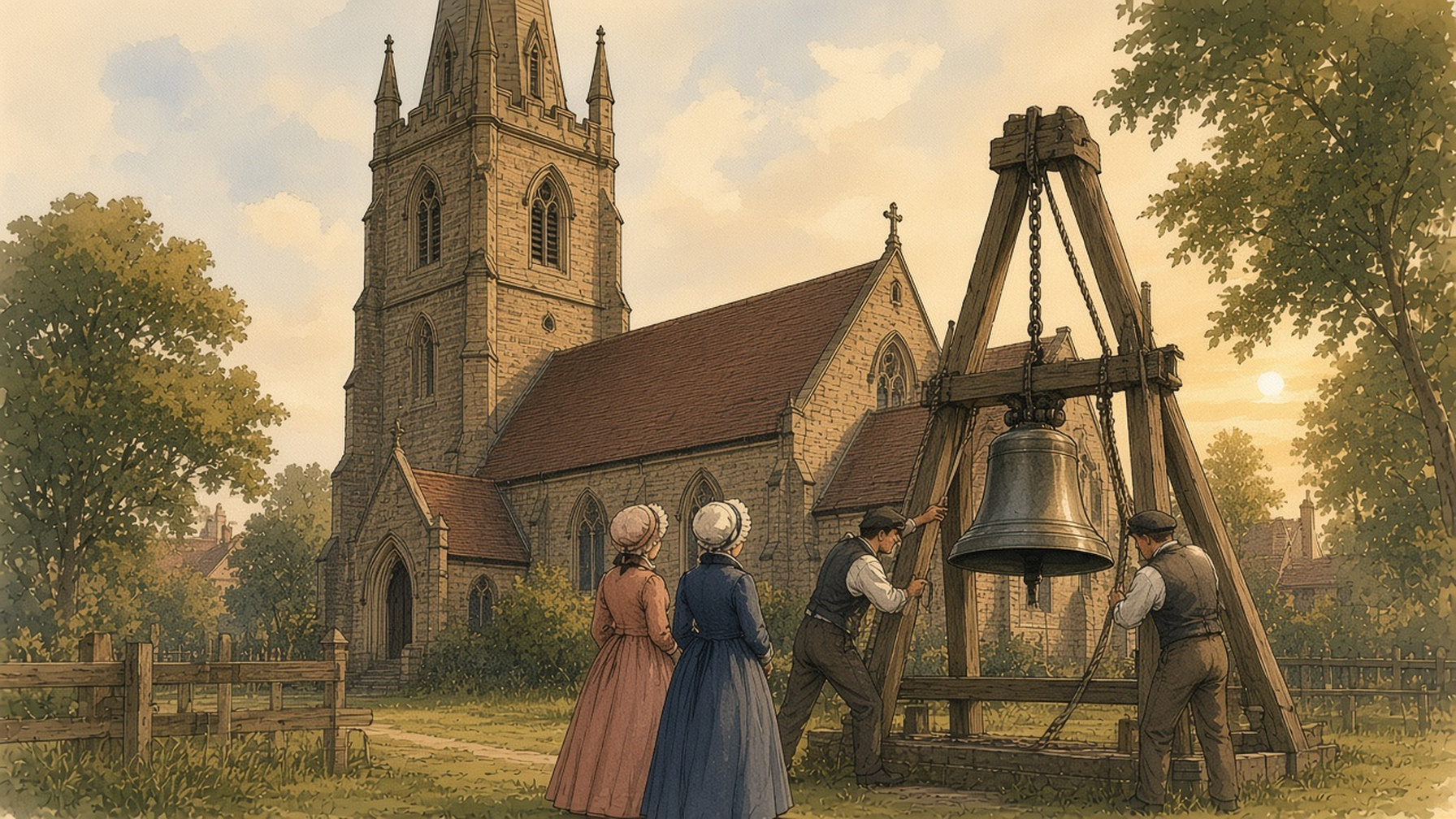
By 1919, the Warner bells were only 30 to 40 years old. Even so, the parish melted down and recast all eight.
Why? The records don’t say, but here is the story Oliver has heard. The town’s leading bell expert, musicologist W. W. Starmer, didn’t like their tone. Starmer was also very close to Taylor’s, the famous bell foundry in Loughborough. After the First World War, Oliver adds, “I think everybody felt they wanted a memorial.”
The contract, though, went to Gillett & Johnston of Croydon. They were best known as church clockmakers, and their earlier firm had built St Peter’s tower clock in 1879. In Oliver’s telling, they were simply cheaper than Loughborough.
Starmer was not amused. According to Love’s Guide to the Church Bells of Kent, he told the churchwarden that “surely he would not go to a clockmaker to hang bells!” In a 1920 letter to Taylor’s, kept in the foundry’s archive, he was blunter: “There is only one bellfounder for me.” He admitted he had praised the St Peter’s bells purely “as a matter of course”.
Oliver’s verdict is fairer to the clockmakers. “Gillett and Johnston perfected the art of casting and tuning bells. The ring of eight at St Peter’s church are tuned to the nominal key of F sharp, but the sound of each bell is rather more complex, resounding with the nominal note enhanced by four ‘partial’ tones, like playing a chord. The remainder of the fittings allowing the bells to be rung are worn and progressively deteriorating.” He puts it more bluntly, too: “Gilletts were very good at making bells,” he says. “They were less good at making the fittings required to make them ringable.” Hold that thought.
Meanwhile, the ringers had their own loss to mark. Their records remember Corporal Edward James Crocker, “a ringer at Tunbridge Wells”, who died on 7 November 1918, aged 24. That was four days before the Armistice.
Peace Day, 8am
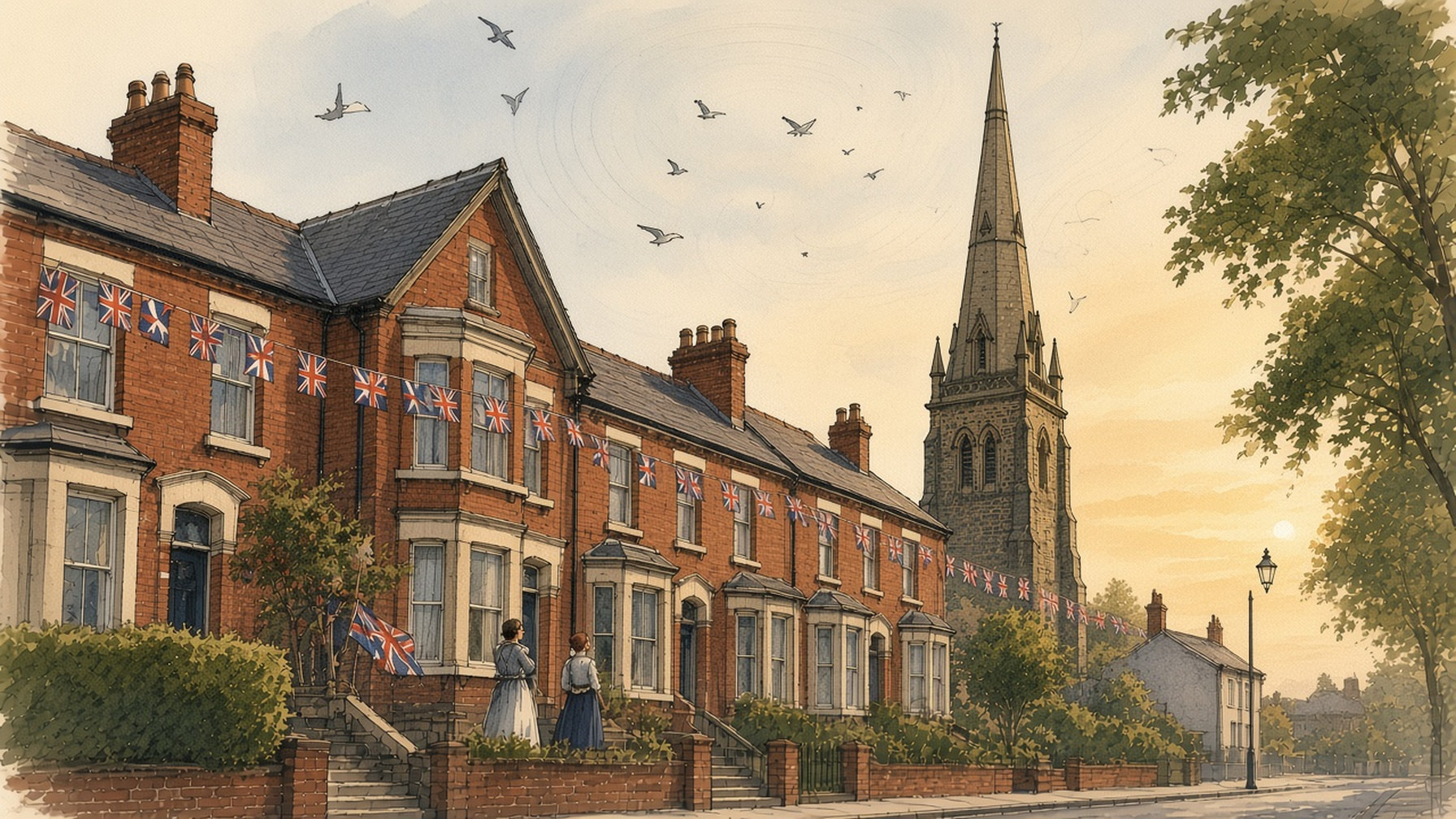
The new bells, all eight cast in 1919, were heard for the first time on Peace Celebration Day, Saturday 19 July 1919. At 8am, as the Courier reported, a “joy peal” rang out from St Peter’s before the town’s grand procession.
The new ring was well made. The tenor, the biggest bell, weighs 14 cwt 3 lb (about 713 kg) and sounds F sharp. Together the eight weigh 51 cwt 11 lb, exactly as the Courier printed it that July. When Gillett & Johnston recast them, they reproduced the inscriptions from the earlier Warner bells, and the Courier reported that each bell also carries the date of recasting and the names of the vicar and churchwardens. Oliver hopes to take rubbings of the inscriptions when the bells come down.
What happened next has a familiar ring, too. The work cost £485. By November 1919 the church still owed £225, and the churchwarden wrote to the Courier asking the public for help. More than a century later, St Peter’s is asking again.
Exactly 100 years after Peace Day, on 19 July 2019, the ringers marked the centenary with a quarter peal. Oliver was one of the band. “A hundred years later, I rang there as well, to celebrate that,” he says.
Silences and Spruce-Ups
Like every church bell in Britain, St Peter’s fell silent in the Second World War. From 1940, bells could only be rung to warn of an invasion, and the ban lasted until 1943.
In 1954, the bells had what the records call a “major overhaul”. Oliver has heard that the ringers did most of the work themselves, led by their tower captain, Ernie Ladd. The fittings were spruced up and the headstocks probably painted, but the bearings and wheels stayed as they were. A peal board in the tower remembers Ernest J. Ladd, rung in his memory in 1996.
The band kept going for decades. Oliver himself first rang here in the 1980s. Eventually, though, the numbers ran out. He says Thursday practice nights stopped in 2014 because too few ringers came and no new ones were being trained.
What’s Wrong Upstairs
“Really and truly, they haven’t been comprehensively maintained since they were installed in 1919, despite more major maintenance undertaken in 1954,” Oliver says. After more than a century, “everything’s looking very sad up there”.
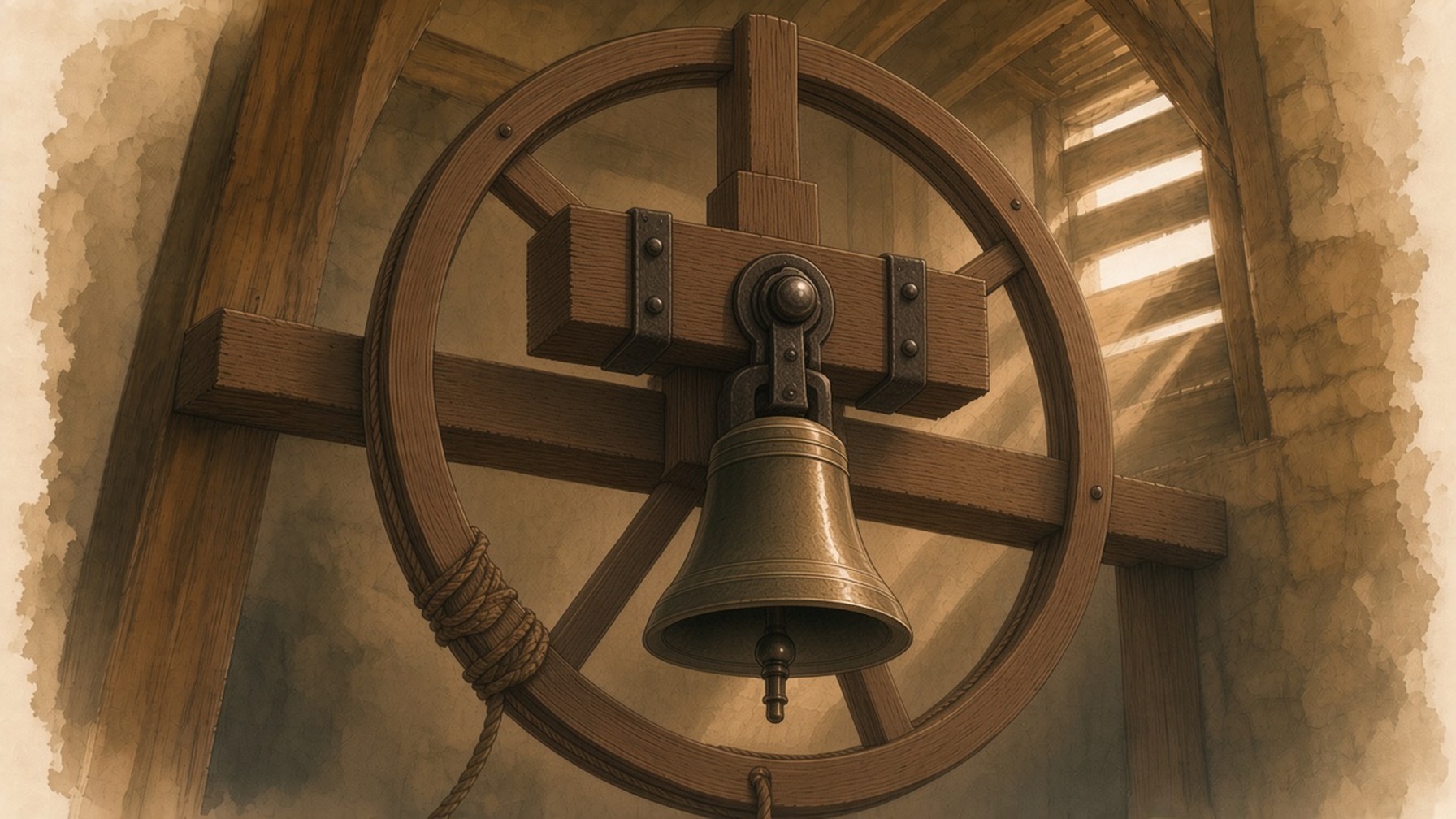
The problems are mostly in the fittings, not the bells. The bells still turn on their 1919 plain bearings, which need oiling every couple of months. The plan is to replace them with sealed roller bearings, which have much less friction and need no attention for about 25 years.
Oliver explains: “The wooden wheels attached to each bell have sections of shrouding missing. There is a possibility that ringers developing bell handling skills may accidentally strip remaining shrouding off, making them unringable, so at the moment we are unable to teach new ringers at St Peter’s.” The missing shrouding is the side rims that keep the rope in place. For now, new ringers learn at other towers.
The refurbishment is due to start at the end of May 2027 and finish by the end of September 2027. The full cost is £74,000. Adding “active” sound control, for the sake of neighbours who don’t all love the sound, would cost another £17,000. Local volunteer labour could save about £17,000 across both, and volunteers are already lined up.
Nine New Ringers
Fixed bells are no use without people to ring them, which brings us to the good news.
“The refurbishment’s going ahead, but of course we don’t have a full band to ring at the moment, but we have had a really positive response following a talk I gave on bells and the history of ringing at St Peter’s, and we now have nine novice ringers learning the skill at Speldhurst and other nearby towers,” Oliver explains. That talk was at the end of October.
“By the time these bells are fixed, I’ll have a band of ringers, and we will resume the Thursday practice,” he says.
The band is already wonderfully mixed. On Monday 9 November 2026, ten ringers rang St Peter’s bells for the induction of the parish’s new vicar, the Rev Jonnie Armstrong. Some have rung here for decades, and among those Oliver has rung with, a number have heritage from parts of the world outside the British Isles.
You don’t need muscles, either. Oliver says: “A certain physicality about it, not greatly so, because with good technique, age and gender are no bars to bellringing.” The real skill is timing. Full-circle ringing lets each ringer control the exact moment their bell strikes, which is what makes English change ringing possible. And afterwards? “There’s usually a bit of a social thing after, because we go to the pub.”
How You Can Help
- Give to the appeal. Oliver organised the church’s GoFundMe, “Restore the only bells in Tunbridge Wells to good order”, for the Parochial Church Council of St Peter’s. As of 17 November 2026, it had raised £675 of its £7,000 GoFundMe appeal target, a first step towards the £74,000 the full refurbishment will cost.
- Learn to ring. To join the next group of learners, email the church at [email protected], and your message will go to Oliver.
- Listen. The bells ring for the morning service on the fourth Sunday of each month, when there are enough ringers, and Oliver hopes they’ll ring for Christmas. When you hear them, you are hearing the only full-circle peal in town.
WalkTW is independent and has no link with the peal. We simply think the town would be quieter, in the wrong way, without these bells.
Fact or Fiction? The WalkTW Archive
- St Peter’s has twelve bells. Fiction. It has eight, and there is no room for more.
- They are the only change-ringing bells in Tunbridge Wells. Fact. St Luke’s has a near-twin set of eight from the same founder and the same year, but they are hung to chime, not to ring full circle. Elsewhere in town, there are only single bells.
- The Victorian bells were all gifts from ladies. That’s a fact, according to the Courier in 1886. Their names are not known.
- A clockmaker made the bells. Partly fact. Gillett & Johnston began as clockmakers and moved into bell founding. Starmer certainly thought of them as clockmakers.
- The bells are 400 years old. Fiction. English full-circle ringing dates back about 400 years, but these bells were cast in 1919.
Go Find It Today
- The Spot: St Peter’s Church, Bayhall Road (Windmill Fields), Royal Tunbridge Wells, TN2 4UU.
- The Route: About 20 minutes on foot from Tunbridge Wells station, heading east via Calverley Road and Camden Road.
- The View or Challenge: Stand outside on a fourth-Sunday morning and count the strikes. Then look up at the west side of the tower for the 1879 clock dial, made by the firm that grew into Gillett & Johnston.
Thanks to Oliver Engleback, who leads the restoration of St Peter’s bells (and is the church’s link with the St Peter’s Bell Ringers), for his time and patience with our questions.
Related reading: The Last Post on Mount Pleasant, The Explorer’s Wife Beside the Stage, Too Religious for a Theatre and The Church That Neale Built Twice.
Sources: Interview with Oliver Engleback, 13 November 2026; Dove’s Guide for Church Bell Ringers, Royal Tunbridge Wells, S Peter and S Luke; Love’s Guide to the Church Bells of Kent, Tunbridge Wells, St Peter, including its transcriptions of the Kent & Sussex Courier (1874, 1875, 1877, 1879, 1886 and 1919) and of W. W. Starmer’s letter to Denison Taylor (7 May 1920, Taylor’s archive); BellBoard performances at St Peter’s; Kent County Association of Change Ringers, Tonbridge District towers; BelgiansRTW, Peace Day 1919; UK Parliament, Big Ben key dates; GoFundMe, Restore the only bells in Tunbridge Wells to good order.
Last amended: 18 November 2026.
Watch this story in under a minute →
Enjoyed this?

Leave a Reply