Armistice Day — 11 November 2026
When Tunbridge Wells unveiled its war memorial on 11 February 1923, the Last Post came from above: buglers sounded it, and Reveille from the roof of a house in Calverley Parade. More than a century later, the Last Post remains part of the town’s remembrance at the memorial on Mount Pleasant.
That rooftop detail connects the monument to a townscape that has changed around it. The memorial predates the civic buildings behind it. Its setting preserves something older still: the retaining wall into which it is set is a surviving part of Decimus Burton’s early nineteenth-century Calverley Estate.
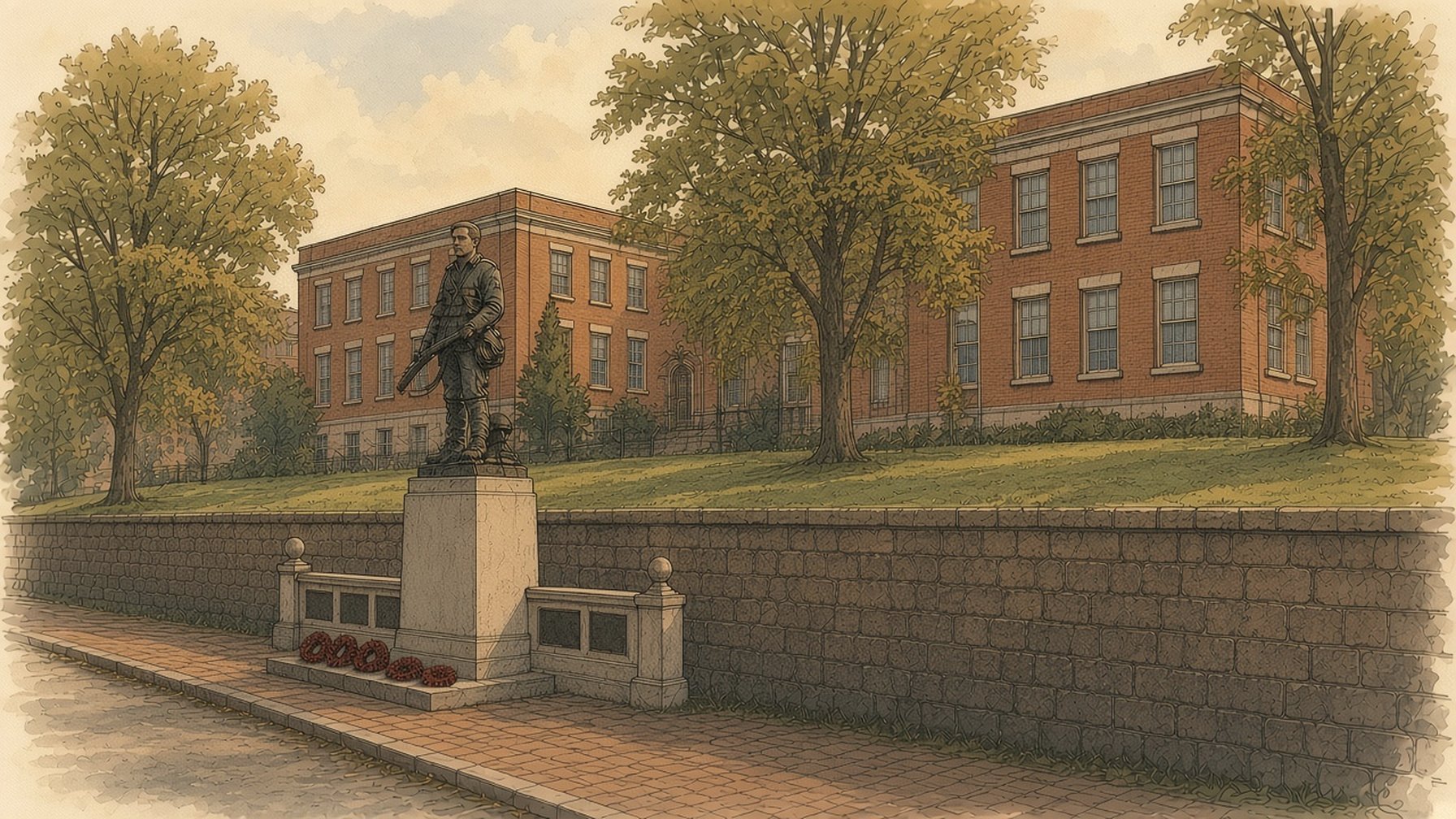
The memorial’s position and form were not inevitable. After the First World War, a committee considered an obelisk and a triumphal arch. Possible sites included the top of the Common overlooking Mount Ephraim and the entrance to Calverley Grounds. They ultimately chose a bronze soldier on a stone base, surrounded by bronze plaques bearing the names of the fallen.
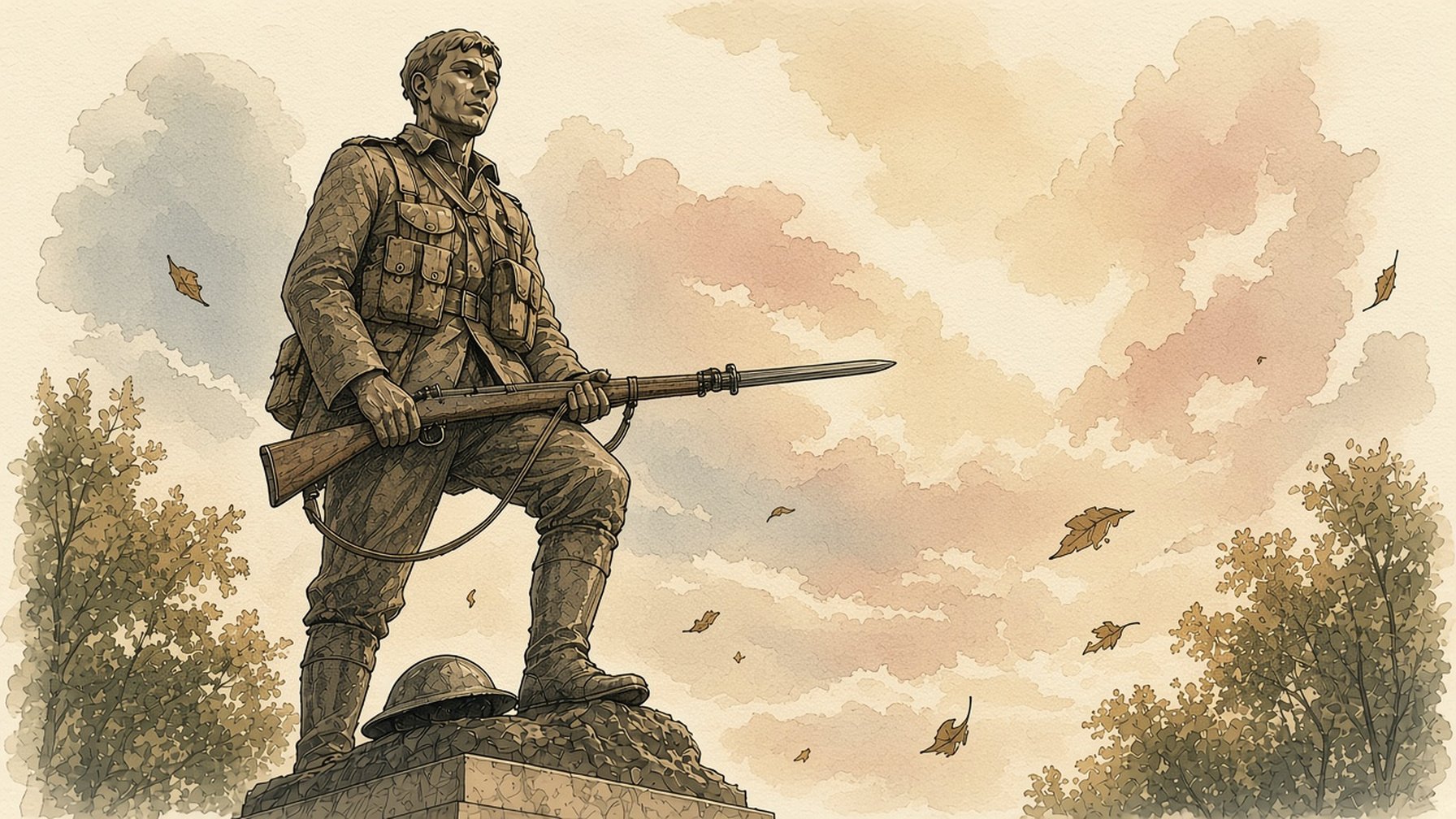
Sculptor Stanley Nicholson Babb’s figure stands bareheaded, his helmet at his feet and his rifle held across his body. Colonel Viscount Hardinge unveiled the memorial in 1923. Plaques commemorating the Second World War were added later, extending its record of the town’s loss. The bronze figure gives the monument a focus; the names around it bring remembrance back to individual lives.
Armistice Day fixes that act of remembrance to a particular date and hour. The armistice on the Western Front took effect at 11am on 11 November 1918. Since 1919, people have marked the anniversary with a two-minute silence. It is distinct from Remembrance Sunday, which falls on 8 November in 2026.
On Mount Pleasant, the connection between the unveiling and the annual ceremony is especially tangible: a familiar bugle call, a memorial built to endure, and time set aside to remember. The surrounding streets have changed, but the names remain central to its purpose.
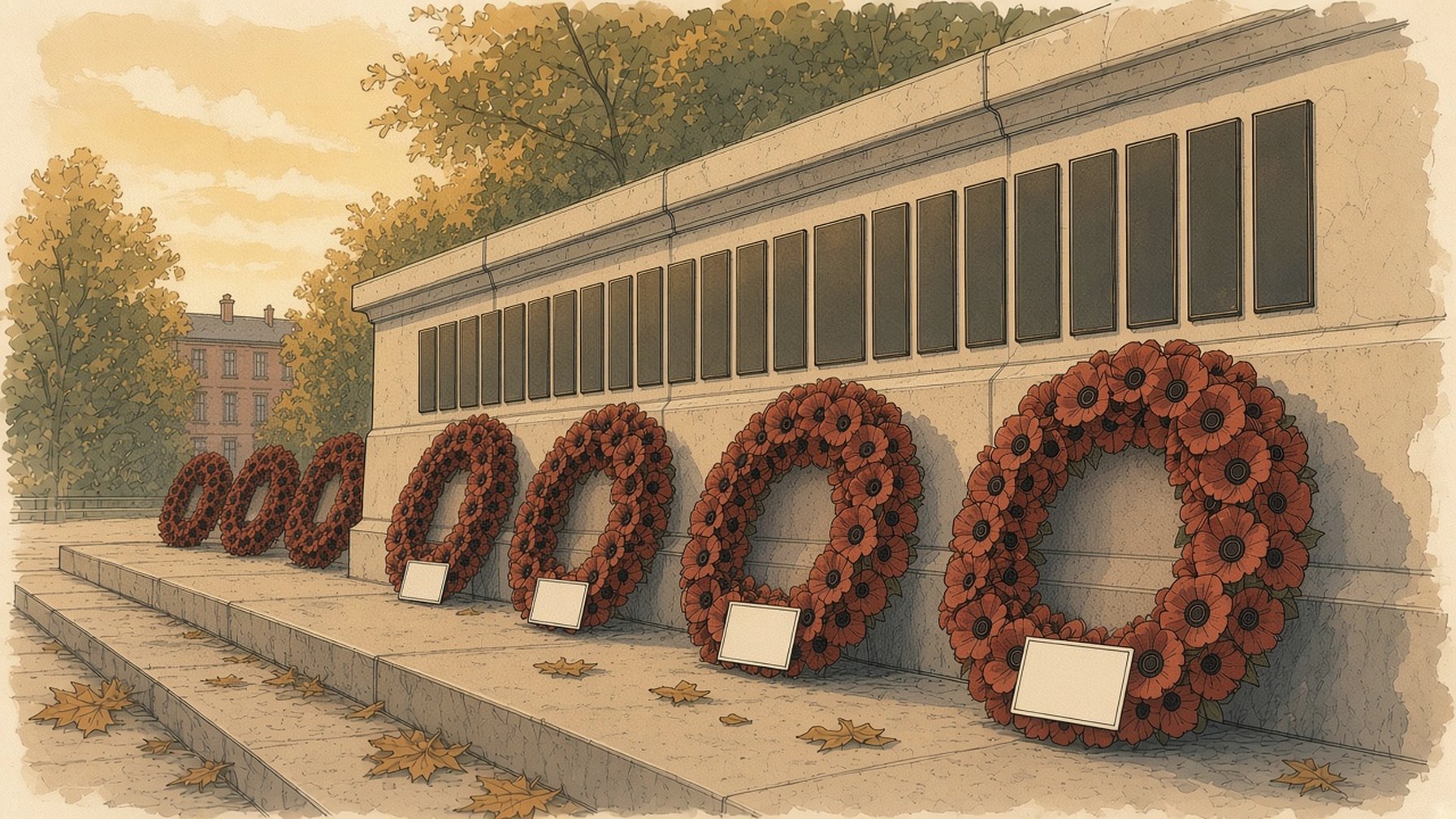
For Wednesday 11 November 2026, the council lists a short ceremony at the War Memorial on Mount Pleasant Road at 10.50am (GMT, UK time), with the Last Post played by Tunbridge Wells Sea Cadets buglers and a wreath laid. A further ceremony is listed at approximately 11.40am (GMT, UK time) at Victoria Cross Grove in Dunorlan Park, near the Bayhall Road entrance.
Walk it: The memorial stands near Stop 5 of Footsteps Tour 5: One Spring, One Town.
Sources
- Royal British Legion, Two-minute silence
- Kent Historic Environment Record, Tunbridge Wells War Memorial (Historic England list entry 1401309)
- Tunbridge Wells Borough Council, War Memorial centenary (2023)
- Tunbridge Wells Borough Council, Remembrance 2026
Related reading: Calverley Park – Decimus Burton’s Gated Utopia; Dunorlan Park – The Private Paradise That Became Everyone’s.
Watch this story in under a minute →
Enjoyed this?