Tag: pubs

The drinking establishments of Royal Tunbridge Wells — their histories, their rivalries, and the colourful characters who drank in them.

  • THE OLD WEST STATION

    THE OLD WEST STATION

    A Building File: 1 Linden Park Road

    Building Files, Issue 4

    This post is part of the Railway War series. Start with Part 1 (1845–1923) and Part 2 (1940–present) if you’re coming to this fresh.


    There is a building on Linden Park Road that has spent 160 years confusing people about what it is supposed to be.

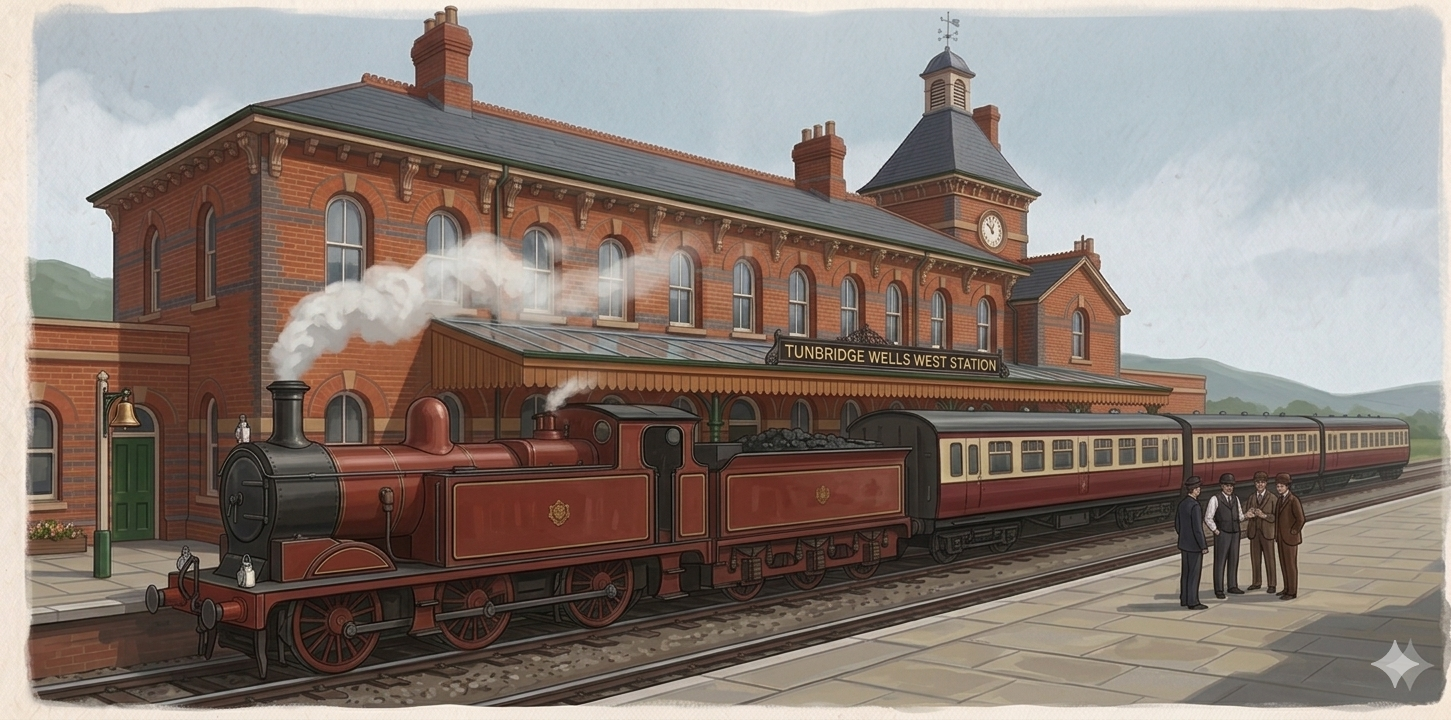
    It arrived in 1866 as a railway station, the LBSCR’s triumphant answer to the SER’s existing terminus half a mile away. It closed in 1985 when British Railways decided the line wasn’t worth keeping. It became a Beefeater. Then a pub. Then a Wild West steakhouse with nine hotel rooms named after South American tribes and a large decorative jail that you can book for parties.

    The building, for its part, has said nothing. It just stands there — red brick, round-arched windows, three-storey clocktower with a pyramidal roof and a louvred cupola — looking exactly as it did when the first LBSCR train pulled in on 1 October 1866. Which is, depending on your mood, either deeply reassuring or faintly absurd.


    The Building Itself

    Before we discuss what has been done to it, it is worth pausing on what it actually is.
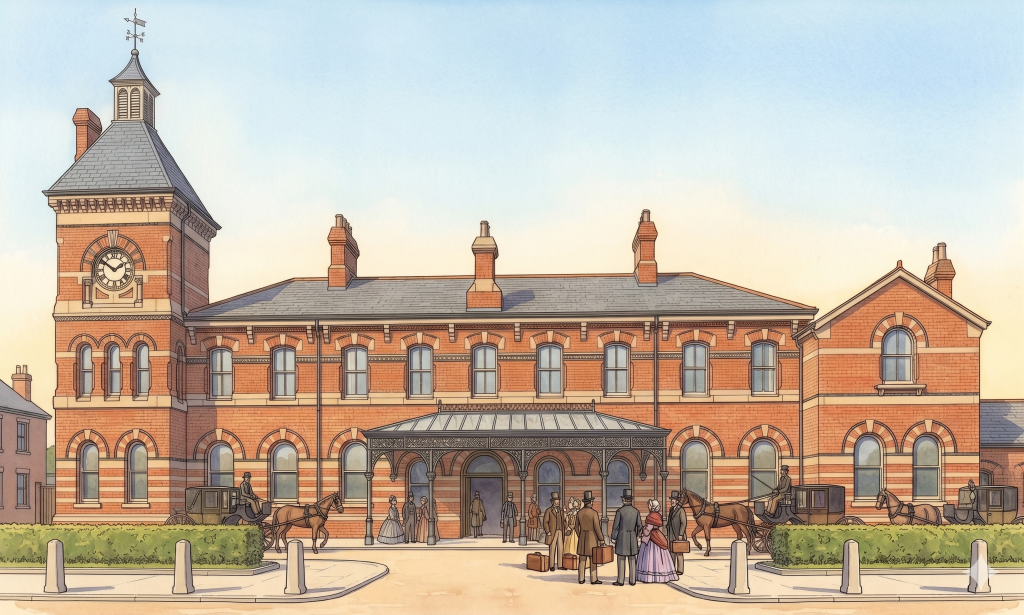
    A detailed architectural illustration of a newly completed Victorian railway station, October 1866. The building is two storeys of red brick with ashlar dressings and black brick detailing, a ten-bay centre block with a gable-fronted wing to the west and a three-storey clocktower to the east. The clocktower terminates in a pyramidal slate roof with a louvred cupola and weathervane above. Nine round-arched windows run across the ground floor, connected by a decorated ashlar impost band. Horse-drawn cabs wait on the forecourt. A small crowd of Victorian passengers with luggage stand at the entrance. The building radiates civic confidence — this is an architect who knew exactly what he was doing. Clean line illustration with warm watercolour wash, golden afternoon light.

    Tunbridge Wells West station was designed by Charles Henry Driver, an engineer’s architect whose credits include the ornamental masonry of the Thames Embankment, the Abbey Mills Pumping Station, and the Crystal Palace aquarium. He was, in short, someone who understood how to make a functional structure look considerably more important than strictly necessary.

    The building he gave Tunbridge Wells in 1866 reflects that instinct entirely. The facade is two storeys of red brick with ashlar and black brick dressings, arranged across a ten-bay centre block with a gable-fronted wing to the west and a three-storey clocktower to the east. The ground floor carries nine round-arched windows and an arched doorway, connected by a decorated ashlar impost band that runs the full width of the building. The eaves are serrated, with an ashlar cornice on foliated brackets. The clock tower terminates in a pyramidal slate roof, above which sits a louvred cupola with a weathervane.

    Inside, the original booking hall featured a panelled ceiling, a three-bay, columned arcade, and four gas-lit ticket windows. It was, in every sense, a statement building — the LBSCR making unmistakably clear that it had arrived in Tunbridge Wells and intended to stay.

    Historic England listed it Grade II on 27 March 1986, approximately ten months after the last train departed. The listing came just in time.


    What Happened Next

    The building’s post-railway life has proceeded in three acts, each successively stranger than the last.

    Act One arrived in the late 1980s, when the main building was converted into a Beefeater restaurant called The Old West Station. The name was apt — it is the Old West Station — though one suspects the Beefeater marketing department was gesturing at cowboys rather than Victorian railway geography. The booking hall, with its panelled ceiling and stone columns, became a dining room. The arched windows looked out over the car park where the platforms used to be.
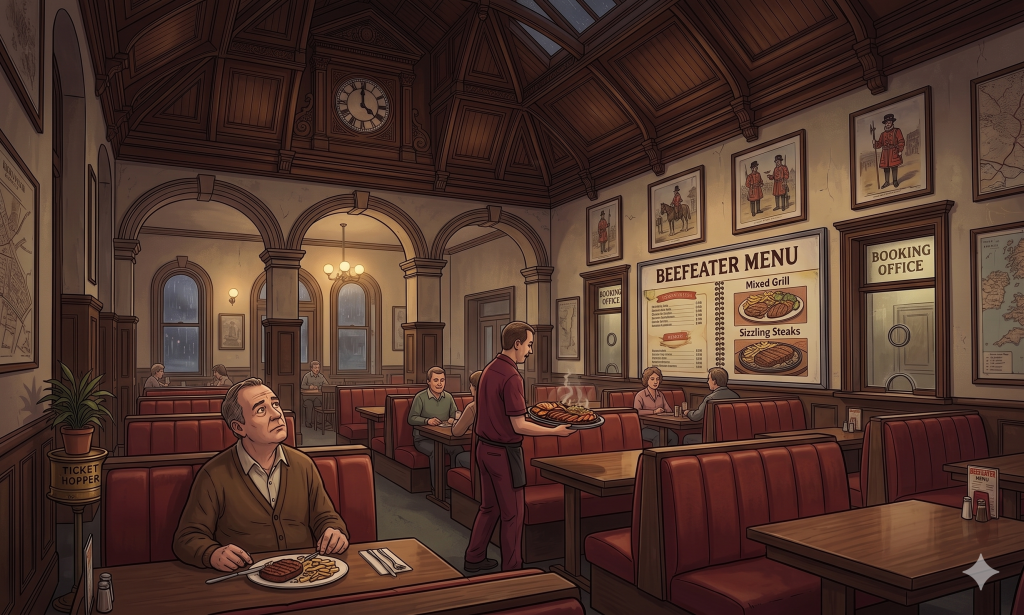
    A slightly melancholy interior illustration of a Victorian railway booking hall converted into a Beefeater restaurant, circa 1988. The original panelled ceiling is visible above, the three-bay columned arcade still frames the room, and the four original ticket windows are now partially obscured by a laminated menu board. Rows of red-upholstered booths fill the floor where the ticket queues once stood. A waiter in a burgundy uniform carries a mixed grill. One diner looks up at the ceiling with a faintly puzzled expression, as if wondering what the room used to be. The comedy is gentle, not cruel. Warm interior light, slightly faded palette — the aesthetic of a Sunday evening in 1989.

    Act Two followed when Herald Inns and Bars purchased the building and continued operating it as a pub-restaurant under the same name. The Cowboys remained notional.

    Act Three began in 2009, when Smith & Western moved in. They are a chain of American-themed steakhouses with Wild West decor, banjo music, and a menu running to ribs, burgers, and fajitas. They have leaned into the theme with total commitment. There is a saloon bar. There is a decorative jail available for private hire. The nine hotel rooms are named after South American tribes, which is a geographically inventive touch. The restaurant’s own website describes the building as “a historic landmark brought back to life,” which is one way of putting it.


    The Awkward Question

    Here is where this Building File has to say something honest, even if it is not entirely comfortable.

    Wild West decor in a Grade II listed Victorian railway station is, on the face of it, a jarring combination. Driver’s building was conceived as a piece of civic architecture — a public gateway to a prosperous town, with the proportions and detailing to match. Filling it with cowboy hats and country music is not, by any conventional standard of heritage, a sympathetic use.
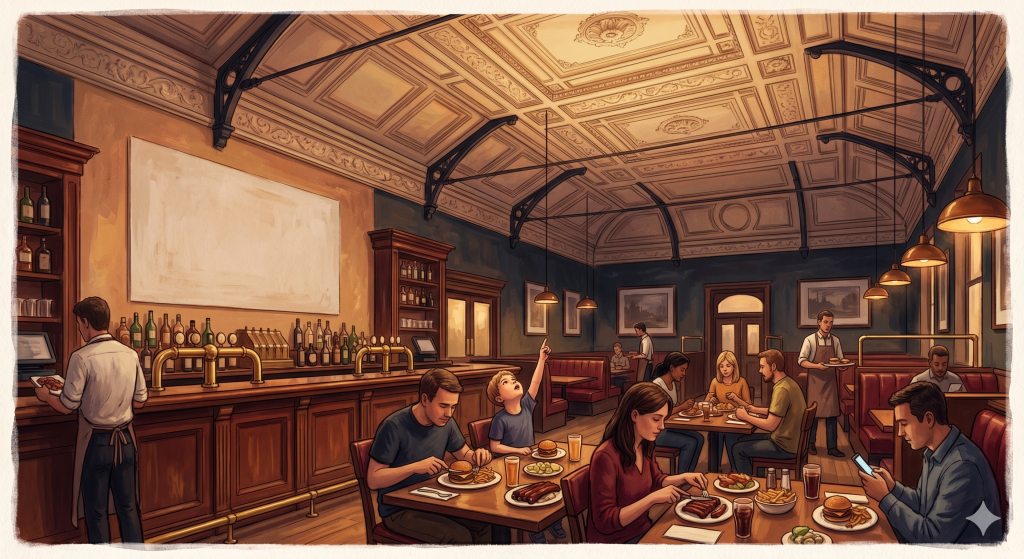
    A quietly pointed editorial illustration of the interior of a converted Victorian railway station now operating as a steakhouse. The panelled ceiling soars above — richly detailed, historically significant, entirely ignored. Below it, four tables of diners eat burgers and ribs, all looking down at their plates or phones. One small child at the far table is the only person in the frame looking upward, pointing at the ceiling. On the wall behind the bar, a blank rectangle of painted plaster sits where an interpretation panel might one day go. Warm amber restaurant lighting. The illustration's emotional register is not angry — it is wistful. Painterly editorial style.

    Furthermore, the context is particularly pointed in Tunbridge Wells. The station building sits directly beside the Spa Valley Railway — a preservation society that spent eleven years fighting to bring the line back, that operates steam trains through the High Weald on volunteer labour, that named itself TWERPS with cheerful obliviousness. One half of the site is a labour of love. The other half serves nachos.

    And yet.

    The alternative — which was very real in the late 1980s, when the building stood derelict, and the Sainsbury’s bulldozers were active next door — was not a sensitively curated heritage centre with educational panels and a gift shop selling LBSCR tea towels. The alternative was a building with no income, no maintenance budget, and no one with a financial incentive to care whether the roof held.

    Adaptive reuse is how most Victorian buildings survive. Those that do not find commercial use tend not to survive at all. Churches become apartments. Pumping stations become nightclubs. Railway hotels become offices. The question is never whether the new use is architecturally ideal — it rarely is — but whether the building is being maintained, whether its structural fabric is intact, and whether the people who walk through its doors can still read the original building clearly if they look up.

    On those terms, the Old West Station is doing reasonably well. The exterior is well-maintained. The nine round-arched windows are still in place. The clock tower still stands above Linden Park Road as it has since 1866. The panelled booking hall ceiling — the one that was lit by gas when the LBSCR first opened the doors — is still there above the tables.


    What It Owes the Town

    There is, however, one thing that adaptive reuse does not automatically provide, and which the Old West Station has so far largely declined to offer: a readable connection to its own history.

    A building this significant — designed by the architect of the Thames Embankment, built as the centrepiece of a Victorian railway war, the scene of the final passenger departure in 1985 and the subsequent eleven-year preservation battle — deserves more than a passing mention on a restaurant website. It deserves an interpretation panel in the entrance. A framed history on the wall of the booking hall. Something that tells the people eating their fajitas where they actually are.

    This is not a radical demand. It costs very little. Moreover, it is arguably good for business — a story this good makes the building more interesting to visit, not less. However, as things stand, the Wild West theme is the narrative, and the Victorian railway history is the backdrop.

    The driver’s building has survived a bomb, a closure, a supermarket next door, and four decades of commercial tenants. It is still standing. That matters enormously. But standing is not the same as being understood — and a building in the middle of Tunbridge Wells, with this much history in its walls, deserves to be both.


    The Building Files is a WalkTW series exploring the hidden histories of Royal Tunbridge Wells’s most interesting addresses. The Smith & Western is open seven days a week at 1 Linden Park Road, TN2 5QL. The Spa Valley Railway departs from the platform directly behind it.
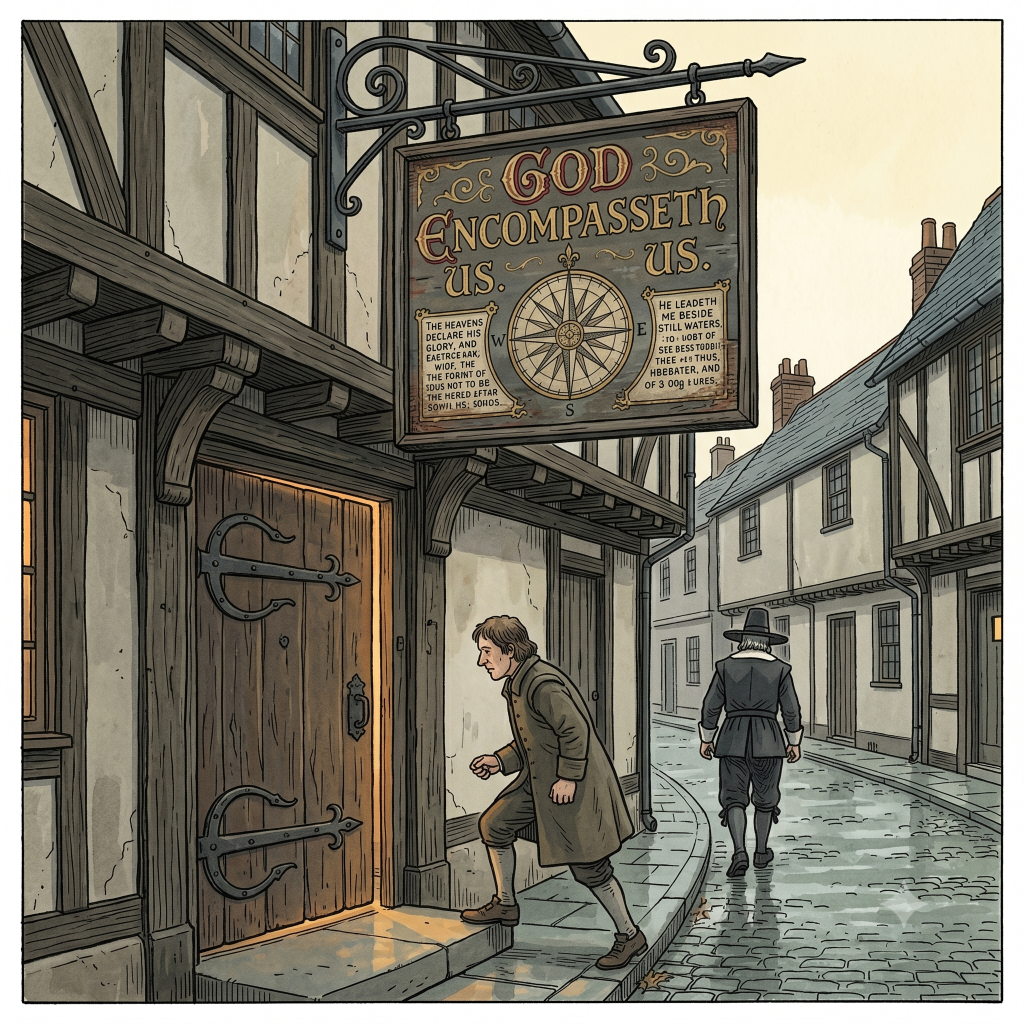
  • The Battle of Little Mount Sion: Two Pubs, One Title, No Resolution 🍺👻

    The Battle of Little Mount Sion: Two Pubs, One Title, No Resolution 🍺👻


    The WalkTW Building Files🏛️🔍

    A Note Before We Begin

    Every WalkTW story so far has followed a person — a writer, a mathematician, a Russian baroness, a playwright — and used the buildings of this town as their backdrop (Thackeray’s window. Cumberland’s playwright. Defoe’s promenade.). In this piece, however, we’ll turn our attention to an event: The Battle of Little Mount Sion. The buildings were always there, waiting patiently in the margins.

    This is the series where the buildings get their turn.

    Tunbridge Wells is 400 years old. That is 400 years of people living, arguing, dying, drinking, conspiring and occasionally dropping dead of shock inside the same walls. Some of those walls are still standing. Some of them are on streets you walked past this morning without a second glance.

    The WalkTW Building Files is a new series — one building per post, investigated properly. Confirmed history, contested claims, rumours that won’t go away, and at least one question that nobody has yet managed to answer. Each post comes with directions, because the whole point is that you can go and stand in front of the building yourself and see what history has left behind.

    We start where Tunbridge Wells itself started — on the hill above the Chalybeate Spring, in the oldest streets in town, where two pubs have been arguing about the same thing for four hundred years.


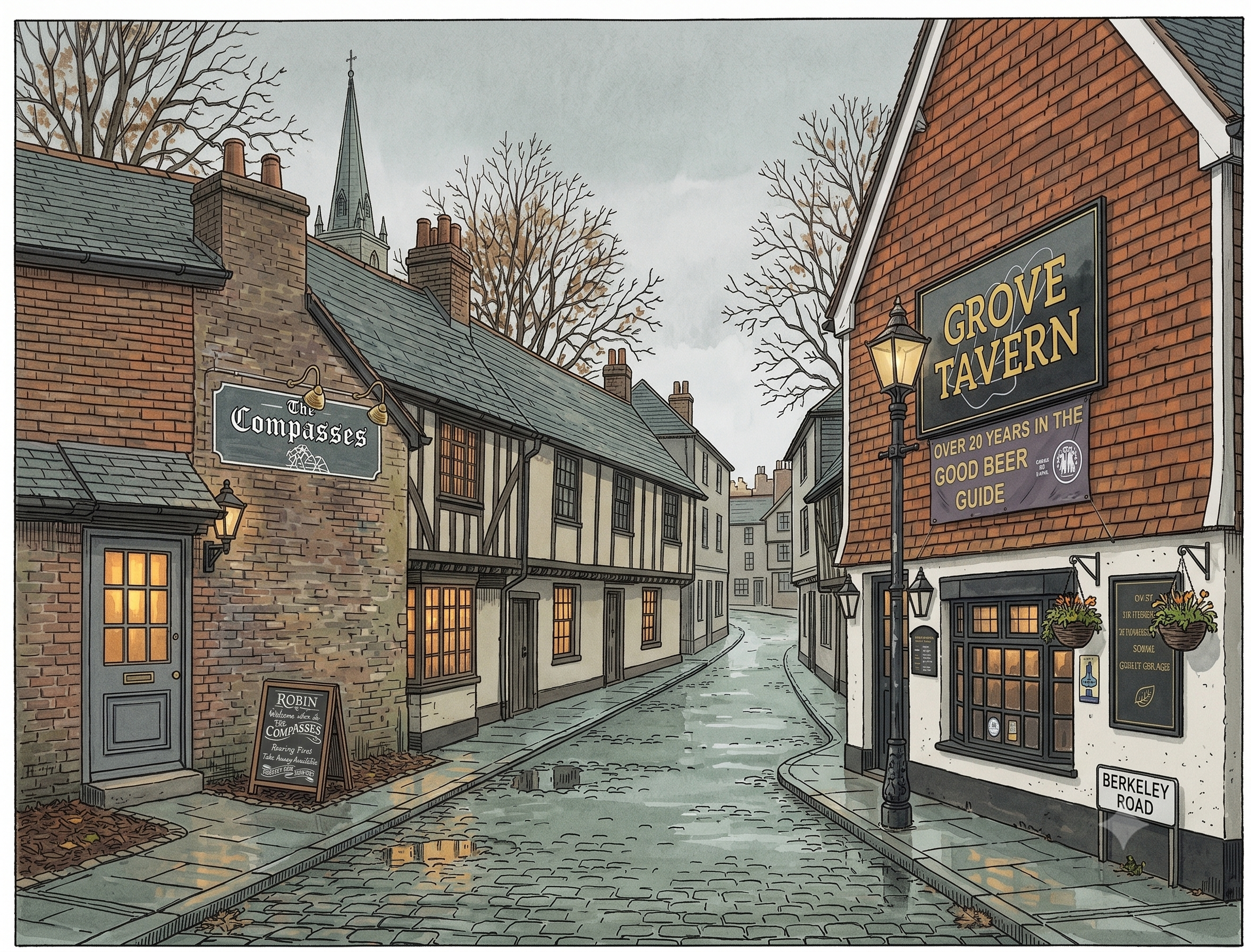
    The Compasses, 45 Little Mount Sion, TN1 1YP, and

    The Grove Tavern, 19 Berkeley Road, TN1 1YR

    They face each other across a quiet backstreet in the oldest part of Tunbridge Wells. Two small pubs, forty metres apart, both claiming to be the oldest buildings in town. Both with beams, open fires and ghost stories. Both have reasons to doubt the other’s claim.

    The Compasses is owned by Greene King and will tell you its history on a laminated card. The Grove Tavern is owned by its landlord and will tell you its history if you ask nicely and stay for a second pint.

    Between them, they contain more of Tunbridge Wells’s original character than almost anywhere else in the town. The question of which one is older may never be settled. The more interesting question is why nobody is properly asking it.


    The Hill Before the Town

    To understand Little Mount Sion, you need to understand what it was before Tunbridge Wells existed.

    When Lord North stumbled upon the Chalybeate Spring in 1606, there was nothing here — no town, no streets, no buildings. Just a spring in a field, two forested ridges on either side, and the ancient track between them. Tunbridge Wells was something of an artificial creation in the early to mid-17th century. Initially, there were no houses or hotels, just the spring, some shops, coffee houses and perhaps a pub or two in the area now called The Pantiles. Residential development only really started in the 1690s on Mount Sion and Mount Ephraim.

    But before that formal development, before the lodging houses and the Assembly Rooms and the paving scandal, there were encampments. Visitors to the spring in the earliest decades pitched tents and temporary structures on the hillsides. And where there are encampments, there is always, eventually, somewhere to drink.

    Those two ridges — Mount Sion and Mount Ephraim — were not neutral territory. If you have read our Mountain Feud post, you already know that the two hills were engaged in a cold war of competing religious and political identities throughout the 17th century. Mount Sion was Puritan, Parliamentarian, Nonconformist. Mount Ephraim was Royalist, Anglican, and fashionable. Little Mount Sion sat squarely in Puritan territory.

    One of the first buildings on Mount Sion was an ale-house, which is now the Grove Tavern. That claim comes from the Tunbridge Wells Civic Society — not from the pub’s own marketing. It is as authoritative as anything in the historical record.

    The Compasses, forty metres away on the same hill, says the same thing about itself.


    The Name That Greene King Doesn’t Mention

    The Greene King laminated card tells you the pub has had many names over the centuries — Compasses, Compasses Hotel, Compasses Inn, Three Compasses, Compasses and Horseshoe, Hogshead and Compasses.

    What it doesn’t tell you is what it was called before all of those. Searching in the local library reveals that it used to be called The Goat and Compass, which is a very strange name. However, when you dig deeper, you discover that it was originally an inn called God Encompasseth Us — a reference to the Bible’s view of God surrounding or encompassing his people, found in Psalm 139:5 and Hebrews 12:1-2.

    Think about what that tells you. The earliest inn on this hill — in the 1630s, at the height of the Mountain Feud between the Puritan Mount Sion and the Royalist Mount Ephraim — was named after a Puritan scripture. God Encompasseth Us. This was a Puritan drinking house, on a Puritan hill, at a moment when the two ridges of Tunbridge Wells were engaged in a cold war of competing religious identities.

    The pub was, from its very beginning, a theological statement. It just gradually shortened its name until nobody remembered what it meant.


    The Night Mrs Pek Dropped Dead

    The Greene King card contains a story sourced from the Annual Register of November 1789 that deserves to be far better known than it is.

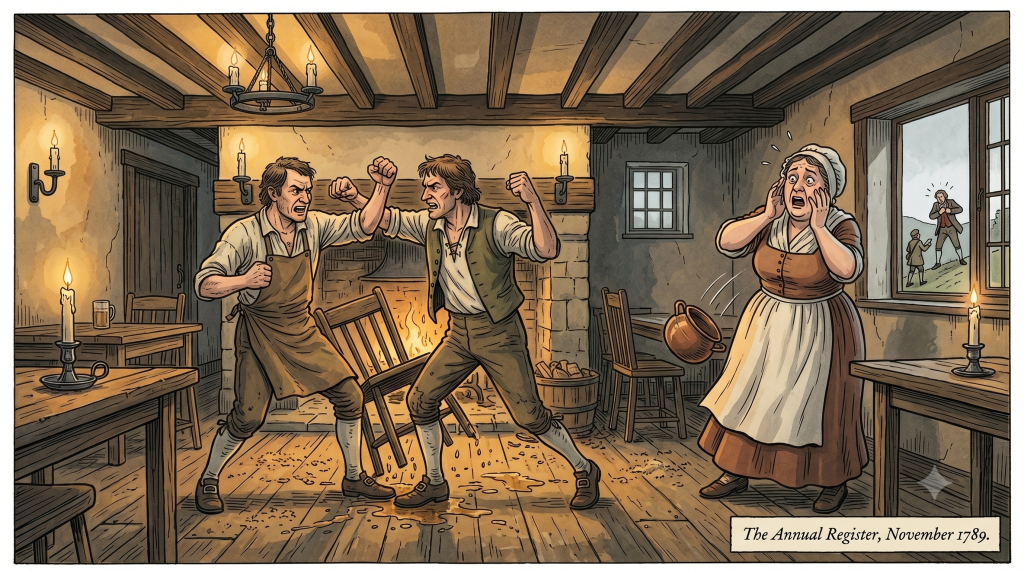
    The landlady at the time was a Mrs Pek. One evening, a turner called Fenner — believed to be related to William Fenner, one of the best-known makers of Tunbridge Ware — and a carpenter called Philpot were drinking together at the pub. A quarrel arose between them, which proceeded to blows. The fight went on for some time.

    The sight of the brawl so greatly affected Mrs Pek that she dropped dead. Although she was given medical help immediately, it was fatal.

    But here is the detail that elevates this from a pub fight into something stranger. When news of Mrs Pek’s death was relayed to a Mr Field at Mount Ephraim — about half a mile away, who was a relative of the deceased — the shock was so great that he dropped dead too, while the story was being related to him.

    Two people died as a direct result of a carpenter and a turner having an argument in a Tunbridge Wells pub in 1789. One of them was half a mile away when it happened. This is documented in the Annual Register. It is real. The next landlord, a Mr D. Schooler, also died at the inn in 1803.


    The Exorcist, the Little Girl and the Angry Spirit

    At some point in the pub’s history, one landlord had an exorcist attend, due to what the card describes only as “some activity.” The Compasses is said to be haunted by the spirit of a little girl who allegedly died on the premises. Her mother — described in the card as a prostitute — was murdered by her father on the same site.

    Witnesses report shadows moving around the ground floor, sudden cold spots, the feeling of someone breathing over their shoulders, whispering in their ears. One member of staff has seen the ghost of a woman wearing a white coat-like garment.

    Soul Searchers Kent, a paranormal investigation team, investigated the pub after receiving a call from the landlord. One ghost hunt ended when an angry and aggressive spirit shouted “Get out” at the paranormal team.

    The paranormal team left.

    Whether the spirit was the little girl, the murdered mother, the deceased Mrs Pek, the late Mr Schooler, or simply a Greene King customer who had been waiting too long for their food is not recorded.

    This is not, incidentally, the only violent history on this street. The Capital of Infidelity series has already established that Georgian Tunbridge Wells ran on assignations, gambling and the management of appearances. The backstreets of Mount Sion were where the less respectable ends of that economy operated. Little Mount Sion was never quite as genteel as it looked.


    Across the Street: Josh in the Cellar

    While The Compasses accumulates its catalogue of deaths, exorcists and aggressive spirits, the Grove Tavern, forty metres away, has been quietly conducting its own supernatural affairs with rather more specificity.

    The Grove Tavern was originally known as Brett’s boarding house, Chapel House, and the Grove in Mount Sion. The Brett family had extensive land holdings in the area. Later, the tap house was no doubt added to quench the visitors’ thirst.

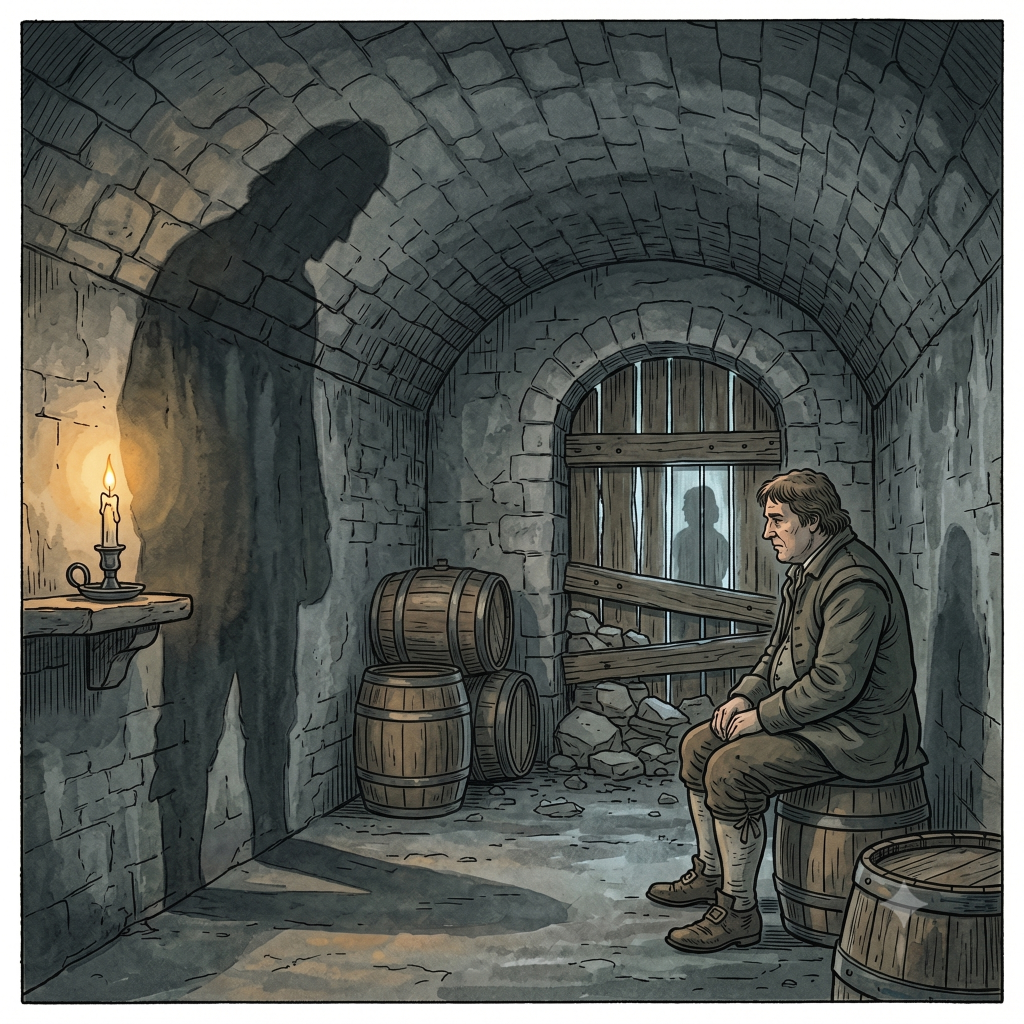
    The ghost at the Grove Tavern has a name. The ghost reported to be haunting there is named Josh. The owner reported that he was a former cellar man waiting for his lady to come through the tunnel to the cellar for a clandestine meeting.

    This detail requires unpacking. Legend states that tunnels ran beneath Little Mount Sion and other areas of the town. One is said to have led from a house across the street to the cellar of the Grove Tavern, and this house was one of ill repute. The gentlemen of the inn would greet ladies of the night there or even in the tunnel for some discreet meetings.

    This puts Josh firmly in the same world that Daniel Defoe documented when he rode into town in 1722 and noted the “gaming, sharping, intriguing” with the eye of a man who had seen everything. The tunnels beneath Little Mount Sion were, apparently, part of the infrastructure of that intriguing.

    Josh, the cellar man, is still waiting. The tunnel presumably still exists beneath the street, whether blocked or forgotten. The house of ill repute across the road is now something else entirely. The lady never arrived. Josh has been in the cellar since the 17th century.

    The Grove Tavern is Grade II listed. Its listing was granted on 7 June 1974. English Heritage saw fit to protect this building. Nobody mentioned Josh in the paperwork.


    The Grove Behind the Compasses

    One detail from the Greene King card that connects both pubs to the wider history of the hill: behind The Compasses was the old Grove Park, where visitors to the spa would take their strolls after dining or listen to the orchestra on the bandstand, which is no longer there.

    That same promenading culture — the performance of respectability over a private reality of gaming and assignation — runs through the entire Capital of Infidelity trilogy. The Georgian visitors who strolled in Grove Park after dinner were the same people conducting their less reputable business in the tunnels beneath the street. Tunbridge Wells has always been very good at holding both in balance.

    The bandstand is gone. The grove is gone. The spa visitors are gone. The orchestra is gone. The tunnel may or may not still be there.

    What remains: two small pubs, forty metres apart, still arguing about which one is older, on a hill that has been continuously occupied since before Tunbridge Wells had a name.


    The WalkTW Verdict on the Oldest Pub Question

    Honest answer: We cannot settle it. The historical record is genuinely ambiguous.

    The Compasses has the more documented paper trail — the 1718 ownership record, the Annual Register account, and the multiple name changes that suggest continuous operation over centuries. The name God Encompasseth Us anchors it to the very earliest years of the town’s development.

    The Grove Tavern has the more credible origin story — Brett’s boarding house predating the formal development of Mount Sion, the Civic Society’s assessment that it was one of the first buildings on the hill, the Grade II listing that formally recognises its historic significance.

    One of the first buildings on Mount Sion was an ale-house, which is now the Grove Tavern. But there may have been places on The Pantiles that we would consider pubs, too.

    The honest answer is that the question of the oldest pub in Tunbridge Wells may have no clean resolution — because the town itself grew too gradually and informally in its earliest decades to leave the kind of paper trail that would settle it definitively.

    What we can say with confidence: both pubs are on the oldest surviving street in Tunbridge Wells, in buildings that have been serving drinks since the town was new, forty metres apart, and both are worth your time.


    🗺️ Go Find Them Today

    Both pubs are on Little Mount Sion — the quiet backstreet running parallel to the High Street, five minutes from the station and two minutes from The Pantiles. Walk up from the Chalybeate Spring, turn left past the Church of King Charles the Martyr, and you will find them facing each other across the street.

    The Compasses — 45 Little Mount Sion, TN1 1YP. Greene King pub, food served, family friendly, open fires in winter. The laminated history card is on display inside. Ask about the exorcist.

    The Grove Tavern — 19 Berkeley Road, TN1 1YR. Independent, no food, proper real ale, dog friendly, one bar. Steve Baxter has been a landlord since 2003 and knows the building better than anyone. Ask about Josh.

    Visit both in the same afternoon. The pubs are forty metres apart, and the beer is better at the Grove. The ghost stories are better at The Compasses. Order accordingly.


    🕵️ The Open Questions

    Three things the WalkTW archive cannot yet answer:

    Question 1: The Tunnel. Does the tunnel beneath Little Mount Sion still exist? Is it blocked, bricked up, forgotten, or still accessible from somewhere? The Grove Tavern’s cellar presumably connects to something. Has anyone looked?

    Question 2: The Little Girl. The Greene King card says the researchers are currently unable to locate any children living at the inn in the historical record, but will keep researching. Has anyone found her? A child dying on licensed premises would have generated a coroner’s record, a newspaper report, something. Does anyone know where to look?

    Question 3: The Original Name. God Encompasseth Us is the most extraordinary pub name in Tunbridge Wells history. When exactly did it change, and why? Was it a deliberate secularisation as the town’s Puritan character faded? Was it simply worn down by generations of drinkers who couldn’t be bothered with the theology? The local library apparently has the records. Has anyone checked?

    Drop what you know in the comments. The Building Files are open. 👇

    The WalkTW Building Files continue. Next up: the building on The Pantiles where a stage crossed a county border, a Ceres statue watches from the roof, and the ghost of a Georgian actress may or may not be taking a curtain call in the antiques market below.

    #TunbridgeWells #WalkTW #BuildingFiles #TheCompasses #GroveTavern #LittleMountSion #LocalHistory #GhostStories #OldestPub #HiddenTunbridgeWells