Part 1 of The Lives They Didn’t List
The Chronicles
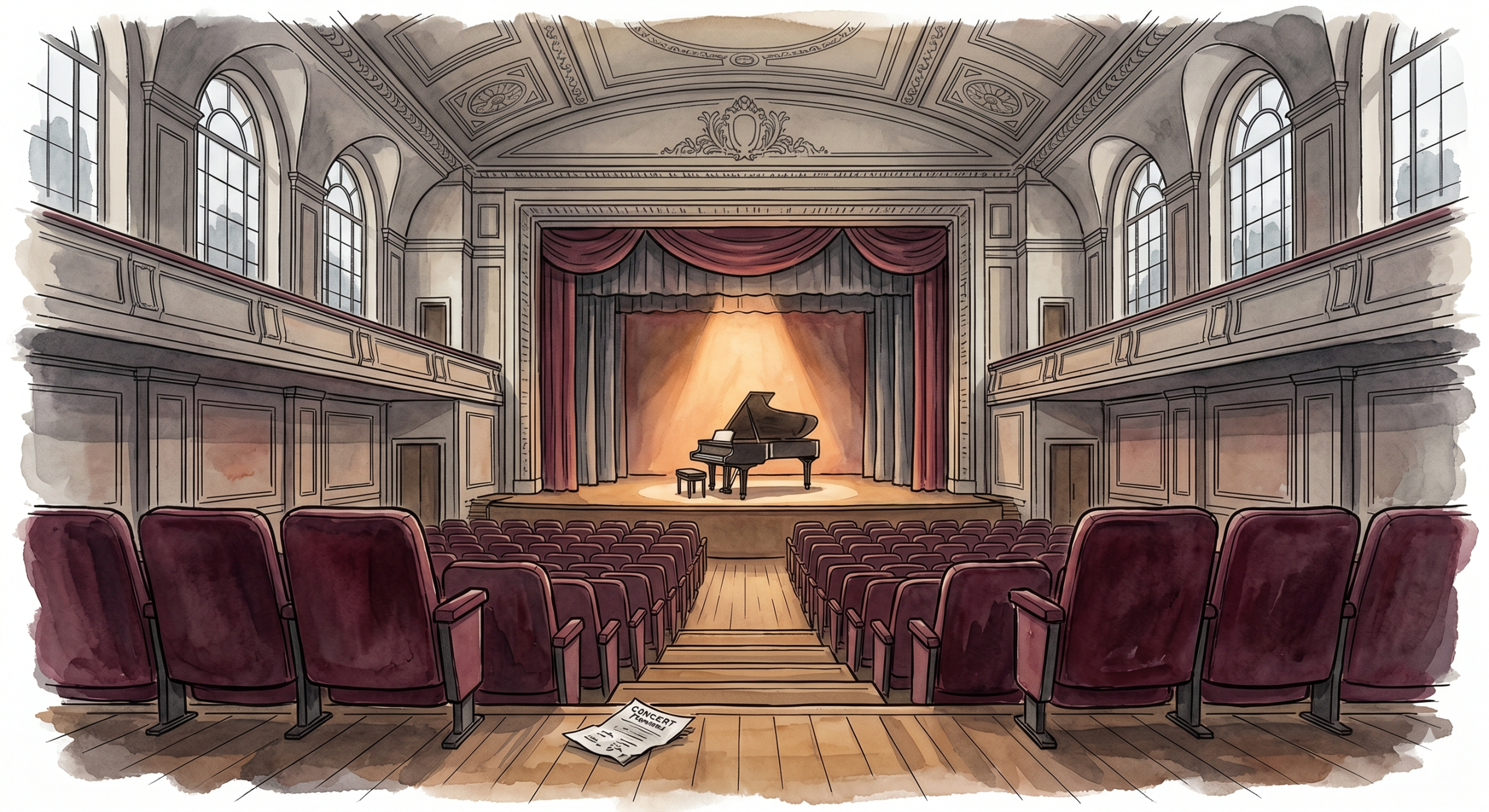
This is a piece of Tunbridge Wells LGBT history that has never appeared in any official account of the town. In the summer of 1974, the Campaign for Homosexual Equality applied to Tunbridge Wells Borough Council for permission to hold a charity concert. The venue they had in mind was the Assembly Rooms — the civic hall at the heart of the town, used for everything from flower shows to political meetings. The performer they had secured was Peter Katin, one of Britain’s most celebrated classical pianists, a regular at the BBC Proms and a man whose recordings of Chopin were regarded as among the finest of his generation.
The Council said no.
Not because of the music. Not because of the pianist. Not because of the time, the date, or the venue’s availability. The Council refused because the concert was connected to the Campaign for Homosexual Equality — and that, in Tunbridge Wells in 1974, was enough.
A Chopin recital for charity was banned. The piano never played.
Two Years Earlier: One Man, One Decision
The story begins in 1972, when a man named Ross Burgess moved to Tunbridge Wells.
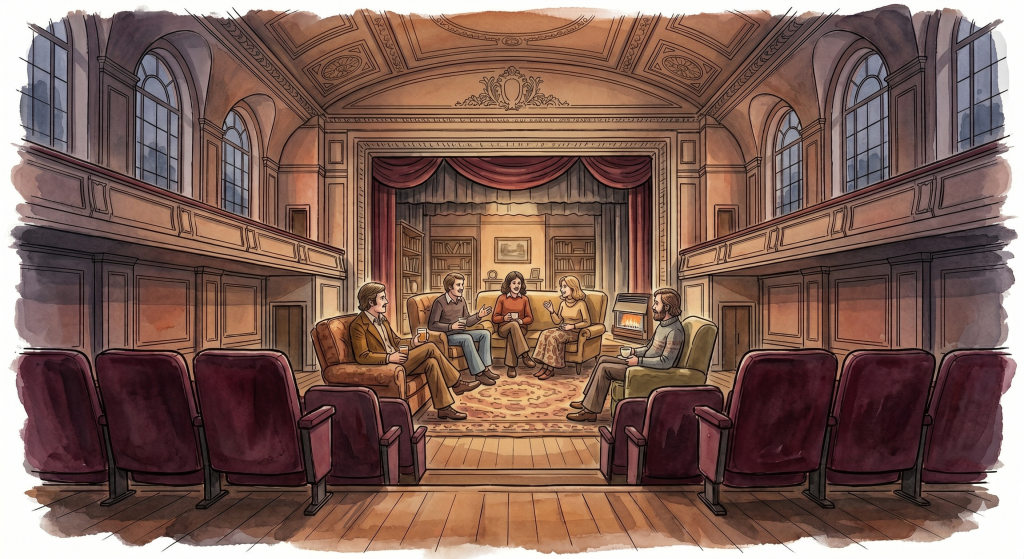
Burgess had arrived in a town that, for all its elegance and self-assurance, offered him very little in the way of community. He was gay, and there was nowhere to meet other gay people locally. There were no groups, no venues, and no formal networks of any kind. The legal landscape had shifted five years earlier — the Sexual Offences Act 1967 had decriminalised homosexual acts between consenting adult men in private in England and Wales — but legal change and social change are different things. In 1972, in a conservative Kent spa town, they were very different things indeed.
Burgess decided to do something about it. He made contact with the Campaign for Homosexual Equality — the national organisation founded in 1969 to promote legal and social equality — and established a local group. In national CHE records at the time, it was listed as the West Kent CHE Group. However, its base was Tunbridge Wells, and its purpose was straightforward: to give gay people in the area somewhere to belong.
The group organised social events. It held discos. It undertook local campaigning. By any measure, it was doing exactly what community organisations across the country do — creating connections, providing support, and being visible enough that people who needed it could find it.
The Concert That Never Happened
By 1974, the group had grown confident enough to try something more public. A charity concert — a legitimate, civic, cultural event — would do two things at once. It would raise funds for CHE and demonstrate that gay people in Tunbridge Wells were not a problem to be managed but a community capable of contributing to the town’s cultural life.
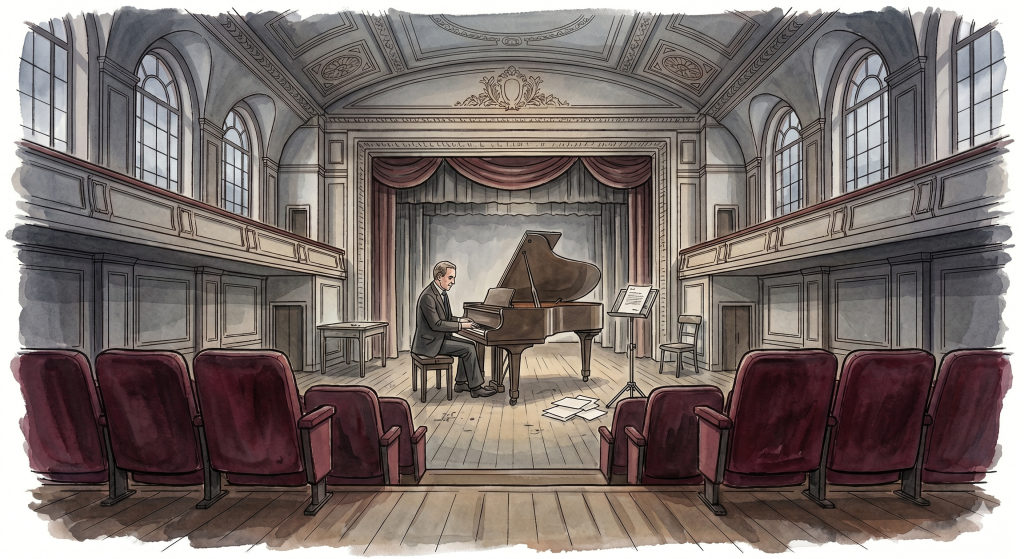
Peter Katin was the natural choice of performer. He was a supporter of CHE, a pianist of national standing, and someone willing to lend his considerable reputation to the cause. The Assembly Rooms were the appropriate venue — the town’s main public hall, centrally located on Mount Pleasant Road, used by every kind of civic organisation.
The application went to the Council. The Council considered it. Then the Council refused it.
The specific wording of the refusal is not on public record. What is confirmed, across multiple sources including Katin’s obituary in The Scotsman and the LGBT History UK archive, is that the reason for the refusal was the CHE connection. Not the music, not the pianist, not any practical objection to a concert being held. The event was refused because of who had organised it.
Peter Katin, a pianist who had performed at the BBC Proms twenty-five times, who had made the first solo tour of the Soviet Union by a British pianist since the war, who had recorded all of Haydn’s and Mozart’s piano sonatas, was told his recital was not welcome in Tunbridge Wells.
He was, by all accounts, generous about it. He went on giving charity concerts elsewhere. He eventually gave fourteen recitals in aid of the Chornobyl Children’s Project. He was appointed professor at the Royal College of Music. He died in 2015, aged 84.
The Assembly Rooms, meanwhile, continued hosting flower shows.
What the Council Was — and Wasn’t — Saying
It is worth being precise about what the 1974 refusal actually represented.
It was not a legal act of persecution. Homosexuality had been partially decriminalised seven years earlier. The Council was not arresting anyone. It was, however, making a clear statement about which organisations it considered respectable enough to use its facilities. In 1974, the Campaign for Homosexual Equality did not meet that standard.
Furthermore, the decision was not unusual for its time. Local councils across Britain had similar instincts. What makes the Tunbridge Wells case notable is the specificity of it — the gap between the stated event (a Chopin recital for charity by one of Britain’s most distinguished pianists) and the stated reason for refusal (the organiser). That gap is where the story lives.
The Council was not banning disorder. It was not banning anything dangerous or disruptive. It was banning a piano.
TWIGG
Ross Burgess’s group did not dissolve after 1974. It continued organising, continued meeting, and in 1975 gained a new convenor: Jim Edgell, who would go on to serve on the CHE National Executive. Under Edgell’s leadership, the group remained active and engaged with the national movement.
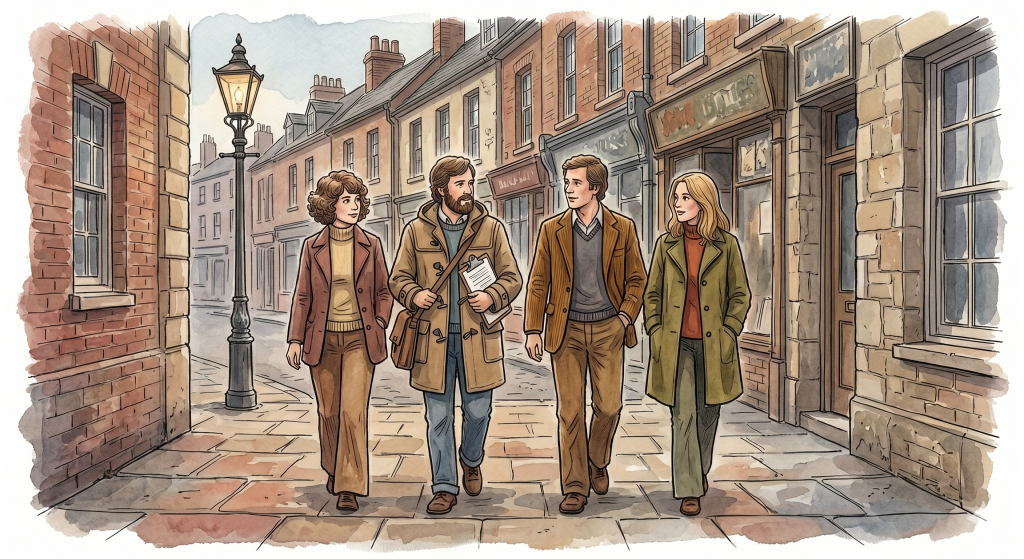
In due course, the Campaign for Homosexual Equality decided to restructure its relationship with its local groups. Each group was to become independent rather than a branch of the national organisation. The Tunbridge Wells group responded by renaming itself. It became the Tunbridge Wells Independent Gay Group.
The acronym is TWIGG.
In a town that had already produced TWERPS — the railway preservation group that had also, in a different context, arrived at an unfortunate abbreviation — TWIGG stands as evidence that Tunbridge Wells has a particular gift for this kind of thing. Whether deliberate or accidental, it is a very Tunbridge Wells name for a group that was quietly, stubbornly refusing to go away.
What Remains of This Tunbridge Wells LGBT History
The Assembly Rooms on Mount Pleasant Road is now the Assembly Hall Theatre — a well-regarded regional venue with a full programme of concerts, comedy, and theatre. Peter Katin’s recordings are available on streaming platforms. The CHE still exists, though its membership is a fraction of what it was in the 1970s.
There is no plaque in the Assembly Rooms foyer recording the 1974 decision. There is no acknowledgement, in any official account of the building’s history, that a concert was once refused there for this reason. The story exists in a 2015 archive entry, in the footnotes of an obituary, and in the memory of whoever was in the room when the vote was taken.
However, it happened. Ross Burgess moved to Tunbridge Wells and decided to build something. A Council voted to keep a piano off its stage. Jim Edgell took over and kept the group running. And TWIGG continued to exist — organising, meeting, and being stubbornly present in a town that had made it quietly clear they would rather it wasn’t.
That is, in the end, a very Tunbridge Wells story — and a chapter of Tunbridge Wells LGBT history that deserves to be remembered. On both sides of it.
More in this series: The Lives They Didn’t List
- Introduction: The Town That Didn’t Know Itself
- Part 1: The Town That Banned a Piano (you are here)
- Part 2: The Waters Were Always Queer
- Part 3: Quietly, On Our Terms