Tag: railway

The railway history of Royal Tunbridge Wells — including the Victorian battle between two rival train companies whose feud shaped the town for over a century.

  • THE OLD WEST STATION

    THE OLD WEST STATION

    A Building File: 1 Linden Park Road

    Building Files, Issue 4

    This post is part of the Railway War series. Start with Part 1 (1845–1923) and Part 2 (1940–present) if you’re coming to this fresh.


    There is a building on Linden Park Road that has spent 160 years confusing people about what it is supposed to be.

    It arrived in 1866 as a railway station, the LBSCR’s triumphant answer to the SER’s existing terminus half a mile away. It closed in 1985 when British Railways decided the line wasn’t worth keeping. It became a Beefeater. Then a pub. Then a Wild West steakhouse with nine hotel rooms named after South American tribes and a large decorative jail that you can book for parties.

    The building, for its part, has said nothing. It just stands there — red brick, round-arched windows, three-storey clocktower with a pyramidal roof and a louvred cupola — looking exactly as it did when the first LBSCR train pulled in on 1 October 1866. Which is, depending on your mood, either deeply reassuring or faintly absurd.


    The Building Itself

    Before we discuss what has been done to it, it is worth pausing on what it actually is.
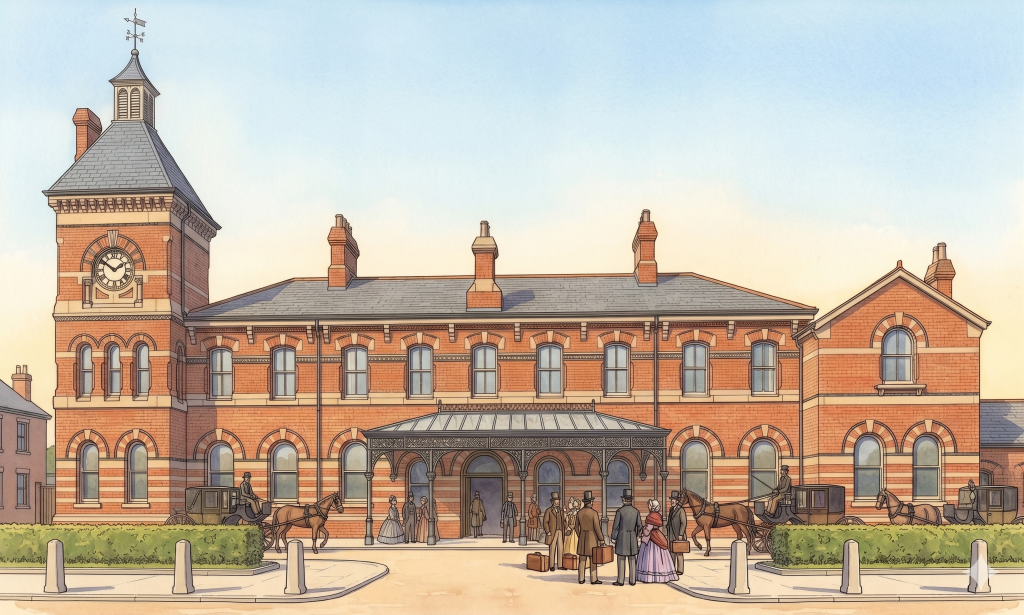
    A detailed architectural illustration of a newly completed Victorian railway station, October 1866. The building is two storeys of red brick with ashlar dressings and black brick detailing, a ten-bay centre block with a gable-fronted wing to the west and a three-storey clocktower to the east. The clocktower terminates in a pyramidal slate roof with a louvred cupola and weathervane above. Nine round-arched windows run across the ground floor, connected by a decorated ashlar impost band. Horse-drawn cabs wait on the forecourt. A small crowd of Victorian passengers with luggage stand at the entrance. The building radiates civic confidence — this is an architect who knew exactly what he was doing. Clean line illustration with warm watercolour wash, golden afternoon light.

    Tunbridge Wells West station was designed by Charles Henry Driver, an engineer’s architect whose credits include the ornamental masonry of the Thames Embankment, the Abbey Mills Pumping Station, and the Crystal Palace aquarium. He was, in short, someone who understood how to make a functional structure look considerably more important than strictly necessary.

    The building he gave Tunbridge Wells in 1866 reflects that instinct entirely. The facade is two storeys of red brick with ashlar and black brick dressings, arranged across a ten-bay centre block with a gable-fronted wing to the west and a three-storey clocktower to the east. The ground floor carries nine round-arched windows and an arched doorway, connected by a decorated ashlar impost band that runs the full width of the building. The eaves are serrated, with an ashlar cornice on foliated brackets. The clock tower terminates in a pyramidal slate roof, above which sits a louvred cupola with a weathervane.

    Inside, the original booking hall featured a panelled ceiling, a three-bay, columned arcade, and four gas-lit ticket windows. It was, in every sense, a statement building — the LBSCR making unmistakably clear that it had arrived in Tunbridge Wells and intended to stay.

    Historic England listed it Grade II on 27 March 1986, approximately ten months after the last train departed. The listing came just in time.


    What Happened Next

    The building’s post-railway life has proceeded in three acts, each successively stranger than the last.

    Act One arrived in the late 1980s, when the main building was converted into a Beefeater restaurant called The Old West Station. The name was apt — it is the Old West Station — though one suspects the Beefeater marketing department was gesturing at cowboys rather than Victorian railway geography. The booking hall, with its panelled ceiling and stone columns, became a dining room. The arched windows looked out over the car park where the platforms used to be.
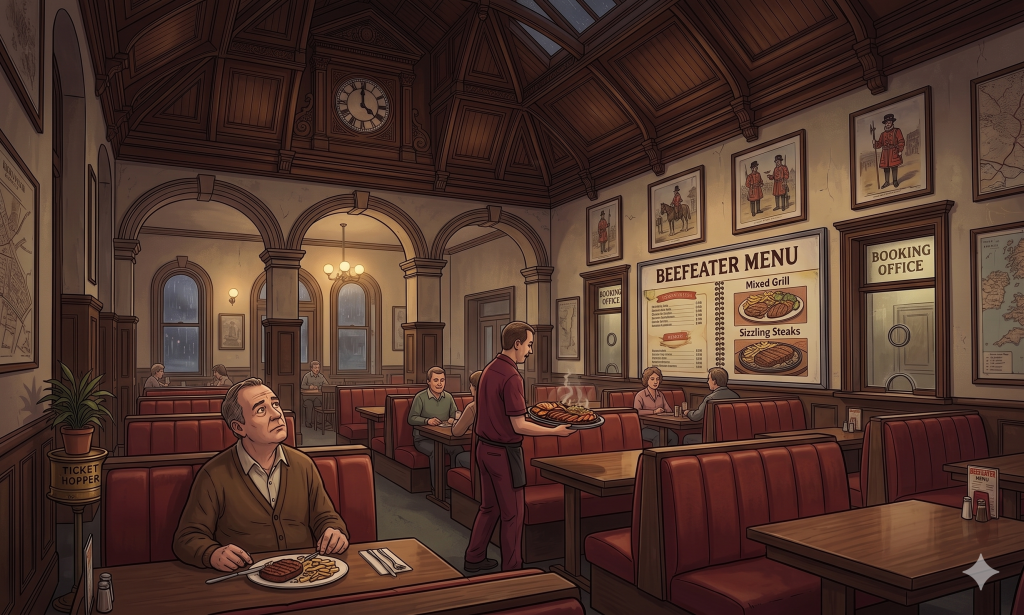
    A slightly melancholy interior illustration of a Victorian railway booking hall converted into a Beefeater restaurant, circa 1988. The original panelled ceiling is visible above, the three-bay columned arcade still frames the room, and the four original ticket windows are now partially obscured by a laminated menu board. Rows of red-upholstered booths fill the floor where the ticket queues once stood. A waiter in a burgundy uniform carries a mixed grill. One diner looks up at the ceiling with a faintly puzzled expression, as if wondering what the room used to be. The comedy is gentle, not cruel. Warm interior light, slightly faded palette — the aesthetic of a Sunday evening in 1989.

    Act Two followed when Herald Inns and Bars purchased the building and continued operating it as a pub-restaurant under the same name. The Cowboys remained notional.

    Act Three began in 2009, when Smith & Western moved in. They are a chain of American-themed steakhouses with Wild West decor, banjo music, and a menu running to ribs, burgers, and fajitas. They have leaned into the theme with total commitment. There is a saloon bar. There is a decorative jail available for private hire. The nine hotel rooms are named after South American tribes, which is a geographically inventive touch. The restaurant’s own website describes the building as “a historic landmark brought back to life,” which is one way of putting it.


    The Awkward Question

    Here is where this Building File has to say something honest, even if it is not entirely comfortable.

    Wild West decor in a Grade II listed Victorian railway station is, on the face of it, a jarring combination. Driver’s building was conceived as a piece of civic architecture — a public gateway to a prosperous town, with the proportions and detailing to match. Filling it with cowboy hats and country music is not, by any conventional standard of heritage, a sympathetic use.
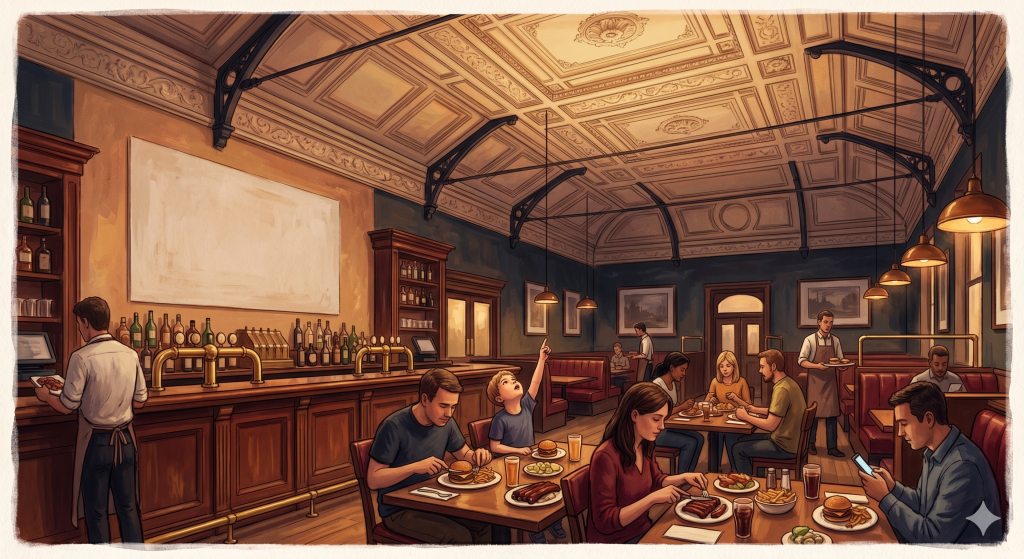
    A quietly pointed editorial illustration of the interior of a converted Victorian railway station now operating as a steakhouse. The panelled ceiling soars above — richly detailed, historically significant, entirely ignored. Below it, four tables of diners eat burgers and ribs, all looking down at their plates or phones. One small child at the far table is the only person in the frame looking upward, pointing at the ceiling. On the wall behind the bar, a blank rectangle of painted plaster sits where an interpretation panel might one day go. Warm amber restaurant lighting. The illustration's emotional register is not angry — it is wistful. Painterly editorial style.

    Furthermore, the context is particularly pointed in Tunbridge Wells. The station building sits directly beside the Spa Valley Railway — a preservation society that spent eleven years fighting to bring the line back, that operates steam trains through the High Weald on volunteer labour, that named itself TWERPS with cheerful obliviousness. One half of the site is a labour of love. The other half serves nachos.

    And yet.

    The alternative — which was very real in the late 1980s, when the building stood derelict, and the Sainsbury’s bulldozers were active next door — was not a sensitively curated heritage centre with educational panels and a gift shop selling LBSCR tea towels. The alternative was a building with no income, no maintenance budget, and no one with a financial incentive to care whether the roof held.

    Adaptive reuse is how most Victorian buildings survive. Those that do not find commercial use tend not to survive at all. Churches become apartments. Pumping stations become nightclubs. Railway hotels become offices. The question is never whether the new use is architecturally ideal — it rarely is — but whether the building is being maintained, whether its structural fabric is intact, and whether the people who walk through its doors can still read the original building clearly if they look up.

    On those terms, the Old West Station is doing reasonably well. The exterior is well-maintained. The nine round-arched windows are still in place. The clock tower still stands above Linden Park Road as it has since 1866. The panelled booking hall ceiling — the one that was lit by gas when the LBSCR first opened the doors — is still there above the tables.


    What It Owes the Town

    There is, however, one thing that adaptive reuse does not automatically provide, and which the Old West Station has so far largely declined to offer: a readable connection to its own history.

    A building this significant — designed by the architect of the Thames Embankment, built as the centrepiece of a Victorian railway war, the scene of the final passenger departure in 1985 and the subsequent eleven-year preservation battle — deserves more than a passing mention on a restaurant website. It deserves an interpretation panel in the entrance. A framed history on the wall of the booking hall. Something that tells the people eating their fajitas where they actually are.

    This is not a radical demand. It costs very little. Moreover, it is arguably good for business — a story this good makes the building more interesting to visit, not less. However, as things stand, the Wild West theme is the narrative, and the Victorian railway history is the backdrop.

    The driver’s building has survived a bomb, a closure, a supermarket next door, and four decades of commercial tenants. It is still standing. That matters enormously. But standing is not the same as being understood — and a building in the middle of Tunbridge Wells, with this much history in its walls, deserves to be both.


    The Building Files is a WalkTW series exploring the hidden histories of Royal Tunbridge Wells’s most interesting addresses. The Smith & Western is open seven days a week at 1 Linden Park Road, TN2 5QL. The Spa Valley Railway departs from the platform directly behind it.
  • Tunbridge Wells Railway War – Part 2

    Tunbridge Wells Railway War – Part 2

    Bombs, Bureaucrats, and a Toilet Block with a Removal Clause

    Building Files, Issue 3 (continued)


    When the Southern Railway took ownership of both Tunbridge Wells stations in 1923, it inherited a peace that nobody had quite asked for. Two stations, one tunnel, decades of simmering antagonism — all of it now tidied away into a single company balance sheet. The railway war was over. What followed was something quieter, and in some ways stranger: a slow, incremental dismantling of everything the LBSCR had built.

    It took sixty years. It involved a German bomb, a supermarket, and a toilet block whose planning permission came with the most unusual clause in Tunbridge Wells history.


    20 November 1940

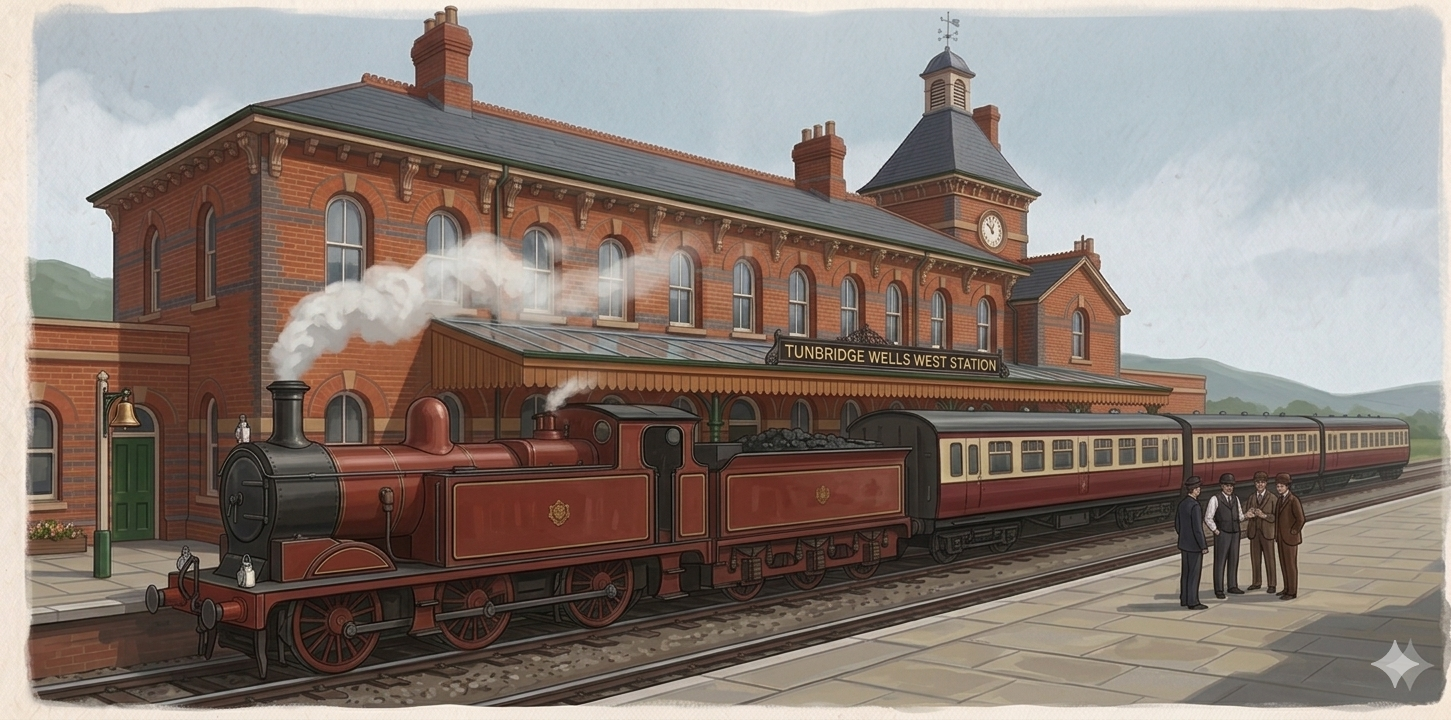
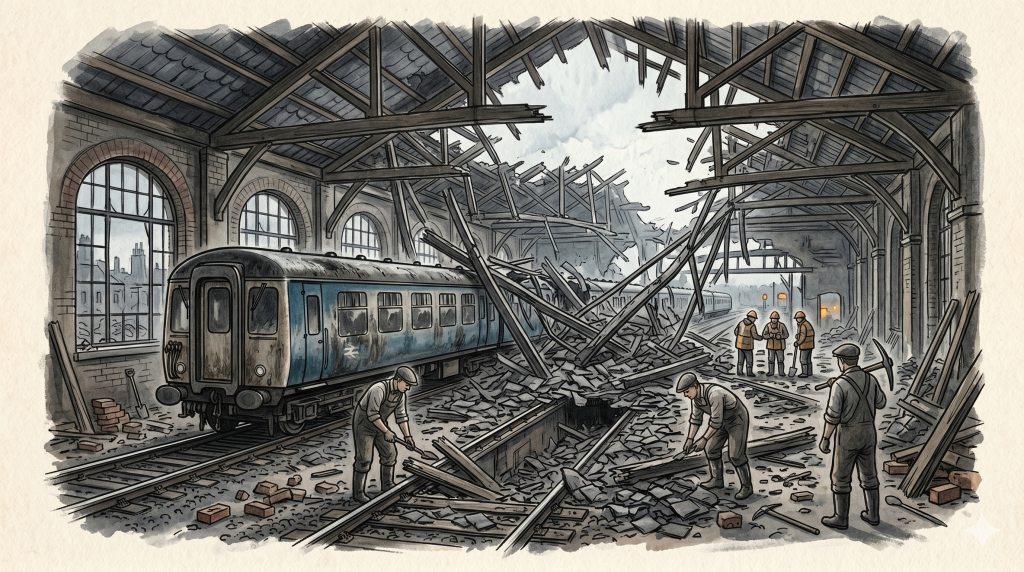
    The Luftwaffe was not, as a rule, targeting railway engine sheds in medium-sized Kent spa towns. However, on 20 November 1940, a bomb found the locomotive shed at Tunbridge Wells West anyway.

    The damage was significant. The original Victorian slate roof — laid in 1891 when the LBSCR expanded the depot to four roads — was destroyed. British Railways replaced it with corrugated asbestos sheeting. This was, in the fullest sense, a wartime solution: functional, immediate, and utterly without grace.

    The great red-brick engine shed survived. It still stands today, its arched windows intact, its Victorian bones unshaken. The asbestos roof is long gone. However, on the night of November 20th 1940, nobody was thinking about the long term. They were thinking about getting the trains running again.

    The Slow Decline

    The post-war decades were not kind to Tunbridge Wells West. Meanwhile, Tunbridge Wells Central — the SER’s station, the one that had won the first round of the rivalry in 1845 — was electrified in 1986 and went from strength to strength.

    West was a different story. It served the Wealden villages, the Groombridge valleys, and the old LBSCR lines through the High Weald. These were lightly used routes, operating on a shoestring. By the early 1980s, the track needed relaying, the signalling needed replacing, and British Railways had run the numbers.

    The conclusion was blunt: keeping the line from Eridge to Grove Junction open would cost £175,000 a year more than it earned. Furthermore, the planned electrification of the Tonbridge to Hastings line required the removal of Grove Junction — the very connection that had been bored through the hillside in 1876 as the price of peace between two Victorian rivals. Therefore, the junction would go. And without it, Tunbridge Wells West was an island.

    British Railways announced closure on 16 May 1983. Local objections were strong enough to delay it. In February 1985, the Secretary of State for Transport confirmed the decision. The last passenger service ran on 6 July 1985.

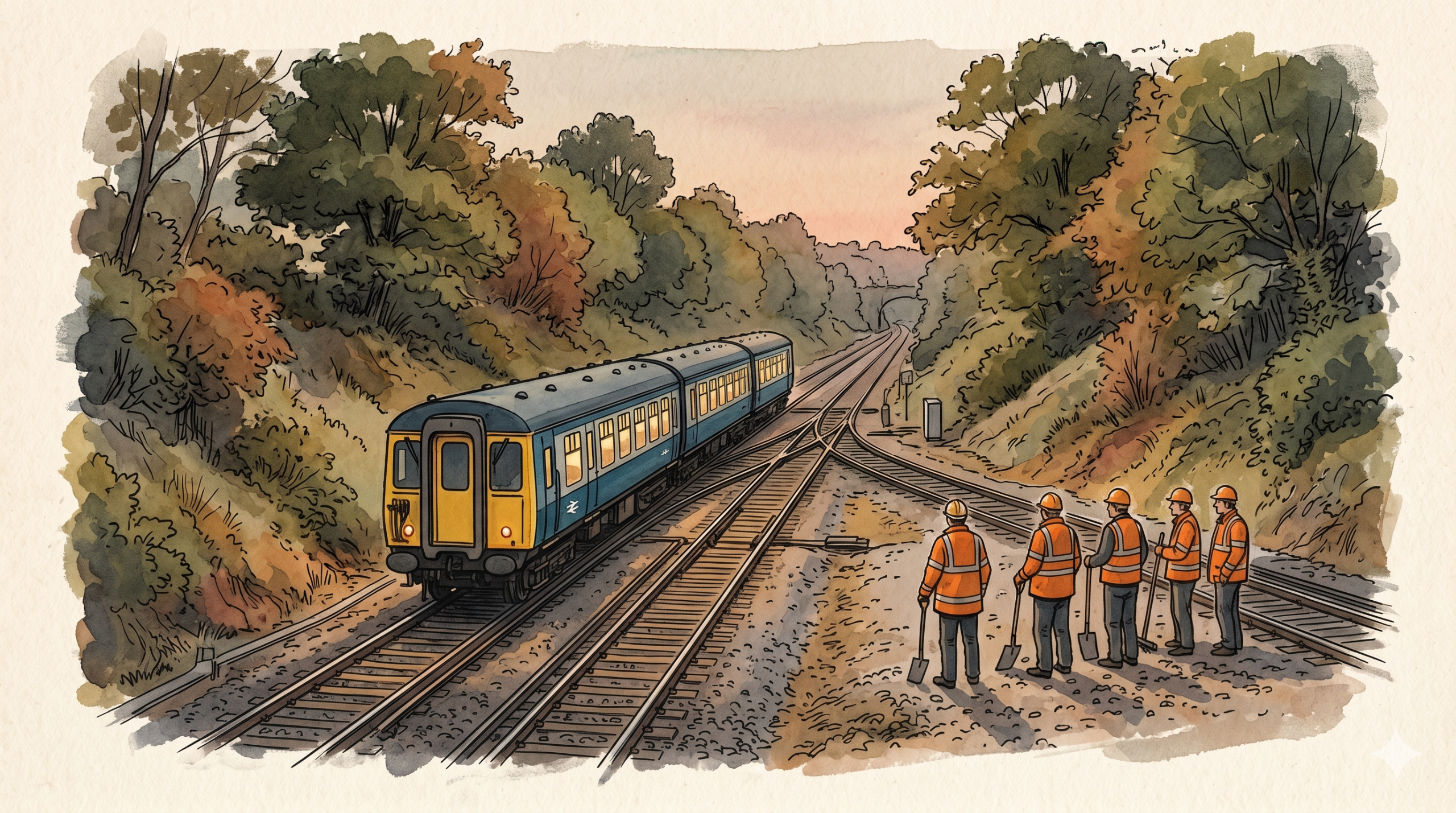
    It is reported that as the final train crossed Grove Junction that evening, the permanent way team was already waiting on the other side with tools in hand. The track was lifted the following morning. After 119 years, the LBSCR’s line into Tunbridge Wells was gone.

    The Group That Named Itself TWERPS

    Six weeks later, on 13 September 1985, a meeting was held in Groombridge village hall. The mood, one imagines, was determined rather than cheerful.

    The people in that room formed a charitable society to do something that British Railways had just declared economically indefensible: reopen the line. They named themselves the Tunbridge Wells and Eridge Railway Preservation Society. The acronym, as the Spa Valley Railway’s own history notes, was chosen by people who were “blissfully unaware of the fact that anyone would use such an acronym to poke fun at them.”

    TWERPS it was. And TWERPS they remained.

    The Sainsbury’s Compromise

    The next few years were hard. Vegetation reclaimed the trackbed. The station buildings sat derelict. Then, in the late 1980s, the situation became dramatically more complicated.

    Tunbridge Wells Borough Council granted planning permission for a large Sainsbury’s supermarket complex on the site of the former goods yard at Tunbridge Wells West. The goods shed was demolished. The signal boxes vanished. The former stabling sidings disappeared under concrete and car parking. A Homebase arrived next door.

    However — and this is where the story acquires its most distinctly Tunbridge Wells character — the planning permission came with conditions.

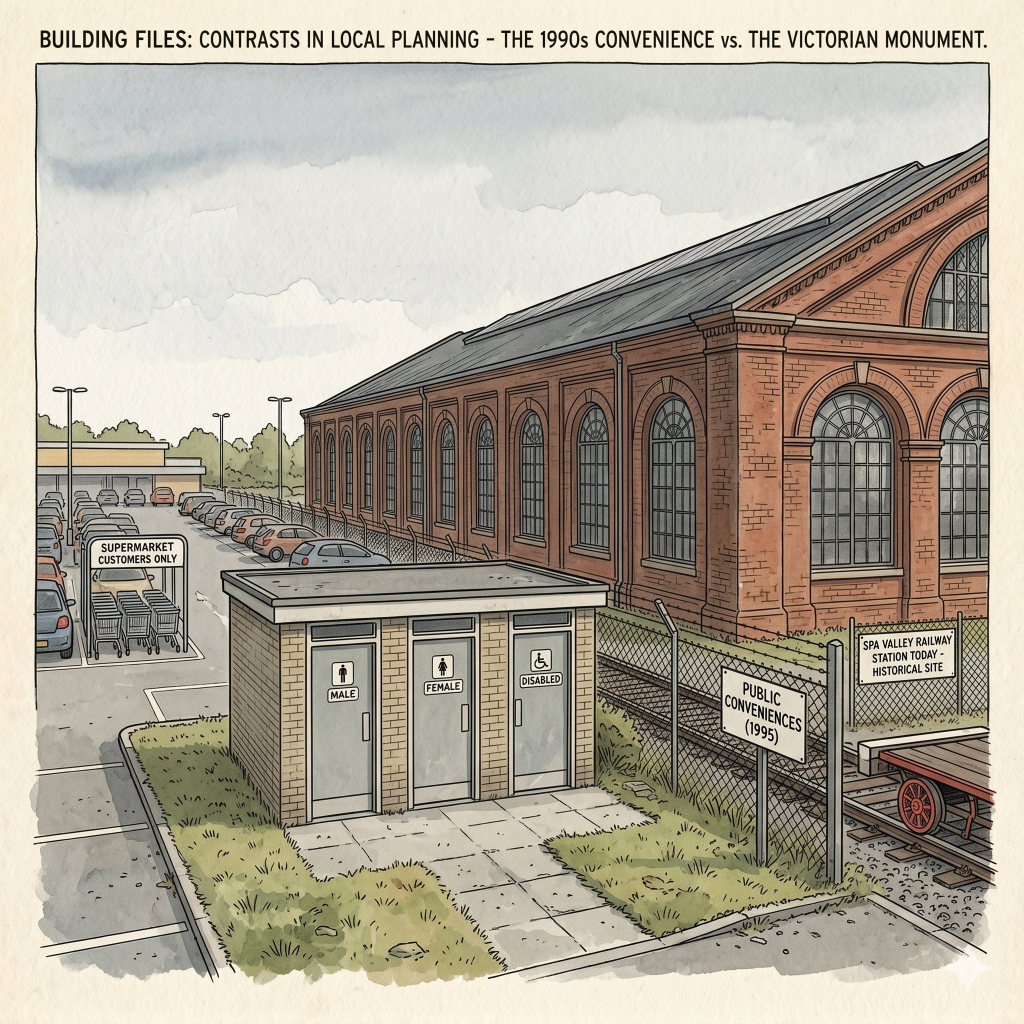
    The 1891 locomotive shed was a listed building. So was the station itself. They could not be touched. Furthermore, the council negotiated a formal agreement with Lord Sainsbury: a corridor would be preserved alongside Linden Park Road, sufficient for a reinstated railway line to pass through the site. And if, at any future point, the railway returned and any Sainsbury’s building stood in its way, the company would remove it at their own cost.

    In the mid-1990s, a toilet block was built on this corridor. It stood in the path of the railway. It could, under the terms of the agreement, be demolished.

    A toilet block with a legally binding removal clause. In Tunbridge Wells. Where else.

    The Return

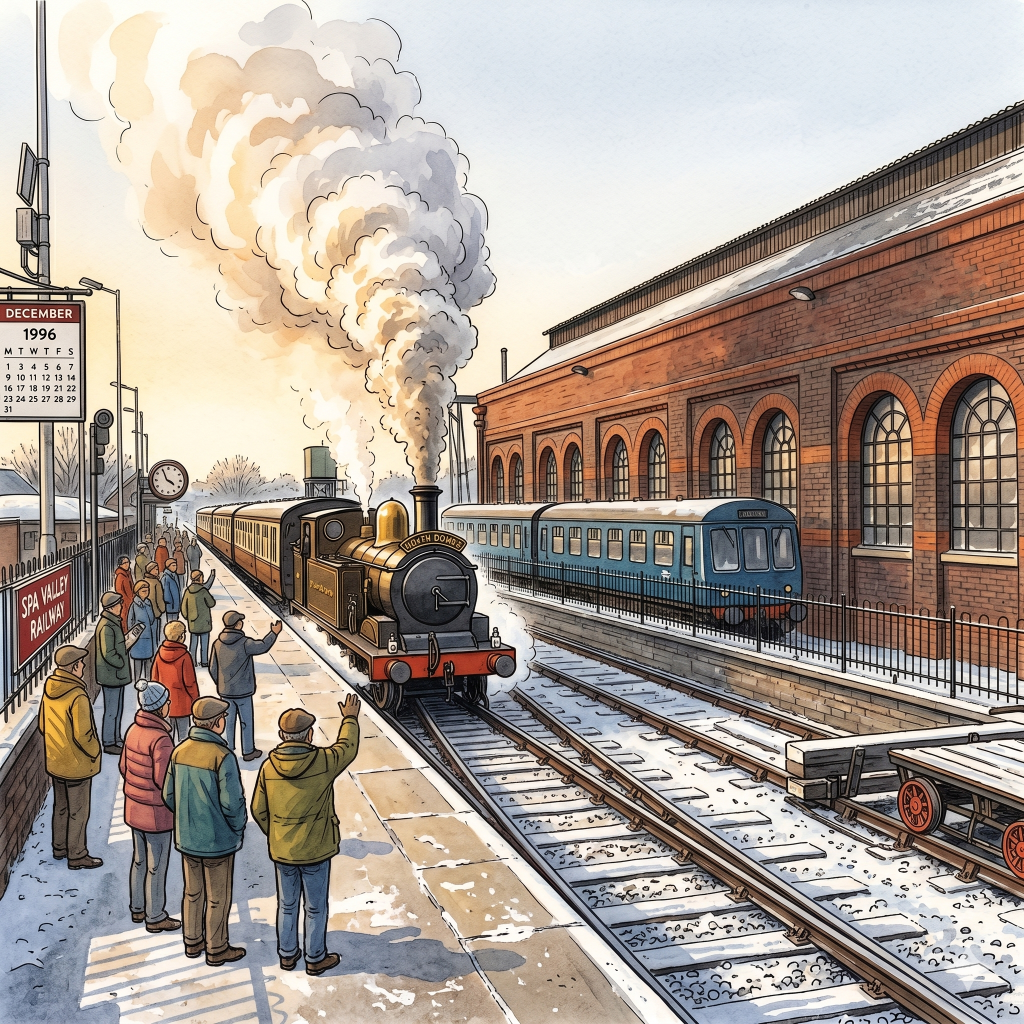
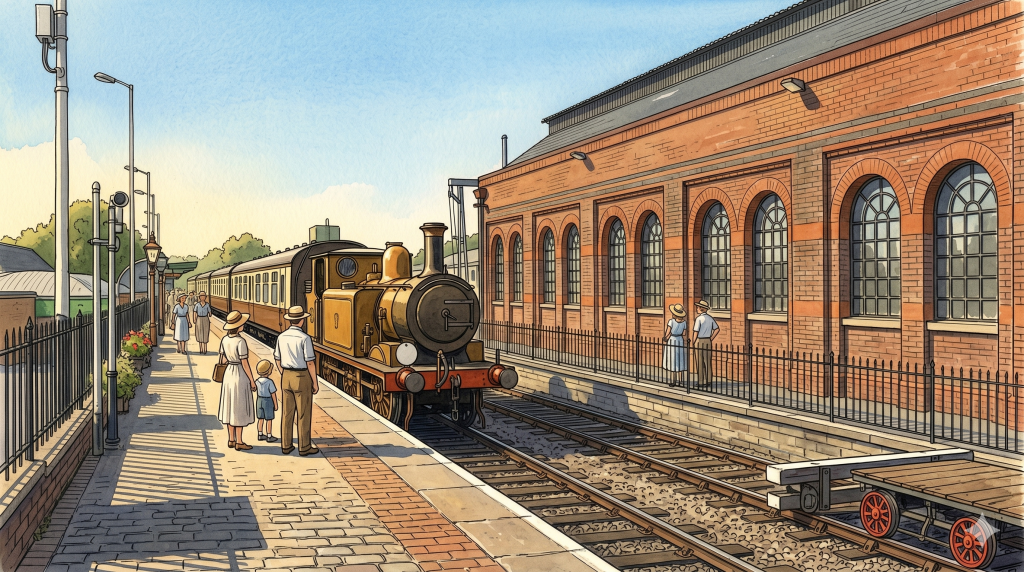
    In 1994, with a loan from Tunbridge Wells Borough Council, TWERPS acquired the line. In December 1996 — eleven years after closure — the first heritage train ran from the restored station at Tunbridge Wells West toward Groombridge, hauled by a steam locomotive called North Downs. Services reached Groombridge in August 1997, Birchden Junction in 2005, and Eridge in March 2011.

    The spur to Grove Junction — the peace tunnel itself, the single track bored through the hill in 1876 — was sold for £1 in 2001 to Railway Paths Ltd, a subsidiary of Sustrans. It is protected by covenant: the land can only ever be used for railway purposes. It is safeguarded in the East Sussex Structure Plan. It sits there now, overgrown, waiting.

    The great engine shed has been restored. The platform is busy on summer weekends. Steam trains run through the High Weald to Eridge, through Groombridge and High Rocks, through the same countryside the LBSCR carved its route through in 1866.

    What Remains

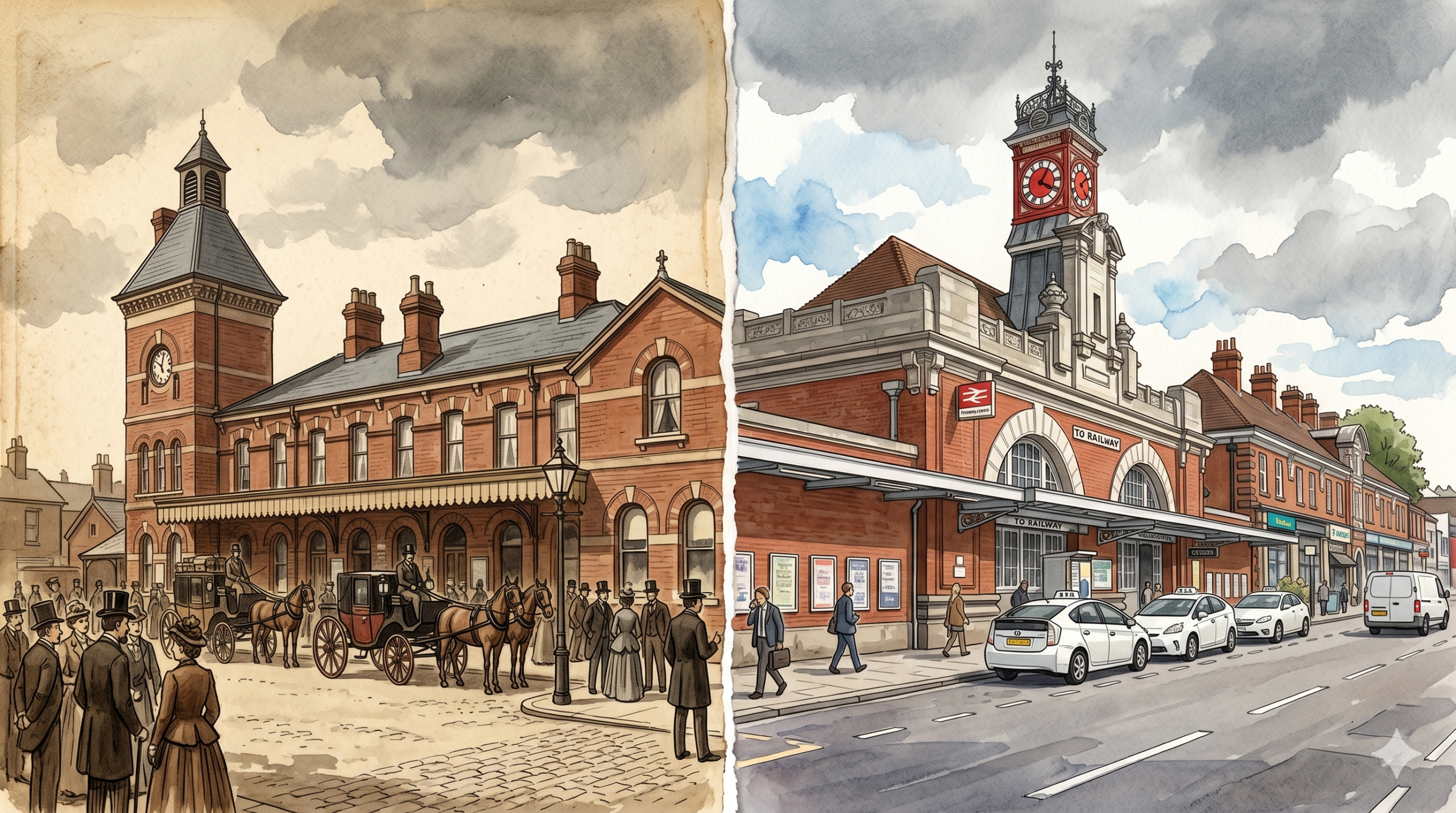
    Tunbridge Wells Central — SER territory, always, is a busy commuter station. Southeastern trains to London Charing Cross, London Bridge, and Hastings. The clock tower that appears in the Victorian photographs still stands above the forecourt. The taxis queue where the horse-drawn carriages once waited.

    Tunbridge Wells West is something different: a working museum, a community project, and an argument that some things are worth keeping not because they are profitable but because they are loved.

    The two stations began as enemies. They ended as a pair of complementary survivors — one thriving on the main line, one thriving on nostalgia, volunteer labour, and the particular stubbornness of people who name their campaign group TWERPS and mean it.

    The railway war ended in 1923. The railway, however, did not.


    The Building Files is a WalkTW series exploring the hidden histories of Royal Tunbridge Wells’s most interesting addresses. Grove Tunnel remains intact beneath Grove Hill, sealed but structurally sound, its Victorian brickwork still in place.

  • Tunbridge Wells Railway War — Part 1 (1845–1923)

    Tunbridge Wells Railway War — Part 1 (1845–1923)

    Two Companies, One Town, Zero Diplomacy

    Building Files, Issue 3


    There are towns in England where the railway arrived, and everyone was grateful. Royal Tunbridge Wells was not one of those towns. Here, the railway arrived twice — brought by two rival companies who despised each other — and the resulting feud shaped the town for the better part of a century.

    It began, as most Victorian problems did, with money, ambition, and a complete absence of goodwill.


    The First Arrival

    The South Eastern Railway reached Tunbridge Wells on 20 September 1845. This was not, it has to be said, a triumphant entry. The line ran from Tonbridge and terminated at a temporary station called Jackwood Springs, on the northern fringe of town. It was essentially a shed. For over a year, passengers alighted into what amounted to a field.

    The proper station — what would eventually become Tunbridge Wells Central — opened on 25 November 1846, once the Wells Tunnel had been excavated beneath the town. The SER now had a foothold. More importantly, it had ambitions. Hastings was next on the agenda, and after that, potentially, Lewes.

    This was when the trouble started.


    Enter the Rival

    The London, Brighton and South Coast Railway had been watching the SER’s southward expansion with the kind of alarm that polite Victorians expressed through Parliamentary bills rather than raised voices. The SER’s push toward Hastings threatened LBSCR territory. A line toward Lewes would be a direct invasion.

    So the LBSCR drew up plans for its own line into Tunbridge Wells — from the west, via Groombridge — and obtained Parliamentary authorisation on 7 August 1862. After three separate Board of Trade inspections (the Victorian equivalent of a zero-star hygiene rating), the line finally opened on 1 October 1866.

    Tunbridge Wells now had two railway stations. They belonged to two companies that, for all practical purposes, regarded each other as enemy combatants.


    The Tunnel Nobody Wanted to Build

    The Tunnel Nobody Wanted to Build

    Having two stations in a town is only useful if passengers can get between them. The two companies had no particular desire to help each other’s customers. However, Parliament had other ideas.

    The SER was eyeing a new line to Eastbourne, which would have cut directly into LBSCR territory. Rather than fight that battle in the courts, the LBSCR made a calculation: build a connecting spur between the two stations, give the SER access to the Eastbourne route it wanted, and get them to back off.

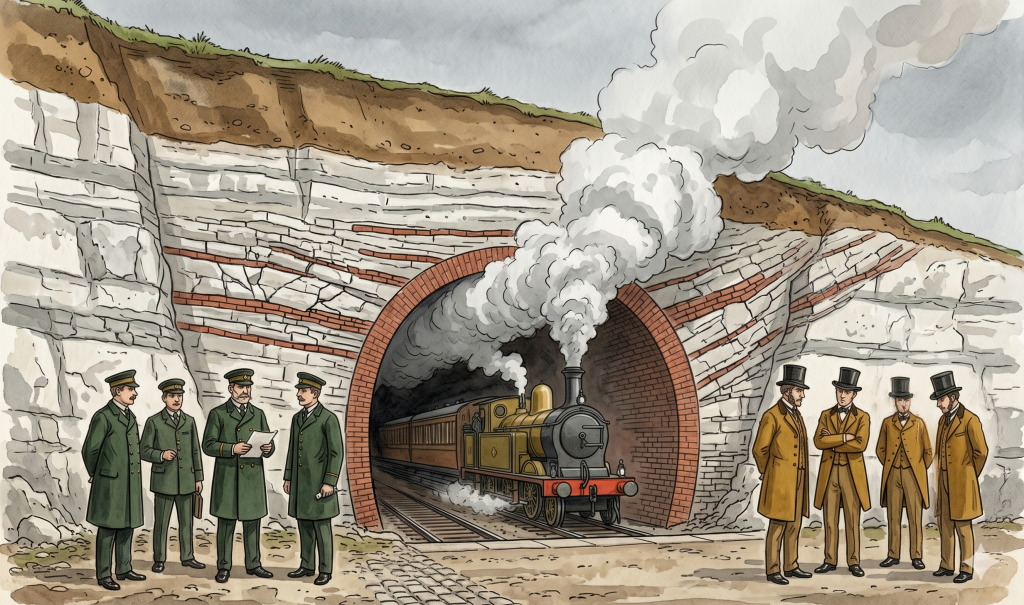
    The result was the Grove Tunnel — a short, single-track connection bored through the hillside between the two stations. It opened for goods traffic in 1866 and for passengers on 1 February 1876. For the first time, a through service was possible between the SER’s Hastings line and the LBSCR’s routes to Lewes and the South Coast.

    It was, in the most literal sense, a peace tunnel. Dug under Grove Hill to connect two companies that still, fundamentally, did not trust each other.

    Through it ran trains from Charing Cross to Eastbourne — via a negotiated compromise buried twenty feet underground.


    Rivals on Paper, Neighbours in Practice

    The peculiar thing about the Tunbridge Wells railway war is how theatrical it was. The two stations sat less than half a mile apart. Passengers transferring between them could walk the distance in ten minutes. However, for most of the Victorian era, the official position of both companies was that no such transfer was necessary, because neither route needed the other.

    In practice, the town required both. Tunbridge Wells West served Brighton, the South Coast, and the Wealden villages. Tunbridge Wells Central served London, Hastings, and Kent. Together, they gave the town remarkable connectivity. Apart — which they mostly insisted on being — they were a logistical inconvenience for anyone whose journey required both.

    Meanwhile, the town’s population was growing rapidly. Tunbridge Wells was becoming a prosperous commuter destination. More trains, more routes, and more passengers meant that the rivalry was increasingly expensive for both sides.


    The Long Road to the Grouping

    By the turn of the twentieth century, the SER and LBSCR had each worn themselves down. The SER had already merged its operations — though not its legal identity — with the London, Chatham and Dover Railway in 1899, creating the South Eastern and Chatham Railway. The LBSCR carried on independently, but the Victorian era of aggressive expansion was essentially over.

    For Tunbridge Wells, this meant a period of relative stability. Two stations, one tunnel, and a grudging peace. Trains ran through Grove Tunnel with increasing regularity. At its peak, Tunbridge Wells West handled more than a hundred trains per day — a figure that would have seemed extraordinary to the two sets of company directors who had spent decades trying to exclude each other from the town.

    The formal end of the war came not with any local drama, but with an Act of Parliament. The Railways Act 1921 reorganised Britain’s railways into four large groups. On 1 January 1923, both the SE&CR and the LBSCR ceased to exist as independent entities. Both were absorbed into the new Southern Railway.

    After nearly eighty years, the two stations in Tunbridge Wells finally belonged to the same company.

    The Southern Railway promptly renamed Tunbridge Wells to Tunbridge Wells Central — a small, tidy act of administrative clarity that would have seemed impossibly utopian to every stationmaster, general manager, and Parliamentary draftsman who had come before.


    What They Left Behind

    The 1923 grouping ended the war. It did not end the consequences. Two stations, two sets of infrastructure, and one tunnel bored through a hill in a gesture of forced cooperation — these were not things that could simply be unified by a renaming exercise.

    The Southern Railway now owned both lines, both stations, and Grove Tunnel. What it did with them over the following decades — and what British Railways did after nationalisation in 1948 — would determine the shape of Tunbridge Wells for the rest of the twentieth century.

    That story involves a German bomb, a pressure group called TWERPS, a supermarket, and a toilet block with a removal clause.

    The Building Files is a WalkTW series exploring the hidden histories of Royal Tunbridge Wells’s most interesting addresses.