An Introduction to Three Stories About Royal Tunbridge Wells and Its Queer History
The Chronicles
There is a version of Royal Tunbridge Wells that everyone knows. It is tweedy, it is conservative, it is faintly outraged by most things, and it almost certainly writes letters. It is the town of the mythic Disgusted of Tunbridge Wells — a place that stands, in the national imagination, as shorthand for a very particular kind of English disapproval.
That version is not entirely wrong. However, it is spectacularly incomplete.
Royal Tunbridge Wells has a queer history. It runs from the Georgian Pantiles — where fluid identity and theatrical self-presentation were, for a brief and glittering century, practically the entry requirement — all the way to a man who returned here from Birmingham in 2021, looked around, found no LGBT+ community infrastructure whatsoever, and quietly built one from scratch.
In between, there is a Council ban on a piano recital. There is a campaigning group so dedicated it operated for decades in a town that mostly pretended it didn’t exist. There is, in short, a story that Tunbridge Wells has never quite told itself.
It is time to tell it.
Why This Town, Why This History
Every place has a version of itself it prefers to project. Tunbridge Wells projects elegance, history, and a certain studied propriety. The Pantiles. The chalybeate spring. The Victorian villas. The commuter trains to London Bridge.
What it projects, rather less enthusiastically, is complexity — the messy, contradictory, thoroughly human reality beneath the curated surface. However, complexity is precisely what makes a town interesting. Furthermore, it is precisely what WalkTW exists to excavate.
Queer history is, in most English market towns, hidden history. Not because it didn’t happen — it always happened — but because it happened quietly, in spite of opposition, and without the institutional support that would have made it visible. As a result, it tends to vanish from the official record. The Assembly Rooms get a heritage plaque. The gay campaigners who were banned from the Assembly Rooms do not.
Therefore, this series exists. Not as a political statement — or not only as one — but as an act of historical accuracy. Tunbridge Wells is more interesting than its reputation. Its LGBT history is part of that.
Three Stories, Three Eras
The trilogy ahead covers three very different chapters of the same long story.,
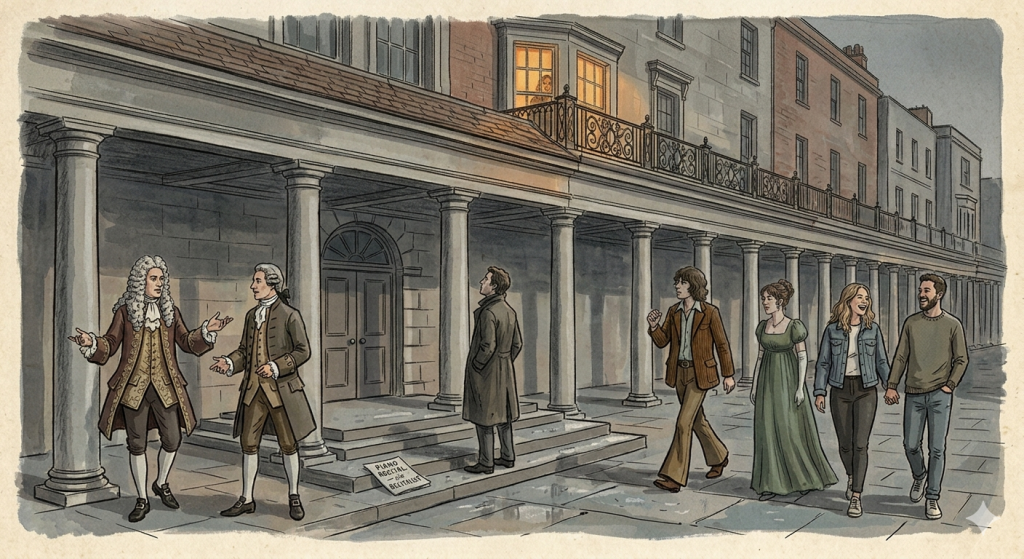
Part One begins in 1972, when a man called Ross Burgess moved to Tunbridge Wells, looked around, and decided to do something about the fact that there was nowhere for gay people to meet. What followed — a campaigning group, a Council ban on a charity piano concert, and an acronym even better than TWERPS — is one of the most quietly extraordinary episodes in the town’s modern history. It is also almost entirely unknown.
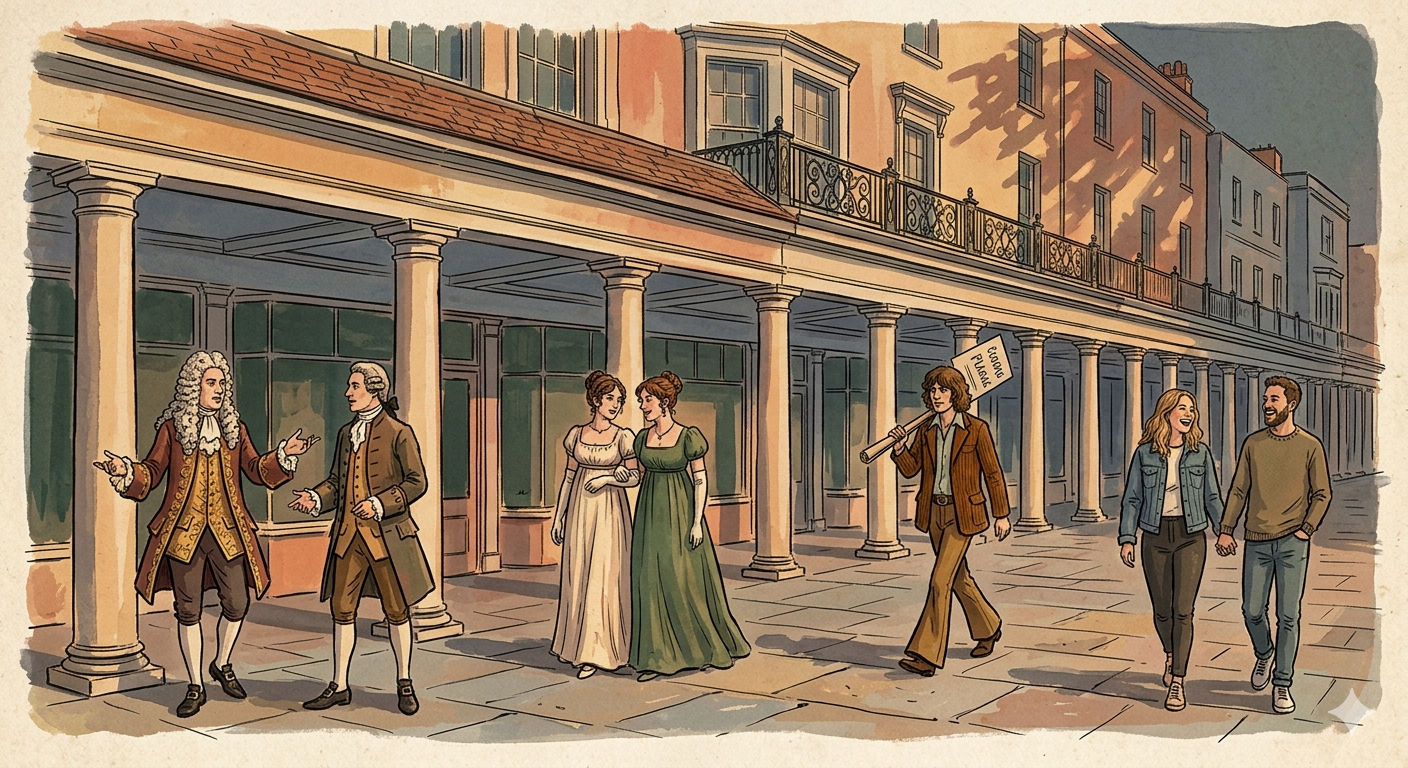
Part Two goes further back — much further. The Georgian spa town of the 17th and 18th centuries was not the conservative retirement destination of modern imagination. It was a place of performance, transgression, and deliberate social theatre, where the usual rules of English life were, for the season at least, suspended. The Pantiles was not simply a place to take the waters. It was a stage. And, historically, stages have always attracted people who needed one.
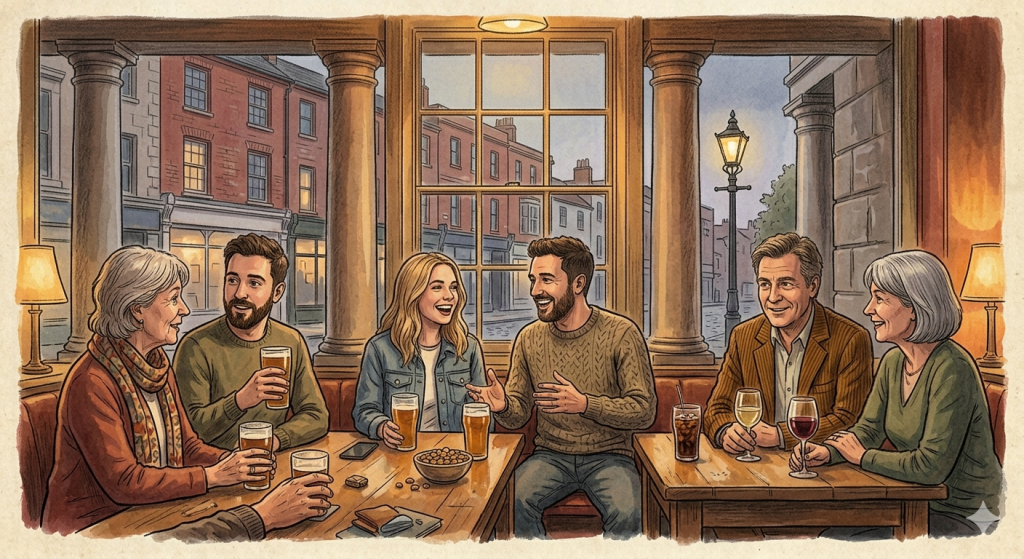
Part Three arrives in the present. Tunbridge Wells in 2024 has no gay bar, no Pride parade, and no LGBT+ venue of any kind. It also has a growing community, a social group built by one determined man with a Facebook page, and a question worth asking: what does a queer life in a town like this actually look like — and what does it say about how much has, and hasn’t, changed?
What We Owe the Full Picture
The Disgusted of Tunbridge Wells myth is, in its way, a comfort. It is easy to understand, easy to repeat, and requires nothing of anyone. However, the real town — the one with three centuries of complicated, interesting, frequently surprising human history — requires a little more from us.
It requires us to look at the Assembly Rooms and remember not just the concerts that happened there, but the ones that didn’t. It requires us to walk The Pantiles and consider who else walked it before us, and why. It requires us to acknowledge that a community need not be visible from the outside to be real.
Royal Tunbridge Wells has always been more than its reputation. This series is, among other things, a small argument for noticing that.
Hashtags: #TunbridgeWells #LGBTHistory #RoyalTunbridgeWells #HiddenHistory #WalkTW #TheChronicles #QueerHistory #KentHistory
Leave a Reply